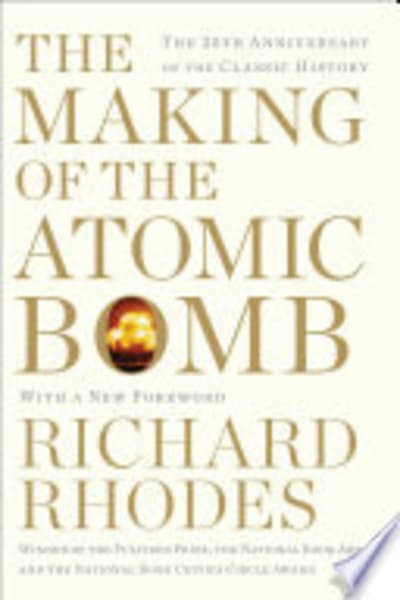
The Making of the Atomic Bomb — Book Summary & Review
Last updated:
The Making of the Atomic Bomb Summary
Richard Rhodes structures 'The Making of the Atomic Bomb' around pivotal moments and figures in nuclear physics, offering a granular look into the scientific advancements and political tensions that culminated in the Manhattan Project. The book meticulously unravels the interplay between the theoretical foundations of nuclear energy and the pragmatic challenges of weaponizing it, with a chapter titled 'Trinity' delving into the first successful detonation. Rhodes doesn't shy away from the ethical and moral implications, giving readers an unvarnished look at the consequences of scientific progress. However, readers expecting a concise read may be frustrated by its exhaustive detail and length, as the book spans over 800 pages and sometimes gets bogged down in technical minutiae.
Key Takeaways from The Making of the Atomic Bomb
-
1
The Curies' Legacy: The book traces the foundational research of Pierre and Marie Curie, pivotal in understanding radioactive decay.
-
2
The Einstein-Szilard Letter: Rhodes details how this letter to President Roosevelt initiated U.S. atomic bomb development.
-
3
Uranium-235 and Plutonium: The book explains why these isotopes became the focus of bomb-making efforts due to their fissile properties.
-
4
The Copenhagen Meeting: Rhodes provides a dramatic recount of the meeting between Heisenberg and Bohr, exploring its moral complexities.
-
5
The Gadget: This term describes the first atomic bomb tested at Trinity, marking a new era in warfare and global politics.
Who Should Read This
Someone who is fascinated by the intersection of science, history, and ethics will find this book invaluable. If you're grappling with understanding how scientific breakthroughs impact global politics, this detailed account is for you.
Who Shouldn't Read This
If you're looking for a concise overview or an easy read, this book will likely prove frustrating. Its dense scientific explanations and extensive length aren't suited for those with a casual interest in history or science.
Editor's Verdict
Rhodes excels at weaving personal stories of scientists like Oppenheimer and Fermi into the broader historical narrative. However, the book's exhaustive detail can be overwhelming and may deter those seeking a brisk read. For anyone deeply interested in the ethical quandaries of scientific discovery, especially in the context of warfare, this is a profound resource.
Ready to read The Making of the Atomic Bomb?
Get your copy on Amazon today.
The Making of the Atomic Bomb — Frequently Asked Questions
About Richard Rhodes
Richard Rhodes, born July 4, 1937, is an acclaimed American historian, journalist, and author. He is best known for his Pulitzer Prize-winning book "The Making of the Atomic Bomb" (1986), which provides a comprehensive history of the development of nuclear weapons. Rhodes's credibility on the topic stems from extensive research and interviews with key figures in the field. His other notable works include "Dark Sun: The Making of the Hydrogen Bomb" and "Arsenals of Folly: The Making of the Nuclear Arms Race."