The Life of the Mind in America — Book Summary & Review
by Perry Miller
Last updated:
The Life of the Mind in America Summary
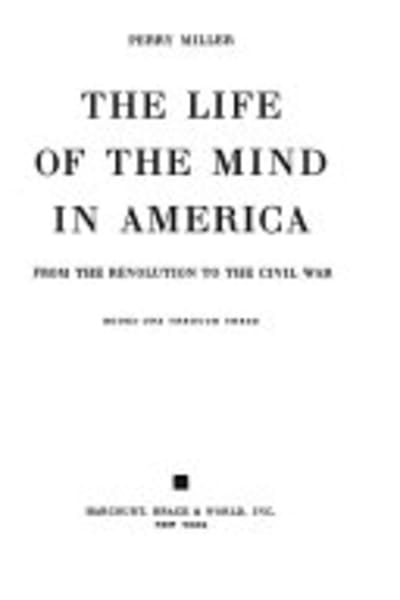
Perry Miller organizes The Life of the Mind in America around a sweeping map of “intellectual life” in the early United States—then, crucially, stops after the portion that covers books 1–2 and part of book 3, leaving the grand nine-book plan unfinished. That structure matters: Miller’s method is to treat American thought as something with institutions, habits of reading, and public arguments, not merely a parade of famous names. Early on, he leans hard into the idea that Puritan theology and its later transformations created an intellectual infrastructure: sermons, colleges, debates, and the expectations people carried into politics. He keeps circling the same question—how a society learns to think in the first place—by tracing recurring patterns of argument about conscience, providence, and moral order.
One concrete place his framework shows up is in the way he frames the Puritan legacy as a living system of interpretation rather than a dead historical phase. He doesn’t let “religion” float vaguely; he tracks how it trains readers to weigh evidence, authority, and inner experience. Even when he moves toward broader cultural developments, Miller’s attention stays on the machinery of reasoning: who gets to write, what gets treated as relevant, and how disputes create new ways of thinking.
Still, Miller’s focus can feel narrow if you want social history in the messy, everyday sense. And because the later parts of the nine-book project were never completed, the arc you might expect—how everything culminates in later American intellectual maturity—simply isn’t there. If you buy this expecting a full, continuous synthesis from colony to modernity, Miller will frustrate you. If you’re willing to read him as a historian of how early American minds were trained to argue, Miller is worth the time and money.
Key Takeaways from The Life of the Mind in America
-
1
Puritan “intellectual life” framework: Miller treats sermons, colleges, and debates as training systems for reasoning, not background color.
-
2
Conscience and providence: He tracks how moral certainty and divine order shape what counts as evidence and authority.
-
3
Institutional habits of reading: Miller emphasizes who reads, writes, and circulates ideas, showing thought as an ecosystem.
-
4
Intellectual infrastructure: His recurring claim is that ideas persist through practices—teaching, disputation, and public argument.
-
5
Nine-book plan cutoff: The unfinished later volumes mean you get partial synthesis, with missing payoff for the full grand arc.
Who Should Read This
Someone who’s stuck in the “great men” habit of history—only noticing famous writers and speeches—will benefit from Miller’s insistence on institutions and interpretive practices. If you’re trying to understand why American public argument sounds the way it does, Miller gives you a workable historical map of the training behind it.
Who Shouldn't Read This
If you want a complete, chronological intellectual history that carries neatly from early America to later modern culture, you’ll hit the wall when Miller’s nine-book project stops. If you prefer narrative history with lots of ordinary-life detail, Miller’s heavy focus on ideas, institutions, and argument will feel bloodless.
Editor's Verdict
The single best thing The Life of the Mind in America does is show, through Miller’s early focus on Puritan interpretive practice and institutional reasoning, how “intellectual life” becomes a durable system. The real limitation is structural: the work is incomplete, with books 1–2 and part of book 3 only, so the promised nine-book synthesis never arrives. This hits hardest for graduate students and serious history readers who are mid-project and need a model for tracing how societies train ways of thinking.
Ready to read The Life of the Mind in America?
Get your copy on Amazon today.
The Life of the Mind in America — Frequently Asked Questions
About Perry Miller
Perry Miller (1905–1963) was an American literary and intellectual historian, known for scholarship on early American thought. He taught at Harvard University and earned recognition for rigorous analysis of New England Puritanism and the development of American intellectual life. Miller is credible on this topic because his research centers on how ideas shaped American culture and because The Life of the Mind in America synthesizes his expertise in colonial-era literature and theology. Other notable works include The New England Mind: The Seventeenth Century and Errand into the Wilderness.