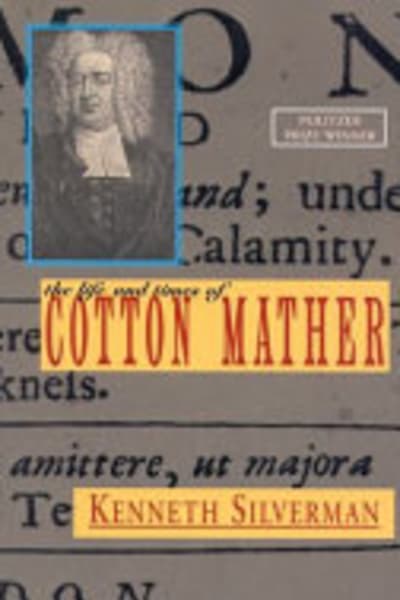
The Life and Times of Cotton Mather — Book Summary & Review
Last updated:
The Life and Times of Cotton Mather Summary
Kenneth Silverman organizes The Life and Times of Cotton Mather around Cotton Mather’s public theology—how a minister’s convictions about providence, contagion, and moral disorder become a practical style of decision-making. Silverman repeatedly returns to the idea that Mather didn’t “fall into” Salem so much as he arrived there with a well-practiced worldview already trained on signs, warnings, and the interpretive habits of Puritan New England. One of the book’s clearest through-lines is Silverman’s attention to Mather’s confidence that extraordinary events had intelligible causes, which made coercive certainty feel like duty rather than cruelty. The Salem material isn’t treated as a standalone horror; instead, Silverman frames it as the logical pressure point where Mather’s broader habits of explanation—his ways of reading the world for hidden causes—met a community primed to treat accusations as evidence.
A concrete example: Silverman spends significant time on how Mather’s stance toward witchcraft and the credibility of testimony fit into earlier Puritan disputes about authority and interpretation, so the trials look less like random madness and more like a system that could run on belief alone. Silverman also emphasizes the social and political usefulness of Mather’s role: he is constantly negotiating reputation, influence, and the expectation that a learned minister will name the meaning of crisis. The result is a biography that tracks behavior through belief rather than through psychology-by-guesswork.
Honest limitation: if you want a quick moral verdict or a purely narrative “case file” of Salem, Silverman’s approach will frustrate you. The prose is dense, the argument is historical and structural, and the book assumes patience with Puritan institutional history rather than offering easy emotional payoff.
Key Takeaways from The Life and Times of Cotton Mather
-
1
Cotton Mather’s providential worldview is treated as a working method: it turns fear and anomaly into actionable interpretation.
-
2
Salem witchcraft is framed as an endpoint of earlier disputes over authority, not as an isolated outbreak of mass hysteria.
-
3
Testimony and credibility function like a technical problem in Silverman’s account, with Mather’s interpretive habits doing the heavy lifting.
-
4
Puritan ministerial reputation drives behavior; for Mather, influence and moral legitimacy are part of how “truth” gets enforced.
-
5
Structural biography over psychology means Silverman tracks institutions and beliefs first, leaving modern mental-health explanations off the table.
Who Should Read This
Someone who keeps running into Salem-related arguments online and wants a historically grounded explanation of how belief becomes policy will likely enjoy this. If you’re studying religious history, legal culture, or the mechanics of public certainty, Silverman gives you a usable map of the terrain.
Who Shouldn't Read This
If you want a fast, story-forward biography with minimal argument and lots of character warmth, this will feel heavy and academic. If you’re looking for a book that centers modern emotional distance or clear moral catharsis over structure, Silverman’s patient framing will frustrate you.
Editor's Verdict
Kenneth Silverman’s best move is tying Salem to Mather’s long-running interpretive habits—belief as a system that produces decisions—rather than treating the trials as a freak accident. The limitation is that the book’s density and structural focus can make the reading experience feel more like sustained analysis than lived narrative. This hits hardest for anyone in the middle of a history or religion deep-dive who wants to understand how certainty gets manufactured inside institutions.
Ready to read The Life and Times of Cotton Mather?
Get your copy on Amazon today.
The Life and Times of Cotton Mather — Frequently Asked Questions
About Kenneth Silverman
Kenneth Silverman (born 1936) is an American literary historian and biographer. He is credible on early New England religious history because he has extensively researched and written about colonial-era figures, including Cotton Mather, drawing on scholarly sources. His best-known work is The Life and Times of Cotton Mather (1984). He also wrote The Life of William Blake (1982) and A Cultural History of the American Revolution (1989).