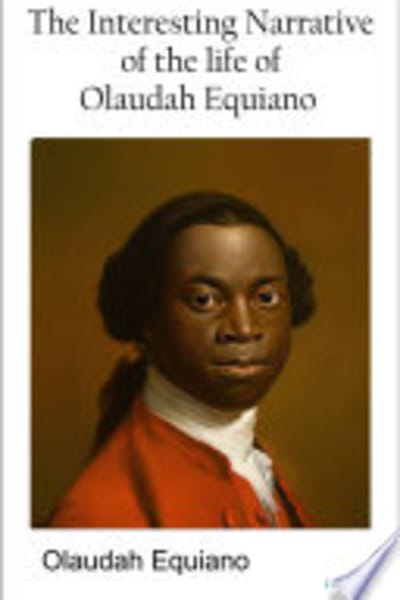
The Interesting Narrative of the Life of Olaudah Equiano — Book Summary & Review
Last updated:
The Interesting Narrative of the Life of Olaudah Equiano Summary
In The Interesting Narrative of the Life of Olaudah Equiano, Equiano frames his life through a relentless back-and-forth between “Africa” as lived memory and slavery as a system designed to erase that memory, and the book’s structure keeps forcing you to watch both processes happen. He opens with childhood recollections that are specific enough to feel like evidence, then pivots into capture, the Middle Passage, and the long grind of forced labor. What lands hardest is how Equiano repeatedly pauses the action to explain what slavery does to time, language, and selfhood—he’s not only narrating events, he’s indicting the machinery behind them. One concrete anchor is the section commonly titled “The Interesting Narrative of the Life of Olaudah Equiano,” where Equiano describes his movement through households and ships and shows how “property” status reshapes every relationship, including faith and family. Another is his account of learning, trade, and religious practice; Equiano doesn’t treat spirituality as decoration, but as a tool for moral clarity when the world keeps denying his humanity. Equiano’s voice also sharpens when freedom becomes complicated—emancipation isn’t presented as a single door that swings open, but as a fragile condition that can be undermined by law, prejudice, and paperwork. Equiano’s insistence on identity is the through-line: he won’t let readers reduce him to a single role (victim, laborer, “specimen”), and he keeps returning to how naming, origin stories, and belief shape what a person can claim.
Honest limitation: this is not a modern, neatly organized abolitionist lecture. If you want a fully chronological, tightly paced plot with minimal digressions, Equiano will test your patience, and readers expecting a contemporary historical analysis with citations will feel under-served.
Key Takeaways from The Interesting Narrative of the Life of Olaudah Equiano
-
1
Equiano’s identity-argument treats naming and origin memory as survival tools, not sentimental background, and shows how slavery attacks both.
-
2
Middle Passage scenes function as evidence of system design, with logistics and language loss used to demonstrate dehumanization’s mechanics.
-
3
Christian faith in Equiano’s narrative is practical moral reasoning, shaping how he interprets cruelty and measures promises of freedom.
-
4
Freedom as a condition—not an event—appears through repeated encounters with law and prejudice, making emancipation feel administratively fragile.
-
5
Household and ship transfers show slavery’s “mobility,” where the victim’s life is reorganized without consent.
Who Should Read This
Someone who keeps running into the same vague “history of slavery” summaries and wants a first-person account with teeth, not abstraction, should read Equiano. If you’re trying to understand how identity, faith, and legal status collide when your freedom is constantly questioned, this narrative will hit.
Who Shouldn't Read This
If you need a polished, modern style with smooth transitions and minimal repetition, Equiano’s 18th-century voice may frustrate you. If you’re looking for a comprehensive scholarly history of the transatlantic slave trade with sources and footnotes, this book will feel too personal and too thin on documentation.
Editor's Verdict
The single best thing The Interesting Narrative of the Life of Olaudah Equiano does is make the case through lived detail that slavery is an identity-erasing system, not just cruelty, and Equiano’s recurring pauses for explanation make that argument stick. The real limitation is that it’s uneven in pacing and sometimes digressive, so readers who want a strictly chronological, modern plot may feel dragged. Anyone who’s recently been assigned abolition-era writing in school, or anyone revisiting the topic after a “history class” fatigue moment, will likely feel the force of Equiano’s voice most intensely.
Ready to read The Interesting Narrative of the Life of Olaudah Equiano?
Get your copy on Amazon today.
The Interesting Narrative of the Life of Olaudah Equiano — Frequently Asked Questions
About Equiano Olaudah
Olaudah Equiano (c. 1745–1797) was a formerly enslaved African who became a prominent abolitionist writer in Britain. Born in West Africa (likely in present-day Nigeria), he was kidnapped as a child and sold into transatlantic slavery, later gaining freedom and documenting his experiences. He is credible because The Interesting Narrative draws on his firsthand life story as an enslaved person and his later public testimony. Other works include a sequel, The Life of Olaudah Equiano, and a pamphlet, Thoughts and Sentiments on the Evil of Slavery.