The Handmaid's Tale — Book Summary & Review
Last updated:
The Handmaid's Tale Summary
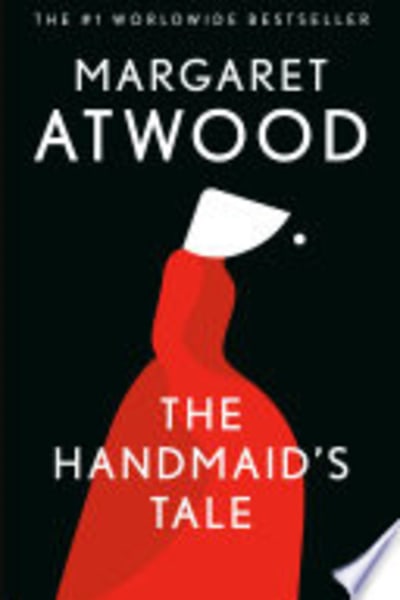
Offred’s narration in The Handmaid’s Tale is framed by the idea of “Historical Notes” that arrive after her story ends, and that structure is Atwood’s quiet weapon: you don’t get closure, you get an argument about how easily societies sanitize cruelty. The main body follows Offred (the handmaid assigned to “produce” children) as Gilead enforces obedience through ritual, surveillance, and the stripping of names—she’s Offred because she belongs to a Commander. Atwood makes the regime feel bureaucratic and intimate at once: the red habits, the rules about eyes and silence, the way language shrinks until survival depends on what you can think without saying. One concrete example is the recurring tension between the Ceremony’s prescribed script and Offred’s private awareness of her own body as something taken, not given. Another is the way Offred keeps testing small boundaries—remembering details, bargaining for information, and reading other women’s moods—until resistance stops being a heroic label and becomes a set of micro-decisions.
What really lands is how Atwood threads resistance through memory and ambiguity. Offred’s inner life isn’t a tidy moral victory; it’s messy, compromised, and often strategic. The “Historical Notes” section, delivered by later scholars, turns that mess into a warning about interpretation itself: even after the fall of a regime, people argue about what happened and why, and those arguments can become another kind of control.
Limitation: if you’re expecting a plot that escalates into a conventional escape-and-revenge arc, Atwood will frustrate you—this book prizes psychological claustrophobia and ideological exposure over resolution, and the final framing can feel cold to readers who want clear answers.
Key Takeaways from The Handmaid's Tale
-
1
Republic of Gilead: a theonomic state where reproduction is policy, enforced with rituals that turn bodies into public property.
-
2
Offred’s naming: losing her name to “Offred” shows how identity is administered, not possessed, and how language becomes a cage.
-
3
The Ceremony: a scripted act that exposes power as choreography, making consent impossible while Offred measures the cost of thinking.
-
4
Handmaid hierarchy: the ranks among women function like bureaucracy, so survival depends on navigating status rather than “good vs evil.”
-
5
“Historical Notes”: the postscript reframes the whole narrative as an artifact, reminding you that interpretation can repeat oppression.
Who Should Read This
Someone who feels boxed in by rules at work or home—watching their autonomy erode one policy at a time—will recognize Gilead’s slow tightening in The Handmaid’s Tale. Someone who’s tired of dystopias that sprint toward explosions and wants a close-up of daily psychological control should read Atwood.
Who Shouldn't Read This
If you need a satisfying ending with a clear escape route and tidy moral payoff, you’ll likely hate how Atwood ends in framing and unresolved dread. If you’re sensitive to religious fundamentalism portrayed as an operating system for coercion—complete with ritualized humiliation—you may find the book emotionally punishing rather than “entertaining.”
Editor's Verdict
The single best thing Atwood does is fuse Offred’s stripped-down daily reality with the later “Historical Notes,” especially how the postscript makes you question who gets to define her story. The real limitation is that the novel withholds conventional narrative release—there’s no clean triumph, and the ending leans on interpretation more than outcome. This hits hardest for anyone who has recently started doubting the stories institutions tell to justify themselves, then realizes the story can be the final lock.
Ready to read The Handmaid's Tale?
Get your copy on Amazon today.
The Handmaid's Tale — Frequently Asked Questions
About Margaret Atwood
Margaret Atwood (born 1939) is a Canadian writer and literary critic. She studied at Victoria College, University of Toronto, and Harvard University. Atwood is credible on dystopian and gender-focused themes because she has extensively published fiction and criticism examining state power, sexuality, and social control. She wrote The Handmaid’s Tale (1985) and its sequel, The Testaments (2019), and also authored novels such as Oryx and Crake (2003).