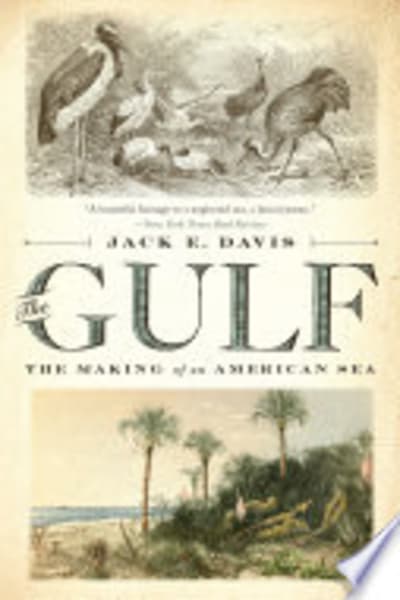
The Gulf — Book Summary & Review
Last updated:
The Gulf Summary
Jack E. Davis frames The Gulf around human ecology—his blunt claim that the region’s abundance has always been a relationship, not a backdrop—and he keeps proving it by moving between Florida Keys marshes and the Texas Rio Grande. The book is built as a sequence of historical vignettes that orbit that framework: oil men and real-estate developers, yes, but also sports-fishermen, presidents, Hollywood executives, New England fishers, the Tabasco king, a Texas shrimper, and a New York architect who “caught the big one.” Davis’s signature method is to treat environmental change like a paper trail. When hurricanes and oil spills happen, they aren’t isolated shocks; they’re the visible end of a longer story about extraction, infrastructure, and local livelihoods. He returns to the idea that climate change doesn’t arrive from nowhere—it accelerates trends already set in motion, and the Gulf’s ecology makes those trends brutally legible.
One concrete example that stuck with me is how Davis connects estuaries and marsh shorelines to specific economic players and policy choices, showing how “improvement” projects often meant draining, channeling, or enclosing living systems. Another is his attention to who gets to define the Gulf: who owns access, who profits from risk, and who pays when the water turns less forgiving. Davis’s writing can feel like it’s constantly widening the lens—history as a set of ecological consequences—so you’re never allowed to treat environment as scenery.
Limitation: The Gulf doesn’t offer a clean, step-by-step blueprint for restoration or climate adaptation; it’s more interested in diagnosis through history than in prescriptions, which will frustrate readers who want actionable solutions by the final chapter.
Key Takeaways from The Gulf
-
1
Human ecology: Davis argues the Gulf’s “nature” has always been co-produced with labor, markets, and policy decisions.
-
2
Estuarine bays and marsh shorelines: these habitats function as living infrastructure, so exploitation breaks resilience, not just scenery.
-
3
Tabasco king and Texas shrimper: Davis uses named figures to show how private ambition and local work collide at the waterline.
-
4
Oil men and real-estate developers: extraction is treated as a long campaign that makes later disasters worse and more likely.
-
5
Climate change acceleration: Davis links modern warming to earlier historical alterations, arguing today’s damage has an origin story.
Who Should Read This
Someone who feels uneasy about reading environmental history that stays abstract—especially if you want to see how specific Gulf industries and politicians shape ecology—should read Davis. If you’re the kind of person who keeps wondering why hurricanes or spills hit some communities harder than others, The Gulf will give you the historical mechanism.
Who Shouldn't Read This
If you want a tightly organized narrative with clear chapter-by-chapter conclusions and a tidy timeline, Davis’s vignette approach will feel scattershot. If you’re shopping for a practical restoration manual or climate policy guide, The Gulf withholds that payoff and will leave you wanting more than historical diagnosis.
Editor's Verdict
The single best thing Davis does is his human-ecology framing, repeatedly tested through character-driven episodes that connect Gulf abundance to extraction pressures rather than treating disasters as freak events. The real limitation is that The Gulf stays in historical diagnosis and rarely turns into a usable restoration or policy playbook. This will hit hardest for a reader who’s just finished a general “environmental crisis” book and wants the Gulf’s local history to explain why the crisis behaves the way it does.
Ready to read The Gulf?
Get your copy on Amazon today.
The Gulf — Frequently Asked Questions
About Jack E. Davis
Jack E. Davis is a historian and professor of history at the University of Georgia. He specializes in the history and culture of the American South, including the Civil War era and the Gulf Coast region. Davis is credible on Gulf-related topics through his scholarly research on Southern communities and material culture, and his work has been published by major academic and trade presses. Notable books include The Gulf: A History and Deep South: A Social History of the American South.