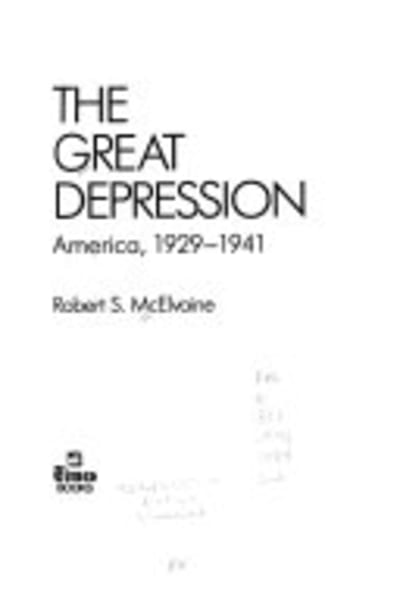
The Great Depression — Book Summary & Review
Last updated:
The Great Depression Summary
Robert S. McElvaine opens The Great Depression by treating the crisis as more than a ledger problem: he pairs economic policy choices with the everyday social weather—politics, culture, and the way Congress and the public argued about relief. His structure leans on a clear 1929–1941 arc, and he keeps returning to a specific interpretive spine: the New Deal’s successes and failures can’t be separated from competing visions of citizenship, federal power, and who “deserved” help. One of the book’s most useful sections is the discussion around 1933–1939 New Deal decision-making, where McElvaine tracks how lawmakers talked about public finance and real estate investment while millions were trying to survive unemployment and collapsing credit. He also gives you concrete texture through correspondence and bureaucratic realities—what government could do, what it hesitated to do, and how diplomatic and consular experience shaped official thinking about international economic pressure.
McElvaine’s best move is insisting that the Depression was experienced culturally as much as economically: speeches, organizing, and popular attitudes mattered for policy outcomes. In the chapter coverage of the Senate and congressional bargaining, he shows how “relief” and “recovery” became competing slogans that different factions used to sell their preferred fixes. Still, this book is not a clean, single-thread explanation of macroeconomics; it won’t satisfy readers who want a tight model of interest rates and output gaps, and it can feel busy if you prefer narrative over analysis. If you come for a simple cause-and-effect story, McElvaine will keep redirecting you to politics, institutions, and the social meanings people attached to money. McElvaine’s argument is persuasive, but it’s also dense enough that you’ll want to take notes as you go.
Key Takeaways from The Great Depression
-
1
New Deal policy framing shows how relief debates became arguments about federal power and citizenship, not only about jobs or budgets.
-
2
Public finance discussion tracks how lawmakers treated deficits and spending as political weapons, shaping what relief programs could survive.
-
3
Real estate investment coverage explains why collapsing property markets lingered, turning recovery into a slower, uneven process.
-
4
Correspondence and bureaucracy reveal what officials could actually execute, exposing the gap between public promises and administrative capacity.
-
5
1933–1939 legislative bargaining demonstrates how Congress and the Senate used slogans to win votes while steering economic priorities.
Who Should Read This
Someone who’s trying to understand why economic crises trigger political fights—especially around relief, responsibility, and federal authority—will get a lot from McElvaine. If you’re studying the New Deal for work or school and keep noticing that policies changed because of culture and Congress, this book will click.
Who Shouldn't Read This
If you want a straightforward macroeconomic explanation of the Depression’s mechanics with minimal politics, McElvaine will frustrate you. If you dislike dense institutional history and want a purely narrative account, this book’s correspondence-and-Congress emphasis will feel like homework.
Editor's Verdict
The single best thing Robert S. McElvaine does is fuse economic policy with cultural and political meaning, especially in the 1933–1939 New Deal decision-making sections tied to public finance debates. The real limitation is that the book isn’t an economics primer, so readers seeking a clean causal model of recovery will feel underfed. This hits hardest for anyone in mid-career who’s watching today’s crisis rhetoric mirror old arguments about who deserves help and how much the federal government should act.
Ready to read The Great Depression?
Get your copy on Amazon today.
The Great Depression — Frequently Asked Questions
About Robert S. McElvaine
Robert S. McElvaine is an American historian and professor who has written extensively about the Great Depression and U.S. social and political history. He earned a Ph.D. in history from the University of Wisconsin–Madison and has taught at the University of Iowa and other institutions. His expertise comes from long-term scholarship on Depression-era America, including its politics, culture, and public life. Other notable works include Down and Out in the Great Depression and The Depression and the New Deal.