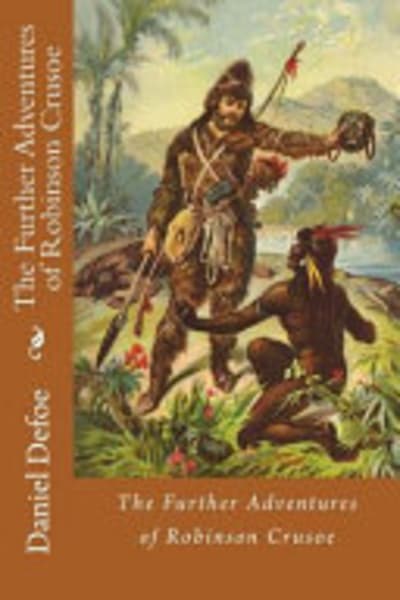
The Further Adventures of Robinson Crusoe — Book Summary & Review
Last updated:
Public domain via Project Gutenberg — free and legal.
The Further Adventures of Robinson Crusoe Summary
In The Further Adventures of Robinson Crusoe, Defoe builds the whole sequel around Crusoe’s “bored with prosperity” restlessness, then tests it by sending him back to the logic of survival—only now the island is replaced by a string of far-flung encounters. The book’s structure is basically a chain of episodes, and Defoe leans hard on the same moral engine that powered the first Crusoe: discontent becomes motion, motion becomes trouble, and trouble becomes a place where faith can be argued, observed, and practiced. Crusoe doesn’t sail because it’s fun; he sails because he can’t stand the quiet life, and Defoe treats that longing as a real spiritual problem, not a quirky personality trait. One of the clearest “chapters” of the argument is Crusoe’s return to action with Friday at his side, where the familiar servant-master dynamic gets re-angled into leadership, loyalty, and cultural translation. Defoe also keeps tightening the stakes through geography-as-test: China, then the long grind over the Russian steppes, then the reach into Siberia. Each location functions like a new courtroom for Crusoe’s worldview, and Defoe uses the hardships—storms, scarcity, sickness, and the endless negotiations of rank—to keep asking whether comfort actually makes a man better or just more complacent.
Still, Defoe’s sequel has a limitation that’s easy to miss when you go in expecting pure adventure: the episodes are often driven by sermon-like commentary and moral bookkeeping, so the narrative momentum can feel like it’s pausing to explain itself. If you want a tight, modern plot with character psychology that stays consistent scene to scene, you may find Defoe’s shifts in tone exhausting rather than enriching.
Enjoyed this one? Read these next.
Top picks in Fiction, chosen for readers of The Further Adventures of Robinson Crusoe.
To Kill a Mockingbird
by Harper Lee
Check price on Amazon
1984
by George Orwell
Check price on Amazon
The Great Gatsby
by F. Scott Fitzgerald
Check price on Amazon
The Catcher in the Rye
by J.D. Salinger
Check price on AmazonKey Takeaways from The Further Adventures of Robinson Crusoe
-
1
Crusoe’s Restlessness: Defoe treats boredom with success as a spiritual symptom, pushing action as the cure and the risk.
-
2
Friday’s Role: Friday is not scenery; he anchors Crusoe’s decisions, making loyalty and cultural translation part of the plot.
-
3
Faith as Survival Logic: Defoe argues that belief isn’t decoration—it’s how Crusoe interprets danger and chooses what to do next.
-
4
Episode Chain Structure: The book advances through location-based trials, so pacing depends on whether you like episodic moral emphasis.
-
5
Geography-as-Test: China, the Russian steppes, and Siberia operate like argument locations where Crusoe’s worldview gets stress-tested.
Who Should Read This
Someone who likes Crusoe stories but wants the faith-and-survival framework pushed into stranger, wider settings should read this. If you’re stuck in a comfort zone and keep wondering whether rest is actually healthy, Crusoe’s restlessness will feel uncomfortably personal.
Who Shouldn't Read This
If you want character psychology that evolves with modern subtlety and minimal sermonizing, Defoe will frustrate you. If you prefer tight cause-and-effect plotting over an episode chain, the repeated moral pauses will feel like drag.
Editor's Verdict
The single best thing The Further Adventures of Robinson Crusoe does is turn Crusoe’s longing into an engine for moral reasoning, especially through the Friday-centered decisions and the escalating trials from China to Siberia. The real limitation is that Defoe repeatedly slows the story for faith-forward commentary, so momentum depends on your tolerance for sermon-like narration. This hits hardest for anyone who loved the first Crusoe but is now tired of “adventure first” books and wants consequences to matter.
Ready to read The Further Adventures of Robinson Crusoe?
Get your copy on Amazon today.
The Further Adventures of Robinson Crusoe — Frequently Asked Questions
About Daniel, 1661?-1731 Defoe
Daniel Defoe (c. 1661–1731) was an English writer and journalist. Born in London, he was educated for a dissenting ministry but became a businessman and later a political journalist. He is credible on Robinson Crusoe–type survival narratives because he wrote extensively about travel, commerce, crime, and practical affairs and published works describing voyages and colonial life. In addition to The Further Adventures of Robinson Crusoe, he wrote Robinson Crusoe (1719) and Moll Flanders (1722).