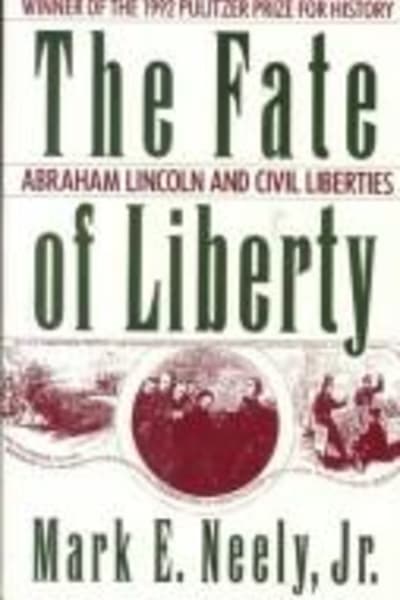
The Fate of Liberty — Book Summary & Review
Last updated:
The Fate of Liberty Summary
Mark E. Neely, Jr. organizes The Fate of Liberty around Lincoln’s suspension of habeas corpus and the practical machinery of martial law, then keeps asking what those powers looked like on the ground. Neely’s core framework is simple but relentless: Lincoln’s constitutional moves were framed as temporary, war-driven necessity, yet the system of arrests, military trials, and prison sentences produced abuses that were politically convenient and legally messy. One of the book’s most memorable sections is the chapter that follows the “floodtide” logic—how the administration justified extraordinary detention in the border states as public order disintegrated and as opponents attacked the first draft of the policy. Neely doesn’t stop at intentions. He tracks letters from prisoners and the records of military courts to show how “well-intentioned” policy translated into real people losing liberty, sometimes with scant process and uneven review. Another concrete example Neely returns to is the pattern of courts-martial handling dissent as if it were inherently disloyal, while political debate raged in the background over whether Lincoln had become an emperor in wartime. Neely also makes a point many Lincoln-histories dodge: the debate wasn’t only moral; it was procedural and institutional—what standards applied, who had authority, and how federal prisons and military commanders actually carried out orders. By the end, Lincoln still comes off as politically calculating and often willing to temper sentences, but Neely’s argument is that constitutional stress doesn’t stay theoretical. Honest limitation: this book is narrow in focus—if you want a broad, chronological Civil War and Reconstruction narrative, Neely will feel like he’s repeatedly returning to one legal flashpoint rather than giving you the whole panorama.
Key Takeaways from The Fate of Liberty
-
1
Habeas corpus suspension: Neely treats it as a legal emergency tool that still reshaped daily life through detention and review delays.
-
2
Martial law execution: The book tracks how military commanders and courts-martial actually applied authority, not how Lincoln wished it would look.
-
3
Border-state public order: Neely uses the breakdown in places like key border regions to explain why arrests multiplied beyond initial expectations.
-
4
Military courts and tempering: Neely shows Lincoln’s willingness to reduce sentences alongside the system’s tendency to punish dissent.
-
5
Political debates over process: The book connects courtroom outcomes to loud congressional and press arguments about constitutional limits.
Who Should Read This
Someone who keeps running into arguments like “Lincoln had to do it” and wants the receipts for what suspension and military trials meant in practice. If you’re studying civil rights history or constitutional law and need a case study of how wartime power tested legal norms.
Who Shouldn't Read This
If you’re hoping for a sweeping Civil War narrative or character study that moves quickly from event to event, Neely’s focus will frustrate you. If you dislike dense source-based history—letters, court records, and federal documentation—this will feel like homework, not drama.
Editor's Verdict
The single best thing The Fate of Liberty does is show the gap between Lincoln’s stated constitutional rationale and the lived reality of detention by using prisoners’ letters and military court records around habeas corpus. The real limitation is that Neely stays tightly locked on one legal crisis, so readers wanting a broader Reconstruction arc may feel boxed in. This hits hardest for anyone mid-research or mid-argument about Lincoln’s civil-liberties record who needs a specific, document-driven account before they write or debate.
Ready to read The Fate of Liberty?
Get your copy on Amazon today.
The Fate of Liberty — Frequently Asked Questions
About Mark E. Neely, Jr.
Mark E. Neely Jr. is an American historian and professor of history at the University of Alabama. He specializes in the Civil War era and the history of American political and constitutional life, drawing on extensive primary-source research. His credibility on liberty and wartime rights stems from his scholarship on the Union and Confederate governments’ legal and political practices. He is the author of The Fate of Liberty: Abraham Lincoln and Civil Liberties (1991) and The Boundaries of American Political Culture (1990).