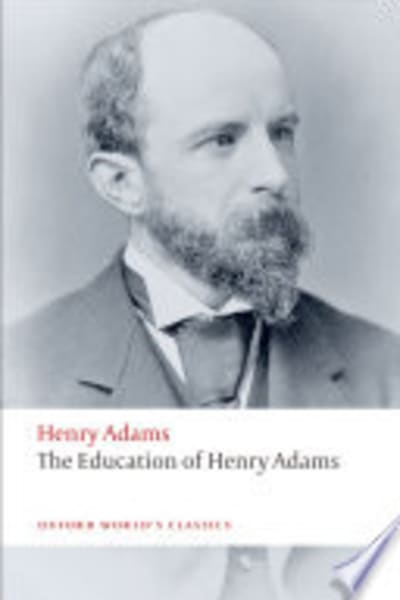
The Education of Henry Adams — Book Summary & Review
by Henry Adams
Last updated:
The Education of Henry Adams Summary
In The Education of Henry Adams, Adams structures his late-life autobiography around a recurring framework: the mind confronting “the void of death” and trying to make sense of 19th-century acceleration through science, technology, and politics. Adams writes like a man watching his own categories dissolve, and he keeps returning to one brutal idea—his education didn’t culminate in mastery, it culminated in bafflement. He stages this through concrete episodes, from his immersion in national power and elite institutions to his fascination with the new physics and machinery that redefine what “progress” even means. When Adams turns to the “Chart” logic of his era—especially his obsessive comparisons between historical cycles and the cold, indifferent regularities of natural law—the book becomes less a straight life story and more a laboratory for his frustration.
A centerpiece is Adams’s sustained wrestling with the shift from older moral-historical explanations to modern technical ones: he keeps asking what history is “for” once the universe starts behaving like a system rather than a narrative. He also gives readers the famous, unsettling contrast between the human scale of ambition and the massive scale of modern forces, a contrast that makes his later chapters read like an argument with the century itself. Adams, in effect, uses his biography as evidence in a trial he’s too late to win.
The honest limitation: The Education of Henry Adams won’t satisfy readers who want a warm, chronological memoir or clear historical conclusions. Adams’s voice is prickly, his references can feel like homework, and he often ends thoughts without translating them into lessons you can apply tomorrow. If you need momentum and clarity, Adams may leave you standing in the same “blank” space he describes.
Key Takeaways from The Education of Henry Adams
-
1
Autobiography as argument: Adams uses life episodes to test whether history can still explain modern power and science.
-
2
The “mind…void of death” frame: his late perspective turns personal memory into a study of meaning collapsing under speed.
-
3
The “Chart” logic: he treats historical comparison like data, then shows how the method breaks when physics wins.
-
4
Dynamo versus the Virgin: Adams contrasts modern energy systems with older spiritual-moral symbols to measure cultural loss.
-
5
Historical acceleration: Adams portrays the 19th century as escalating complexity that outpaces human judgment and ethics.
Who Should Read This
Someone who’s trying to understand why the 19th century feels both awe-inspiring and spiritually bankrupt will find Adams’s anger clarifying. If you’re mid-career and suddenly feel your frameworks failing under rapid technological change, Adams will mirror that panic with ruthless specificity.
Who Shouldn't Read This
If you want a smooth, chronological biography with digestible takeaways, Adams will frustrate you with digressions and dense references. If you prefer emotionally warm narration, Adams’s ironic, combative tone will feel like a door slammed in your face.
Editor's Verdict
The single best thing The Education of Henry Adams does is stage the “dynamo” idea as a cultural verdict, tying modern energy to spiritual and historical disorientation. The real limitation is that Adams writes as a private intelligence test—he offers fewer clear answers than escalating experiments in thought. Anyone who’s spent years chasing coherent progress and then hit a wall of technological acceleration will feel this book hit hardest when they realize their old story no longer fits.
Ready to read The Education of Henry Adams?
Get your copy on Amazon today.
The Education of Henry Adams — Frequently Asked Questions
About Henry Adams
Henry Adams (1838–1918) was an American historian and author, born into a prominent political family in Boston. He was educated in Europe and worked in government, including serving as a diplomat and U.S. minister to Great Britain. He is credible on the subject of historical change because he witnessed major shifts in American and European politics, technology, and education firsthand. His other notable works include History of the United States during the Administrations of James Madison and The Life of Albert Gallatin.