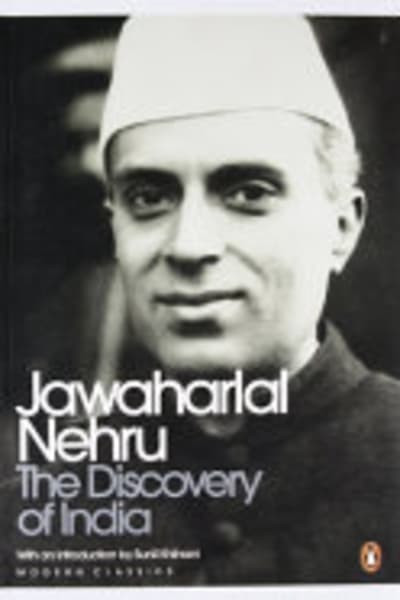
The Discovery of India — Book Summary & Review
Last updated:
The Discovery of India Summary
Nehru's 'The Discovery of India' weaves an intricate tapestry of India's cultural, historical, and philosophical roots, structured around his personal reflections and extensive research. The book opens with 'A Pilgrim's Progress', setting the tone for Nehru's exploration of India's past, present, and future. Nehru's treatment of 'The Upanishads' is particularly enlightening, showing how ancient texts influenced India's spiritual and intellectual identity. His narrative intertwines the story of India's civilization with his own political journey, offering insights into how historical events shaped his vision for independent India. However, readers looking for a detailed analysis of post-independence India might find the book lacking, as it primarily focuses on the period before 1947 and Nehru's own ideological perspective.
Key Takeaways from The Discovery of India
-
1
A Pilgrim's Progress: Nehru frames his exploration as a personal and intellectual journey, blending history with his reflections.
-
2
The Upanishads: Nehru discusses these ancient texts' role in shaping Indian philosophy and spiritual thought.
-
3
The Unity in Diversity: Nehru argues that India's strength lies in its ability to embrace a multitude of cultures and ideas.
-
4
The Indus Valley Civilization: He highlights this early society's advanced urban planning and social organization.
-
5
The Ganga: Nehru uses this river as a metaphor for India's timeless continuity and cultural evolution.
Who Should Read This
If you're grappling with understanding India's complex history and cultural evolution, this book offers a profound perspective. Someone who wants to see how historical events influenced modern India's formation will find it insightful.
Who Shouldn't Read This
If you're seeking a straightforward historical account without personal reflections, Nehru's narrative might feel too subjective. Those expecting an in-depth analysis of contemporary India will be disappointed, as the book ends with the pre-independence era.
Editor's Verdict
The book excels at presenting India's history through Nehru's unique lens, particularly in 'The Unity in Diversity' chapter. Its limitation lies in its lack of coverage on post-1947 events, leaving modern history enthusiasts wanting more. If you're at a point where you're struggling to connect India's past with its present, Nehru's insights can provide a foundational understanding.
Ready to read The Discovery of India?
Get your copy on Amazon today.
The Discovery of India — Frequently Asked Questions
About Jawaharlal Nehru
Jawaharlal Nehru (1889-1964) was an influential Indian statesman and the first Prime Minister of independent India. Educated at Harrow and Cambridge, Nehru was a key figure in the Indian independence movement. His book, "The Discovery of India," reflects his deep understanding of Indian history and culture. Nehru's credibility stems from his leadership role and personal involvement in shaping modern India. Other notable works include "Glimpses of World History" and "An Autobiography."