The Dead Hand — Book Summary & Review
Last updated:
The Dead Hand Summary
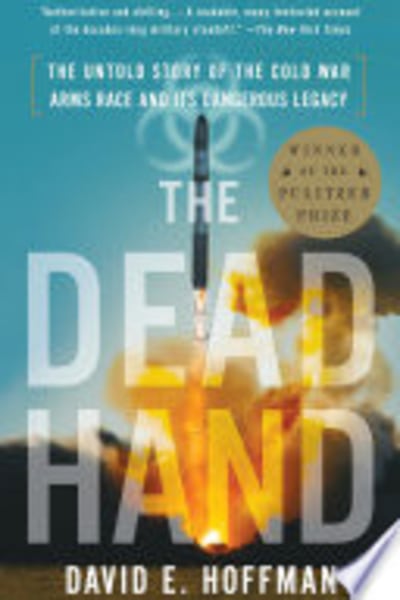
David E. Hoffman structures The Dead Hand around the Cold War’s “last chapters” logic: how crises, misread signals, and secret decision systems stacked the odds toward catastrophe even after détente rhetoric cooled. Early on, Hoffman lays out the Soviet ambition for an automatic retaliatory strike—what the book frames as the “Dead Hand” concept—and then tracks how that idea interacted with U.S. fears about vulnerability, especially as Reagan pursued space-based missile defenses. The book’s engine is not just hardware; it’s human incentives. Hoffman repeatedly returns to internal Soviet debates inside Kremlin circles and to U.S. intelligence and policy maneuvering, showing how each side treated the other’s moves as proof of worst-case intent.
A concrete example is Hoffman’s focus on the narrowing decision windows during late-1980s negotiations: he shows how Gorbachev could want arms control while officials, planners, and commanders worried that concessions would invite coercion. Another is Hoffman’s attention to the “race against time” after the Soviet collapse—how nuclear and biological weapons security became a new kind of arms race, driven by fear of terrorists and rogue states rather than superpower parity. Hoffman also uses specific sources—memoirs, interviews, and archival material—to map who pushed what, when, and why, giving the arms race an ugly sense of inevitability without pretending every choice was deterministic.
Limitation: Hoffman writes with the density of a research-driven history, so if you want a clean, scene-by-scene thriller with minimal policy context, you may find the middle chapters heavy and occasionally repetitive.
Key Takeaways from The Dead Hand
-
1
Dead Hand concept: an automated retaliatory strike idea that turns “communication failure” into “launch authorization,” raising crisis stakes.
-
2
Reagan space-based missile defenses: Hoffman treats them as political leverage plus technical risk, not a simple defensive shield.
-
3
Kremlin decision circles: Hoffman shows policy outcomes shaped by internal rivalries, not only by top leaders’ intentions.
-
4
Late-1980s negotiation windows: arms control progress depends on timing, secrecy, and command-control fears that can’t be wished away.
-
5
Post-Soviet race against time: after 1991, the threat shifts to loose warheads and biological capability, changing the U.S. mission.
Who Should Read This
Someone who’s followed Cold War headlines but never understood how “automatic” systems and command-control fears could survive diplomacy. If you’re trying to connect modern nuclear anxiety to the actual late-Cold-War decisions Hoffman reconstructs, this will click.
Who Shouldn't Read This
If you want a fast narrative with minimal jargon, Hoffman’s policy and source density will slow you down, especially in the middle. If you’re expecting a tidy moral about nuclear disarmament, Hoffman instead emphasizes messy incentives and institutional inertia.
Editor's Verdict
The single best thing The Dead Hand does is track how the Dead Hand idea and Reagan-era defenses fed each other through misperception and internal planning, culminating in late-1980s negotiation pressure. The real limitation is that Hoffman leans hard on archival detail and policy context, so readers who want a lean story may feel bogged down. Anyone who’s mid-career questioning the credibility of arms-control narratives will hit hardest when the book shifts from superpower rivalry to the post-1991 security scramble.
Ready to read The Dead Hand?
Get your copy on Amazon today.
The Dead Hand — Frequently Asked Questions
About David E. Hoffman
David E. Hoffman is an American journalist and author who has reported on national security, foreign policy, and intelligence for decades. He has covered major U.S. and international security issues, including nuclear policy and covert operations, drawing on extensive interviews and documentary research. Hoffman is credible on nuclear command-and-control and related policy questions because of his long reporting focus on intelligence and security matters. His other notable works include The Last King of America and The Billion Dollar Spy.