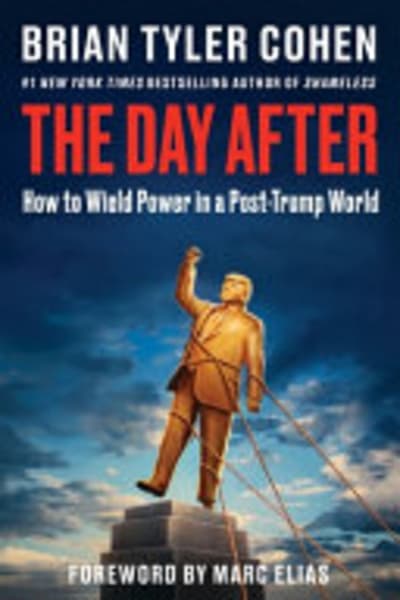
The Day After — Book Summary & Review
Last updated:
The Day After Summary
In The Day After, Brian Tyler Cohen builds a clear two-part framework: first diagnose how Republicans abused power (and Democrats sat on theirs), then argue for a progressive “power-with-purpose” agenda that can survive a post-Trump backlash. Cohen’s structure is argumentative rather than narrative, but it’s organized like a strategy memo—he keeps returning to the same core claim: democracy doesn’t “heal” itself; it’s protected by people willing to use institutional leverage. One concrete example he leans on is the long arc of norm-breaking—how early concessions and procedural games trained the system to accept escalation. He also spends time on the contrast between holding power and exercising it, treating Democratic restraint as a recurring self-inflicted wound.
A recurring section that anchors the book is Cohen’s insistence on turning outrage into operational politics: progressives should prepare policy, staffing, and legal tactics before Election Day, not after. He names the problem of “restoration” thinking—trying to return to the pre-Trump status quo as if it were stable—and argues that restoration without enforcement is a fantasy. Cohen’s most useful move is how he frames the election as a fork in the road: if progressives win a free and fair election, they should treat governance like a responsibility to defend democratic capacity, not a chance to win applause.
Honest limitation: this isn’t a deeply reported, case-by-case historical study. Cohen is persuasive, but he often sketches patterns at the level of political dynamics rather than delivering the granular evidence you’d expect from a top-tier academic history. If you want footnoted specifics or regional policy walkthroughs, Cohen may leave you wanting more detail than he provides.
Key Takeaways from The Day After
-
1
Power-with-purpose: Cohen’s framework for using institutional leverage to defend democracy, not merely campaign for it.
-
2
Restoration thinking: The habit of aiming to return to the pre-Trump baseline, which Cohen argues is strategically naive.
-
3
Norm-breaking escalation: Cohen traces how small concessions train opponents to escalate, making restraint a recurring cost.
-
4
Operational politics: His insistence that staffing, legal strategy, and policy readiness should start before Election Day.
-
5
Post-Trump capacity: Cohen treats democratic survival as an active project requiring governance choices, not vibes.
Who Should Read This
If you’re exhausted by politics that swings between moral outrage and zero follow-through, you’ll feel seen by Cohen’s focus on power. Someone who’s planning to volunteer, organize, or vote with an eye toward governing—not just resisting—will likely get the most out of Cohen’s prescriptions.
Who Shouldn't Read This
If you want a tightly sourced, chapter-by-chapter historical account with lots of documents and data, Cohen’s approach will frustrate you. If you’re looking for practical messaging scripts or day-to-day organizing tips, this book’s emphasis on political strategy over tactics may feel too abstract.
Editor's Verdict
The single best thing The Day After does is push Cohen’s restoration-versus-defense argument into an actionable political mindset, especially in his repeated contrast between exercising power and performing it. The real limitation is that Cohen doesn’t supply the level of detailed evidence and casework many readers expect from a book making sweeping historical claims. This hits hardest for anyone mid-career who’s watched their idealism drain out after elections—then wonders why the system keeps changing while their side keeps hesitating.
Ready to read The Day After?
Get your copy on Amazon today.
The Day After — Frequently Asked Questions
About Brian Tyler Cohen
Brian Tyler Cohen is a U.S. political commentator and author. He gained prominence through his work explaining American politics on social media and in public appearances, focusing on Congress, elections, and policy. His credibility on contemporary political events comes from his consistent coverage and analysis of U.S. political developments. He is the author of The Day After and has also written other political commentary books, including The Resistance Manifesto.