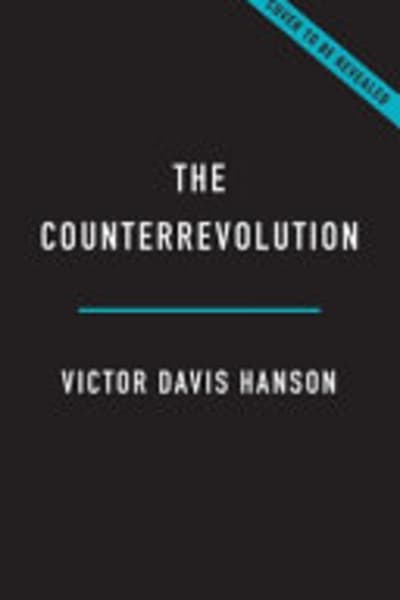
The Counterrevolution — Book Summary & Review
Last updated:
The Counterrevolution Summary
In The Counterrevolution, Victor Davis Hanson organizes his argument around the idea that Trump’s legal and social “wilderness” years forged a new, retaliatory governing style, and he returns to that framework again and again as he tracks Trump’s comeback arc. Hanson’s core claim is blunt: the second term’s aggressiveness wasn’t an accident of personality or messaging; it was the political education of being targeted, humiliated, and pressured—followed by a willingness to exploit opponent overreach. He frames the story as a contest between two Americas: one that treats Trump as an aberration to be managed, and another that treats his persecution as proof of a wider system that deserves confrontation. The book’s structure is essentially retrospective causation—Hanson repeatedly pauses to explain how a prior legal fight, media narrative, or institutional response shaped the next policy posture.
A concrete example is Hanson’s attention to the “counterrevolution” logic itself: he argues that Trump’s opponents tried to neutralize him through prosecutions and cultural shaming, then misread the result. Instead of ending Trump, those moves hardened loyalty, produced fundraising and organization, and gave Trump a ready-made narrative for reshaping political and cultural institutions in his second term. Hanson also spends time on what he calls tactical errors—overreaches that, in his telling, made the establishment look vindictive and incompetent at the same time.
Honest limitation: this is less a neutral chronology than a thesis-driven interpretation. Hanson doesn’t meaningfully entertain alternative readings of Trump’s comeback, and readers who want balanced evidence across multiple schools of thought may feel the argument is one-directional.
Key Takeaways from The Counterrevolution
-
1
Counterrevolution: Hanson uses the term to describe how backlash against Trump allegedly produces institutional power for him.
-
2
Legal and social wilderness: He argues years of prosecution and ridicule become training for sharper, more retaliatory governance.
-
3
Opponent tactical errors: Hanson claims establishment overreach converts critics into recruitment material and strengthens Trump’s base.
-
4
Second-term agenda logic: He treats policy aggressiveness as downstream from earlier conflicts, not from new ideology alone.
-
5
Media narrative feedback: Hanson suggests press and social-media pressure shape strategy by forcing Trump to frame enemies.
Who Should Read This
If you’re exhausted by political punditry that talks in slogans but never explains cause-and-effect, this is for you. Someone who wants a single, forceful storyline about Trump’s comeback—especially the role of legal conflict—will likely find it satisfying.
Who Shouldn't Read This
If you need careful, multi-perspective sourcing and a willingness to weigh competing interpretations, Hanson will frustrate you. If you dislike polemical political writing that reads like a brief for one side, you’ll probably feel the book is too committed to its own thesis.
Editor's Verdict
The best part of The Counterrevolution is Hanson’s sustained causal framing—his insistence that Trump’s “wilderness” years shaped the second-term posture shows up in multiple sections and keeps the book from feeling like random commentary. The real limitation is that Hanson offers interpretation first and alternative explanations rarely enough, so the evidentiary balance will feel thin. If you’re someone early in a deep political re-read—say, after you’ve watched another Trump-related cycle and want a coherent theory of what happened—this hits hardest.
Ready to read The Counterrevolution?
Get your copy on Amazon today.
The Counterrevolution — Frequently Asked Questions
About Victor Davis Hanson
Victor Davis Hanson is an American classicist and historian. He taught classics and history at California State University, Fresno, and is known for writing on military history and the relationship between ancient and modern warfare. He is credible on topics of political violence and cultural conflict through his academic background and extensive research and commentary on war and society. Notable works include Carnage and Culture and The Western Way of War.