The Age of Reform — Book Summary & Review
Last updated:
The Age of Reform Summary
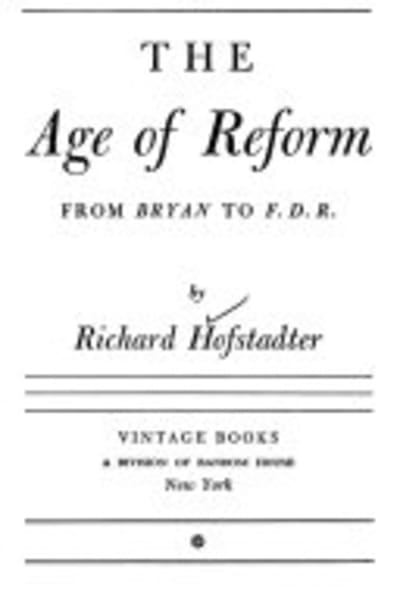
In The Age of Reform, Richard Hofstadter organizes the story into three arcs—Populism (1890s), Progressivism (c. 1900–1914), and the New Deal (1930s)—and then keeps asking what these reforms did to American political thinking. Hofstadter’s core framework is that “reform” is never purely moral or administrative; it’s an ideology with techniques, constituencies, and blind spots. In the Populist portion, he treats the agrarian uprising as more than local grievance, stressing how it becomes a national style of argument about power, corruption, and economic justice. In the Progressive section, his attention shifts to reformers’ methods—investigations, commissions, expert administration, and a belief that the right leadership could rationalize capitalism without overthrowing the system. The New Deal chapter work then shows how those earlier habits of mind reappear under different conditions: reform becomes coalition-building, state expansion, and a new language for managing the Great Depression.
What I appreciated most is how Hofstadter links intellectual aims to political effects: he doesn’t let you pretend reformers were merely sincere. He keeps returning to the tension between democratic agitation and elite management, and he argues that reform movements often channel popular anger into projects that preserve key structures while promising renewal. Still, Hofstadter’s method has a cost. He’s more interested in leading reformers’ ideas than in the lived experience of ordinary voters, workers, and farmers, so readers expecting vivid social history or grassroots detail may feel shortchanged. If you want the story of how reform actually landed in communities, you’ll need to pair Hofstadter with something more textured from the ground up.
Key Takeaways from The Age of Reform
-
1
Populism (1890s) frames economic rage as national ideology, turning local agrarian grievances into arguments about power and corruption.
-
2
Progressivism (1900–1914) treats expert administration as reform’s tool, aiming to rationalize capitalism without fully breaking it.
-
3
New Deal (1930s) reframes earlier reform habits into state expansion, coalition politics, and new rules for managing crisis.
-
4
Hofstadter’s focus on reformers’ ideas shows ideology at work, not just policy outcomes, shaping what reformers consider “reasonable.”
-
5
The democratic-versus-elite tension Hofstadter tracks explains why reforms can feel both empowering and controlling.
Who Should Read This
Someone who’s trying to understand why American reform politics swings between mass anger and elite management will get a lot from Hofstadter. If you’re studying U.S. political history for a class or writing project and need a clear intellectual through-line from 1890 to 1940, this helps.
Who Shouldn't Read This
If you want narrative history driven by scenes, characters, and grassroots detail, Hofstadter’s emphasis on leading reformers’ ideas will frustrate you. If you’re looking for a modern, easy-to-skim political handbook-style synthesis, the argument-heavy structure may feel dense and old-school.
Editor's Verdict
The single best thing Hofstadter does is connect the three reform waves into one argument about ideology and technique, especially through his treatment of Progressivism’s expert-administration approach. The real limitation is that the book prioritizes elite thinking over everyday lived experience, so it can feel bloodless when you crave human texture. If you’re a mid-career history reader tired of vague “good intentions” summaries of reform, this hits hardest when you’re trying to explain how political language turns into institutions.
Ready to read The Age of Reform?
Get your copy on Amazon today.
The Age of Reform — Frequently Asked Questions
About Richard Hofstadter
Richard Hofstadter (1915–1970) was an American historian and professor at Columbia University. He studied at the University of Wisconsin–Madison and Harvard and became known for analyzing U.S. political thought and intellectual history. He is credible on the topic of American reform-era politics because he wrote extensively on nineteenth- and early twentieth-century political movements using primary sources and scholarly synthesis. Other notable works include Anti-Intellectualism in American Life and The American Political Tradition.