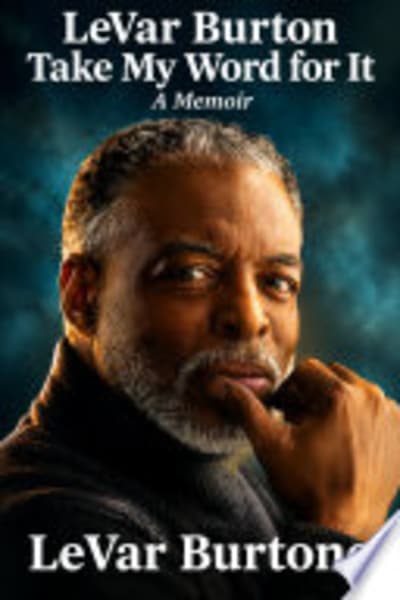
Take My Word for It — Book Summary & Review
by LeVar Burton and Tracey Michae'l Lewis-Giggetts
Last updated:
Take My Word for It Summary
In Take My Word for It, LeVar Burton organizes his memoir around the idea that story is both armor and obligation, then tests that claim by moving from childhood Civil Rights memories to the adult responsibilities of fame. Burton’s earliest chapters lean hard on his mother’s influence and on how segregation-era life taught him what safety costs—before he ever had the language for “liberation and equity.” He doesn’t treat his acting career as a clean escape; he frames it as a double door, opening toward transformation while also letting him avoid certain rooms in his past. When he writes about being Kunta Kinte and later stepping into Geordi La Forge, the book keeps returning to one uncomfortable question: what do you owe the people who made your survival possible? The memoir’s recurring throughline is literacy work, especially the lived meaning behind Reading Rainbow—how education can be a family ritual, not a program. Burton also shows the mechanics of being a public figure: parenthood, marriage, and the grind of householder life tugging against the mythology fans build. Tracey Michae'l Lewis-Giggetts helps shape the pacing so the family photos and named relationships feel like evidence, not decoration.
Here’s the limitation: the book is more interested in emotional truth and moral reflection than in step-by-step craft or behind-the-scenes detail about Roots or Star Trek. If you want exhaustive production stories or a tightly argued, policy-heavy manifesto, Burton will frustrate you by staying intimate rather than technical. Still, if you’ve ever wondered whether your talents are a gift or a debt, Take My Word for It lands with unusual steadiness.
Enjoyed this one? Read these next.
Top picks in Non-Fiction, chosen for readers of Take My Word for It.
Sapiens
by Yuval Noah Harari
Check price on Amazon
Educated
by Tara Westover
Check price on Amazon
Becoming
by Michelle Obama
Check price on Amazon
The Wright Brothers
by David McCullough
Check price on AmazonKey Takeaways from Take My Word for It
-
1
Story as obligation: Burton treats storytelling as a responsibility to ancestors, not a career perk, and he measures himself by that standard.
-
2
Kunta Kinte to Geordi La Forge: he contrasts roles to show how the same craft can either heal or help you sidestep painful history.
-
3
Reading Rainbow as family practice: literacy becomes something enacted at home, where attention and empathy are trained, not merely taught.
-
4
Civil Rights childhood memories: Burton links early exposure to injustice with later choices, including which fears he lets acting bury.
-
5
Householder life friction: Burton shows how marriage and parenting complicate celebrity purpose, forcing him to confront real-world limits.
Who Should Read This
Someone who’s carrying unresolved family history and keeps trying to outrun it through work will recognize Burton’s pattern immediately. If you’re in a season where you want meaning from your career—especially through education or community—this memoir gives you language for the tug-of-war.
Who Shouldn't Read This
If you came for production gossip or a blow-by-blow account of Roots or Star Trek, Burton gives you less than you want and more emotion than mechanics. If you prefer tightly structured arguments with citations and policy specifics, the book’s reflective, personal mode will feel too soft around the edges.
Editor's Verdict
The best thing Take My Word for It does is connect Reading Rainbow to Burton’s lived theory of story as responsibility, using specific family memories and photos to make it stick. The real limitation is that it avoids detailed behind-the-scenes explanation and doesn’t turn its themes into a rigorous, external argument. This will hit hardest for anyone in mid-career who’s suddenly unsure whether their public identity matches their private values.
Ready to read Take My Word for It?
Get your copy on Amazon today.
Take My Word for It — Frequently Asked Questions
About LeVar Burton and Tracey Michae'l Lewis-Giggetts
LeVar Burton is an American actor, director, and educator known for hosting Reading Rainbow and for his work in television and film. Tracey Michae’l Lewis-Giggetts is an American author and educator who has written and taught about African American history and literature. Together, they are credible voices on the topic of words, language, and meaning because of their long-standing public engagement with reading, storytelling, and education. LeVar Burton also directed and appeared in Roots, and Tracey Lewis-Giggetts wrote The Black Kids’ Book of Famous People.