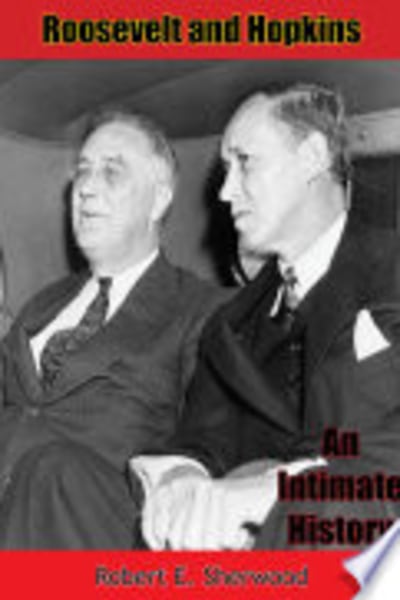
Roosevelt and Hopkins — Book Summary & Review
Last updated:
Roosevelt and Hopkins Summary
In Roosevelt and Hopkins, Robert E. Sherwood builds his account around the way Roosevelt and Hopkins fused personal access with policy leverage, especially through the 1930s fight over New Deal spending for jobs and infrastructure in rural and urban America. Sherwood’s structure keeps returning to a recurring tension: Roosevelt’s domestic industrial priorities versus the political trouble he courts by leaning on powerful Southern Democrats and by managing Vice President Henry Wallace’s increasingly prickly stance toward the New Deal. The book’s most vivid early sections track how Roosevelt and Hopkins tried to “use infrastructure spending” as a practical solvent—reviving towns, farmland, and city life—while simultaneously waging war on the domestic opposition that could stall those programs, namely southern Dems resistant to certain terms and northern Republicans suspicious of the costs.
Sherwood then pivots to the wartime partnership, where Hopkins becomes Roosevelt’s private attaché to Britain and Russia, tasked with smoothing relations that were perpetually on the verge of rupture—particularly the Churchill–Stalin problem, with every meeting carrying subtext about postwar Europe. Sherwood’s handling of this is detailed enough that you feel the friction in the room rather than treating diplomacy as a clean sequence of agreements. By the time you reach the later Roosevelt-centered portions, the book’s political realism is harder and less flattering: Roosevelt’s instinct for compromise keeps colliding with the values Wallace and other progressives wanted protected.
Limitation: Sherwood does not write a balanced “both sides” moral portrait of the men; if you want a strictly neutral overview of Allied diplomacy or a narrowly focused military strategy history, you’ll find the emphasis on political maneuvering and personal access frustrating rather than satisfying.
Key Takeaways from Roosevelt and Hopkins
-
1
Hopkins–Roosevelt access: Sherwood shows how private channels shaped public policy, turning information and influence into leverage during crises.
-
2
Infrastructure spending politics: The book treats roads, towns, and farmland investment as a weapon against obstruction, not mere economic relief.
-
3
Warfare diplomacy via attaché work: Hopkins’ role reframes wartime “strategy” as constant relationship management with Britain and Russia.
-
4
Churchill–Stalin mitigation: Sherwood tracks how friction with Stalin shaped meeting goals, timelines, and what each side could plausibly concede.
-
5
Wallace vs southern power brokers: Sherwood highlights Roosevelt’s domestic balancing act, where progressive ideals collide with entrenched regional interests.
Who Should Read This
Someone who keeps getting stuck on modern political biographies that skim motives and then jump to outcomes will like how Sherwood lingers on the mechanics of influence. If you’re trying to understand how wartime diplomacy grows out of domestic power fights, this book will feel like the missing link.
Who Shouldn't Read This
If you want a clean, chronological war narrative with minimal politics, Sherwood’s constant focus on domestic factions—Roosevelt, Wallace, and the southern power brokers—will wear you down. If you dislike long, dense biographies from the mid-20th century, the ~979-page sprawl will feel like punishment rather than context.
Editor's Verdict
The single best thing Sherwood does is make the Hopkins attaché work feel operational—especially in the Britain and Russia diplomacy sections where Churchill–Stalin tensions drive the real decisions. The real limitation is that the book prioritizes political maneuvering and personal access over a comprehensive, balanced account of Allied negotiations and their competing perspectives. This will hit hardest for anyone mid-career who’s tired of abstract “leadership” talk and wants to see how power actually gets built, negotiated, and sometimes compromised.
Ready to read Roosevelt and Hopkins?
Get your copy on Amazon today.
Roosevelt and Hopkins — Frequently Asked Questions
About Robert E. Sherwood
Robert E. Sherwood (1896–1955) was an American journalist, playwright, and biographer who worked as a foreign correspondent and press aide. He became closely involved with Franklin D. Roosevelt’s administration and later wrote extensively about Roosevelt and World War II-era diplomacy. His proximity to primary sources and his journalistic career make him credible on Roosevelt and Harry Hopkins. Other notable works include Roosevelt and Hopkins (1939) and Roosevelt’s Foreign Policy (1944).