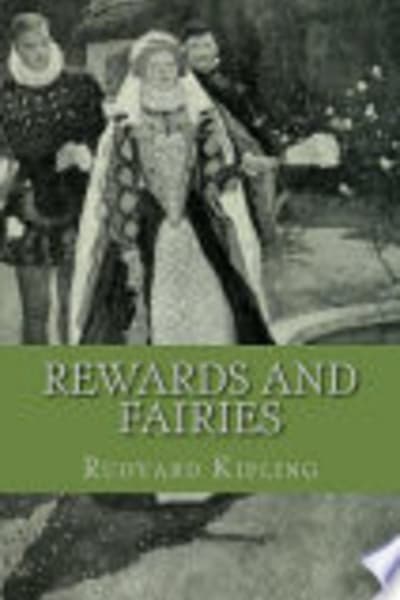
Rewards and Fairies — Book Summary & Review
Last updated:
Public domain via Project Gutenberg — free and legal.
Rewards and Fairies Summary
In Rewards and Fairies, Kipling uses a loose frame—children accidentally stepping into a fairy ring—to let history show up as lived experience, not textbook background. Una and Dan, playing around Sussex with the confidence of kids who think Shakespeare is mostly costumes, summon Puck on Midsummer’s Eve, and Kipling immediately turns that mistake into a recurring mechanism: each encounter with the fairy world refracts an episode of English memory through story, rhyme, and mood. What surprised me most is how carefully Kipling varies the emotional temperature. The tales aren’t all “spooky”; they’re often sly, even domestic, until the rug shifts and you feel the cost of time—loss, breakdown, and then that tentative sense of repair that Kipling keeps circling.
Kipling also makes his historical imagination feel physical. Instead of dumping facts, he stages them: you watch how people behave under pressure, how reputations harden, how a community decides what to believe. One concrete example is the way the book leans on fairy-court logic—rules you only learn by being inside the rules—so that “history” arrives as consequence. You don’t read about old England; you catch it like a scent.
Still, Kipling’s approach has a real limitation: the stories sometimes assume you’ll tolerate a certain archaic, theatrical tone, and they don’t slow down to modernly explain their references. If you’re hunting for tight plot momentum or psychological realism, you may find yourself drifting between episodes rather than being pulled forward. I finished the collection, but I can see why Kipling’s style—especially in the fairy-ring transitions—will frustrate readers who want clearer connective tissue.
Even so, Kipling rewards patience, and Rewards and Fairies keeps earning its place beside Puck of Pook’s Hill as a companion piece: the same imaginative engine, revised toward a darker, more elegiac kind of wonder.
Enjoyed this one? Read these next.
Top picks in Short Stories, chosen for readers of Rewards and Fairies.
Child Christopher and Goldilind the Fair
by William Morris
Check price on Amazon
The Story of Doctor Dolittle
by Hugh Lofting
Check price on Amazon
Collected Stories
by Katherine Anne Porter
Check price on Amazon
The Collected Stories
by Jean Stafford
Check price on AmazonKey Takeaways from Rewards and Fairies
-
1
Fairy ring framing: The narrative treats English history as something you “enter,” not something you study, through Puck’s rules.
-
2
Midsummer’s Eve timing: Kipling uses the seasonal holiday as a structural switch that changes tone from play to consequence.
-
3
Puck as mediator: Puck functions like a mischievous narrator who filters events, so moral meaning arrives indirectly.
-
4
English historical imagination: Kipling emphasizes community behavior and belief under stress, not documentary accuracy or chronology.
-
5
Loss-and-healing rhythm: Stories often end with repair that feels partial, making the wonder carry emotional weight.
Who Should Read This
Someone who loves English folklore but secretly wants history to feel emotional—like a family story you can’t quite verify—should read Rewards and Fairies. If you’re burned out on modern realism and crave fable logic with melancholy underneath, Kipling will likely land for you.
Who Shouldn't Read This
If you need relentless plot propulsion and clear episode-to-episode bridges, you’ll likely get annoyed by Kipling’s episodic fairy-ring transitions. If you dislike archaic, theatrical diction and don’t enjoy poetry-adjacent storytelling, Kipling’s voice may feel like an obstacle rather than a charm.
Editor's Verdict
The single best thing Rewards and Fairies does is turn Kipling’s fairy-ring mechanism into a practical way to experience English history as mood, not lecture. The real limitation is that the collection is episodic and often reference-heavy, so readers wanting connective tissue or modern clarity may feel stranded. This hits hardest for anyone who’s spent a year chasing “serious” literature and needs permission to feel wonder with their melancholy.
Ready to read Rewards and Fairies?
Get your copy on Amazon today.
Rewards and Fairies — Frequently Asked Questions
About Rudyard Kipling
Rudyard Kipling (1865–1936) was an English writer born in Bombay (now Mumbai) to a British family. He worked as a journalist and published widely in Britain and abroad, giving him direct experience with British imperial life and folklore. He is credible on “Rewards and Fairies” because he wrote and edited children’s stories and fairy tales, drawing on oral traditions and Victorian storytelling. Other notable works include The Jungle Book and Kim.