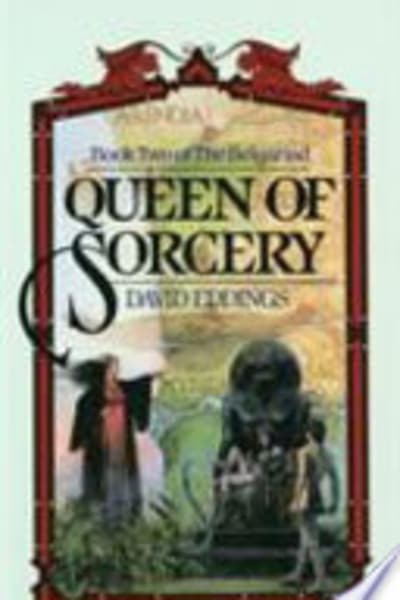
Queen of Sorcery — Book Summary & Review
Last updated:
Queen of Sorcery Summary
In Queen of Sorcery, the second Belgariad book, David Eddings doubles down on the prophecy-and-quest machinery by making Garion’s “growing power” feel less like destiny and more like an unwanted job he keeps getting assigned. Early on, Belgarath and Polgara treat the campaign for the Orb of Aldur like a clockwork operation, while Garion—still a farm boy in his head—keeps reacting as if sorcery is an illness he can’t consent to. Eddings structures the plot around travel episodes and escalating magical incidents, so the tension isn’t only “will they win,” but “when will Garion stop pretending he’s ordinary?” A concrete example: the book leans hard into the Belgariad’s recurring pattern of peril in strange places, then a sudden lesson delivered in Belgarath’s blunt, mythic voice. Another example is how the narrative keeps re-framing “help” as control—people around Garion steer him toward prophecy goals while he experiences the magic as something happening to him, not something he chooses. Eddings also refreshes the gods-and-kings backdrop by showing how divine politics trickle down into human decisions, which makes Torak’s long game feel less like a distant villain and more like a pressure in every room. The limitation: this volume doesn’t meaningfully deepen the world through new cultures the way some modern fantasy does; it mostly advances the larger machine of the Belgariad, so if you want lyrical prose or morally messy characterization, you’ll likely find the tone repetitive and the character arcs comfortably predictable.
Enjoyed this one? Read these next.
Top picks in Magic, chosen for readers of Queen of Sorcery.

The Way of Kings
by Brandon Sanderson
Check price on Amazon
The Night Circus
by Erin Morgenstern
Check price on Amazon
Harry Potter and the Philosopher's Stone
by J.K. Rowling
Check price on Amazon
The Tales of Beedle the Bard
by J.K. Rowling
Check price on AmazonKey Takeaways from Queen of Sorcery
-
1
Orb of Aldur: The story treats the Orb as more than an object—its presence controls timing, alliances, and who gets to call themselves “chosen.”
-
2
Belgarath’s lessons: Eddings uses Belgarath’s blunt instruction to translate prophecy into actionable steps, even when Garion hates the result.
-
3
Polgara’s authority: Polgara functions as the political and magical compass, turning “female sorceress” into a practical decision-maker.
-
4
Torak’s long game: Torak isn’t just a threat; his influence shows up as patterns—misdirection, pressure, and people acting out divine agendas.
-
5
Garion’s reluctant power: Garion’s magic grows like a burden, making the central question “how do you live with destiny?” rather than “how do you cast spells?”
Who Should Read This
If you’re in the mood for a prophecy-driven fantasy series where each leg of the journey adds another forced step into fate, you’ll probably enjoy Queen of Sorcery. Someone who likes clear roles—mentor, manipulator, reluctant chosen one—will find the structure satisfying even when Garion resists it.
Who Shouldn't Read This
If you’re craving morally complex characters, Queen of Sorcery will frustrate you with its broadly legible motivations and steady momentum. If you can’t tolerate repetition in travel/peril/lesson cycles, Eddings’s quest rhythm will feel like the same drumbeat with new scenery.
Editor's Verdict
The best thing Queen of Sorcery does is make prophecy feel like pressure through Garion’s reluctant power, especially in the way Belgarath and Polgara keep converting “fate” into immediate action. The limitation is that the book advances the Belgariad’s plot machine more than it deepens the world in fresh, surprising ways. This will hit hardest for someone who’s already committed to the Belgariad and wants the next installment of the Orb of Aldur storyline without demanding stylistic reinvention from Eddings.
Ready to read Queen of Sorcery?
Get your copy on Amazon today.
Queen of Sorcery — Frequently Asked Questions
About David Eddings
David Eddings (1931–2009) was an American author known for fantasy novels. He and his wife, Leigh Eddings, co-wrote many works, including the Belgariad and Malloreon series. Their long-running fantasy career and extensive publication record make them credible writers on sorcery and epic worldbuilding. David Eddings also co-authored The Elenium and The Tamuli series, and Queen of Sorcery is part of their broader fantasy bibliography.