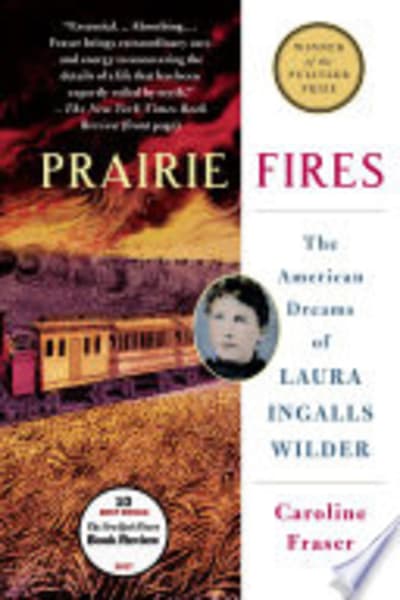
Prairie Fires — Book Summary & Review
Last updated:
Prairie Fires Summary
Prairie Fires is built around Caroline Fraser’s central method: she treats Laura Ingalls Wilder’s fame as a public story and then painstakingly cross-checks it against the private paperwork—Rose’s letters, Wilder’s manuscripts, and financial records—to show where the myth hardens and where it wobbles. Fraser also organizes the book in a way that keeps tugging at a single question: what did Wilder know, when did she know it, and how did she choose what to publish. One recurring anchor is the “Little House” books’ crafted voice—Fraser repeatedly pauses on the gap between lived experience and the polished narrative contract Wilder offered her readers. The book’s most vivid concrete example comes from Fraser’s tracing of Rose Wilder Lane’s role, especially how Rose could function like an editor, strategist, and gatekeeper while still being written out or softened in the public-facing family script.
Fraser’s research is heavy and often bracing. She uses archival material to track how the Wilder family negotiated money, authorship, and reputation, and she does not let readers forget that Wilder’s “pioneer” brand was also a business. The result is not a simple takedown; it’s a portrait of authorship as power. Fraser also makes a strong case that Rose’s ambitions and Wilder’s instincts were intertwined, which reframes the emotional center of the story.
Honest limitation: Prairie Fires doesn’t read like a straight, scene-by-scene biography of Laura’s entire life. If you want a traditional chronological narrative with minimal argument, Fraser’s interpretive detours—however well-supported—will feel demanding and sometimes slow.
Key Takeaways from Prairie Fires
-
1
Laura Ingalls Wilder’s “public story” vs private records: Fraser compares published scenes to letters and manuscripts to expose editing choices.
-
2
Rose Wilder Lane’s authorship influence: Rose functions as strategist and gatekeeper, shaping what becomes “family history” on the page.
-
3
Financial records as narrative evidence: Fraser treats money trails as proof of motives, not background trivia.
-
4
The “Little House” voice as a contract: Fraser argues the writing sells a promise to readers, even when reality was messier.
-
5
Archival cross-checking: Fraser’s method is cumulative—each document tightens or complicates the previous version of events.
Who Should Read This
Someone who’s read the Little House books and feels uneasy about how “true” they seem will find Fraser’s argument clarifying. If you’re stuck between nostalgia and skepticism—wanting evidence without losing the human story—Prairie Fires will give you both, and then some.
Who Shouldn't Read This
If you mainly want a warm, linear biography with fewer interpretive interruptions, Fraser’s argumentative structure will frustrate you. If you’re allergic to dense archival detail and long stretches of argumentation, Prairie Fires will feel like work more than reading pleasure.
Editor's Verdict
Fraser’s best move is her use of Rose Wilder Lane’s involvement to reframe the “Little House” books as authored outcomes, not automatic memoir, with specific attention to Wilder’s crafted narrative voice. The limitation is that the book’s heavy research and interpretive sidetracks don’t always keep a traditional chronological pace, so casual readers may lose patience. This hits hardest for anyone who grew up on the series and is now trying to decide what to believe as an adult.
Ready to read Prairie Fires?
Get your copy on Amazon today.
Prairie Fires — Frequently Asked Questions
About Caroline Fraser
Caroline Fraser is an American historian and author specializing in the history of the American Midwest and the Great Plains. She earned a PhD in history and has published extensively on the region’s social and political movements, including the 19th- and early 20th-century settlement and reform eras. Her expertise and research background make her credible for writing about the origins of the prairie populist movement in Prairie Fires. Other notable works include Prairie Fires: The American Dreams of Laura Ingalls Wilder and the Prairie Populists.