Origins of the Fifth Amendment — Book Summary & Review
Last updated:
Origins of the Fifth Amendment Summary
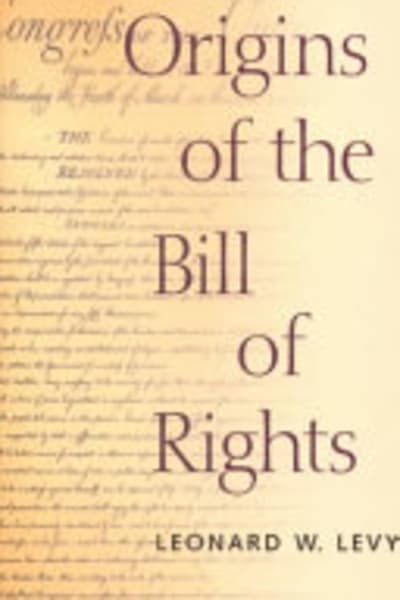
Levy organizes Origins of the Fifth Amendment around the specific problem of how “self-incrimination” and related protections emerged from the Bill of Rights’ drafting and political fights, rather than from a single philosophical spark. He repeatedly returns to Madison’s maneuvering—who wanted certain safeguards to be explicit, who feared overreach, and who knew rhetoric could do as much work as legal text. A useful early framework in the book is Levy’s insistence on tracing the Fifth Amendment’s ideas through the surrounding Bill of Rights history, including debates about warrants, criminal procedure, and the meaning of “liberty” as lawmakers used it in public. One concrete example: Levy’s discussion of the “silent” or compelled testimony question shows how prosecutors’ practices and colonial precedents shaped what legislators thought they were actually authorizing. He also highlights the political motivations behind the final wording, arguing that Madison and allies were managing both principles and party optics.
Levy’s approach becomes clearest in the way he handles the Fifth Amendment’s origins as a chain of translation—legal practice gets reframed as constitutional principle, then packed into language that could survive argument in multiple states and factions. He uses courtroom and legislative context to show why the right against self-incrimination landed where it did, and why the amendment’s protections were not simply “there” waiting to be discovered. My main limitation with Levy is that he mostly stays at the level of constitutional history and the drafting record; if you want a modern, practical explanation of how courts apply the Fifth Amendment today, you’ll have to supply that yourself.
Even so, Levy’s method—patient, source-driven, and often skeptical of easy moral narratives—makes Origins of the Fifth Amendment feel like reading history with the legal scaffolding still attached. If you’re willing to follow Levy through the behind-the-scenes manoeuvres, you’ll come away with a sharper sense of what Madison risked, what was bargained for, and what the Fifth Amendment was designed to prevent.
Key Takeaways from Origins of the Fifth Amendment
-
1
Self-incrimination origin tracking: Levy traces a legal idea through colonial practice and drafting debates, not from abstract theory alone.
-
2
Madison’s rhetorical management: Levy treats speeches and public framing as political tools shaping what constitutional text could safely say.
-
3
Bill of Rights translation: Levy argues lawmakers converted courtroom realities into constitutional principles through wording compromises.
-
4
Colonial procedure pressure: Levy uses prior practices to explain why legislators focused on compelled testimony and related safeguards.
-
5
Constitutional intent skepticism: Levy repeatedly questions later “clean” narratives by comparing drafts, motives, and surrounding debates.
Who Should Read This
If you’re studying constitutional history for class or writing and you keep running into vague claims about “why the Fifth exists,” this will give you a sturdier chain of evidence. Someone who suspects Madison’s role was more strategic than saintly will enjoy watching Levy follow the drafting logic closely.
Who Shouldn't Read This
If you want a modern, courtroom-focused explanation of Fifth Amendment doctrine, Levy’s history-first approach will feel like detouring. If you dislike dense source work and long legislative context, you’ll likely find Levy’s pacing slow and occasionally academic.
Editor's Verdict
The single best thing Levy does is connect the Fifth Amendment’s meaning to the Bill of Rights’ drafting politics, especially in his sustained attention to Madison’s maneuvering. The real limitation is that Levy largely ignores contemporary case law and application, so readers seeking practical doctrine won’t get what they came for. This book hits hardest for law-student or policy-curious readers who are stuck rewriting the same generic paragraph about self-incrimination and need a more grounded origin story.
Ready to read Origins of the Fifth Amendment?
Get your copy on Amazon today.
Origins of the Fifth Amendment — Frequently Asked Questions
About Leonard W. Levy
Leonard W. Levy (1923–2003) was an American legal historian and professor who specialized in constitutional law and the history of the Bill of Rights. He was credible on the Fifth Amendment because he conducted extensive scholarship on American constitutional development and judicial practice. Levy’s works include Origins of the Fifth Amendment (1968) and Legacy of Suppression: Freedom of Speech and Press in Early American History (1960).