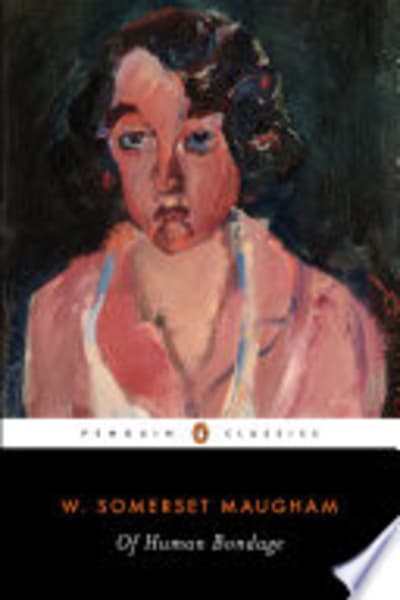
Of Human Bondage — Book Summary & Review
by W. Somerset (William Somerset) Maugham
Last updated:
Public domain via Project Gutenberg — free and legal.
Of Human Bondage Summary
In Of Human Bondage, Maugham builds its emotional engine around Philip Carey’s compulsions—especially the way Mildred becomes both an obsession and a self-justifying story he keeps rewriting. The novel is structured as a long apprenticeship in feeling: Philip’s clubfoot and orphanhood set the tone, but Maugham’s real subject is how a person manufactures meaning when life won’t cooperate. After Philip leaves home, he tries on careers like coats—first art in Paris, then medicine back in London—and every shift is less about vocation than about escaping the next version of himself. The Mildred plot is where the book’s temperature spikes: her androgynous, magnetic presence isn’t just “romance,” it’s a mechanism for Philip’s self-hatred, his fantasies of freedom, and his willingness to confuse pain for choice. Maugham makes this brutally clear in scenes where Philip insists he can manage the relationship through effort and insight, then immediately proves he can’t. Even when Philip is studying, working, or attempting stability, Maugham keeps dragging him back to the same core pattern—desire that pretends to be destiny. The result is a bildungsroman that doesn’t end with a clean lesson; it ends with a person who has learned the cost of his own longing. One honest limitation: it may frustrate readers who want a tidy moral arc or who dislike novels that linger in psychological self-implication rather than external plot twists. If you’re expecting a modern, minimalist style, Maugham’s early-20th-century narration will feel patient, even when it’s sharp. Still, Of Human Bondage remains hard to shake because Maugham, again and again, shows how Philip’s “freedom” is negotiated inside the cage he keeps building.
Key Takeaways from Of Human Bondage
-
1
Philip Carey’s compulsions: Desire functions like a trap, turning romance into repetitive self-sabotage rather than romance into growth.
-
2
Mildred as mechanism: Mildred isn’t only a person; she’s the story Philip tells to excuse obsession and deny responsibility.
-
3
Bildungsroman as apprenticeship: The “coming of age” arc tracks emotional training—Philip learns patterns, not just facts about life.
-
4
Paris-to-London career shifts: Art and medicine operate as escape routes, and Maugham shows that changing jobs doesn’t change the core hunger.
-
5
Religious guardianship and resentment: Early upbringing supplies the emotional grammar Philip uses later, especially guilt, longing, and the need to be punished.
Who Should Read This
Someone who feels stuck in a repeating relationship pattern—chasing intensity while calling it “truth”—will recognize Philip Carey’s logic fast. If you’re tired of stories that treat desire as character-building and want a novel that treats it as a force with consequences, read Maugham.
Who Shouldn't Read This
If you need a clear moral takeaway and a plot that accelerates toward redemption, Of Human Bondage will likely frustrate you with its slow, self-incriminating focus. If you can’t stand extended interior psychology and early-20th-century narration, Maugham’s pacing may feel like a slog rather than a reward.
Editor's Verdict
The single best thing Of Human Bondage does is make obsession feel mechanical, especially in the Mildred-centered stretch where Philip keeps mistaking suffering for agency. The real limitation is that Maugham offers no satisfying “lesson ending,” so readers seeking closure may feel stalled. This hits hardest for anyone nursing a fresh heartbreak or returning to an old pattern and realizing they still want the same kind of pain.
Ready to read Of Human Bondage?
Get your copy on Amazon today.
Of Human Bondage — Frequently Asked Questions
About W. Somerset (William Somerset) Maugham
W. Somerset Maugham (William Somerset Maugham, 1874–1965) was an English novelist, playwright, and short-story writer. He was educated in England and worked as a doctor before turning to writing, and he drew on his extensive observations of human behavior from travel and professional life. His credibility on human relationships and psychology is reflected in Of Human Bondage (1915), a major novel about desire, dependency, and self-discovery. Other notable works include The Razor’s Edge (1944) and Of Human Bondage’s stage adaptation.