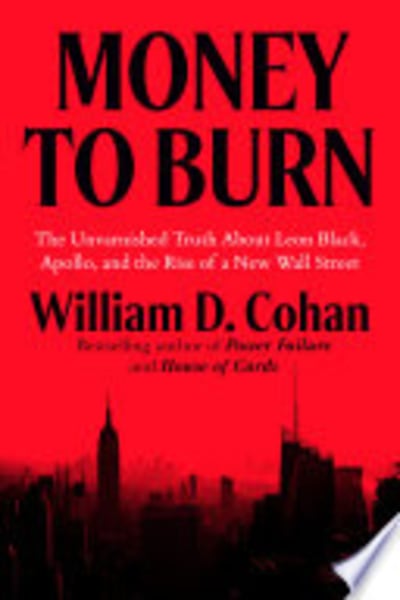
Money to Burn — Book Summary & Review
Last updated:
Money to Burn Summary
Money to Burn is built around Cohan’s recurring contrast between Apollo’s dealmaking mythology and the human wreckage behind it, and the book keeps returning to how “brilliance” can be a euphemism for appetite. Cohan opens by anchoring the reader to Leon Black’s March 22, 2021 resignation, but he refuses to treat it as a sudden moral collapse; instead, he traces Apollo’s rise from the ashes of Drexel Burnham Lambert during the junk bond crisis, then follows how Black’s inherited risk tolerance shaped every later decision. One concrete early engine is Cohan’s reconstruction of how Apollo’s ascent rode Michael Milken’s ecosystem—especially the pipeline of young dealmakers who learned to treat leverage like oxygen. The narrative then tightens around the courtroom and regulatory pressure that shadows these firms, culminating in the public disgrace that finally makes private behavior impossible to separate from public outcomes.
A big chunk of the middle works because Cohan doesn’t only list scandals; he shows the internal power struggles that make them plausible. You see it in the way Apollo insiders talk about loyalty, rivalry, and access, and how Jeffrey Epstein becomes less a single “bad association” than a lens for the firm’s blind spots, social networks, and risk-management theater. Cohan also threads in the parallel of Black’s father—celebrated, then shattered by scandal—so the book’s emotional logic is “pattern recognition,” not just chronology.
The limitation is that Money to Burn is less a guide to how to judge private credit deals and more a forensic drama about people and institutions; if you want a clean investing framework, Cohan doesn’t deliver one, and the density of names and court-adjacent detail can feel relentless.
Key Takeaways from Money to Burn
-
1
Apollo’s “new Wall Street” myth: Cohan shows how private equity branding masked governance gaps and normalized aggressive leverage.
-
2
Drexel Burnham Lambert aftermath: the junk-bond ecosystem becomes Apollo’s training ground, shaping deal instincts for decades.
-
3
Leon Black’s risk inheritance: Cohan frames Black’s father’s scandal as a template for appetite, not a cautionary tale.
-
4
Epstein as a lens: Epstein functions less as trivia and more as evidence of social networks overpowering due diligence.
-
5
Courtroom gravity: Cohan treats lawsuits and regulators as plot mechanics that expose the costs of secrecy.
Who Should Read This
Someone who’s followed Apollo, private credit, or Wall Street scandals and wants the full human and institutional chain of cause-and-effect should read Money to Burn. If you’ve ever wondered why “smart money” keeps producing the same wreckage, Cohan gives you names, motives, and pressure points to connect it.
Who Shouldn't Read This
If you want a crisp investing playbook or a spreadsheet-friendly explanation of private credit risk, Money to Burn will frustrate you because it stays focused on personalities and legal fallout. If you dislike long stretches of insider detail—rivalry, relationships, and procedural conflict—Cohan’s pace may feel crowded and exhausting.
Editor's Verdict
The best thing Money to Burn does is trace Apollo’s rise from the Drexel Burnham Lambert collapse into the Apollo dealmaking culture, making the later disgrace feel engineered rather than accidental. The real limitation is that Cohan offers little practical framework for evaluating modern private credit or translating the story into actionable investing lessons. This hits hardest for anyone mid-career who’s built their identity around “competence” and is now questioning how competence can coexist with moral and legal failure—especially after reading headlines about Leon Black’s resignation.
Ready to read Money to Burn?
Get your copy on Amazon today.
Money to Burn — Frequently Asked Questions
About William D. Cohan
William D. Cohan is an American journalist and author. He has covered finance and markets for decades, including work at major publications such as The New York Times and as a contributor to outlets including Bloomberg and Vanity Fair. His reporting and long-form research on Wall Street and capital markets make him credible to write about how money, dealmaking, and incentives drive financial outcomes. Other notable works include The Last Tycoon: The Secret Life of Lazard Freres and Power Failure: The Rise and Fall of an American Empire.