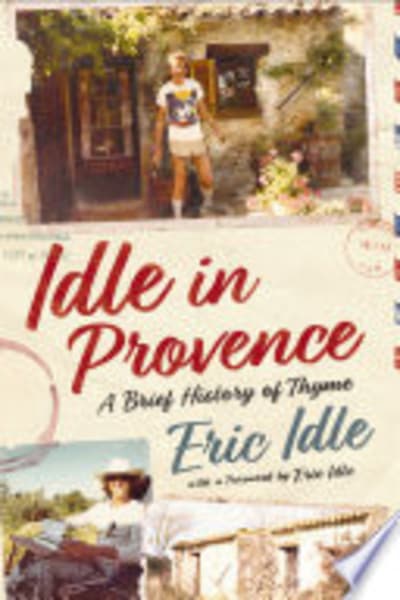
Idle in Provence — Book Summary & Review
by Eric Idle
Last updated:
Idle in Provence Summary
Eric Idle frames Idle in Provence around a setup he repeats like a private mantra: build the “shackeau” with almost no infrastructure and let the project teach you how to live with uncertainty. The book is stitched from memoir and travelogue, but it keeps circling one concrete idea—Idle doesn’t chase serenity by escaping showbiz so much as by doing unglamorous work in harsh conditions, then letting friendships and laughs keep him from turning that work into a bitter hobby. One of the clearest through-lines appears in the early chapters where Idle describes buying the crumbling ruin in 1971 and immediately confronting the basics: no electricity, no water, no road, and no plan that survives contact with reality. He writes about the practical mess—stone dust, improvised solutions, the slow calendar of repairs—and he pairs it with backstage memories of the Monty Python era, so fame feels like weather: loud, temporary, and mostly something you learn to shelter from.
Idle’s best material isn’t the “France is beautiful” stuff; it’s the way he explains his creative routine while rebuilding. He’ll mention hosting friends like George Harrison and Paul Simon, then cut to how those visits changed his writing rhythm—less performance, more conversation, more permission to be ordinary. He also invents a recurring tone for the book: self-mockery as a tool, not a pose. When Idle admits he’s still chasing approval even while pretending he’s above it, the memoir stops being a postcard and becomes a working record of ego management.
Limitation: if you’re expecting a tightly structured travel guide with reliable itineraries, this won’t satisfy you. It’s affectionate and funny, but it’s not organized for tourists who want logistics first, reflection second. Also, some long spans of friend-centric anecdotes may feel indulgent if you only want construction details or only want comedy history.
Key Takeaways from Idle in Provence
-
1
Shackeau: Idle’s term for a ruin-to-home project that forces daily problem-solving without modern comforts.
-
2
1971 Monty Python context: Fame’s early momentum becomes a contrast layer for why Idle chooses slow, physical work.
-
3
No electricity/no water/no road: The book treats infrastructure limits as emotional limits, shaping his patience and humor.
-
4
Revolving-door friends: Harrison, Robin Williams, and Paul Simon function as creative weather, shifting Idle’s writing tempo.
-
5
Idle’s self-deprecation method: He uses embarrassment as a steering wheel, preventing nostalgia from turning into self-pity.
Who Should Read This
Someone who’s burned out on polished success stories and wants a memoir where the “fix” is mud, patience, and human mess. If you’re in a life phase where you’re questioning whether your work still fits you, Idle in Provence offers a lived alternative to reinvention-as-branding.
Who Shouldn't Read This
Someone who wants a clear, chapter-by-chapter travel itinerary will be frustrated by the book’s reflective, anecdotal structure. If you only want comedy history or only want construction details, Idle in Provence will feel uneven because it constantly crosscuts both.
Editor's Verdict
Idle in Provence’s strongest move is the way Eric Idle ties the “shackeau” project to his creative process, using concrete constraints (no electricity, no water) to explain why his friendships and writing changed. The real limitation is that the book leans heavily on celebrity-adjacent anecdotes, so it can feel indulgent when you’re not there for the social circle. This hits hardest for anyone mid-career who has started to suspect their identity is stuck to their old role and needs a slower, dirtier reset.
Ready to read Idle in Provence?
Get your copy on Amazon today.
Idle in Provence — Frequently Asked Questions
About Eric Idle
Eric Idle is a British comedian, actor, and writer, best known as a founding member of the comedy troupe Monty Python. He has written and performed widely in film, television, and stage, including the Monty Python works and later solo projects. Idle is credible on Provence through his authorship of Idle in Provence, which draws on his personal experiences traveling and living there. Other notable works include The Rutles: All You Need Is Cash and The Life of Brian (Monty Python).