Lords of Finance — Book Summary & Review
Last updated:
Lords of Finance Summary
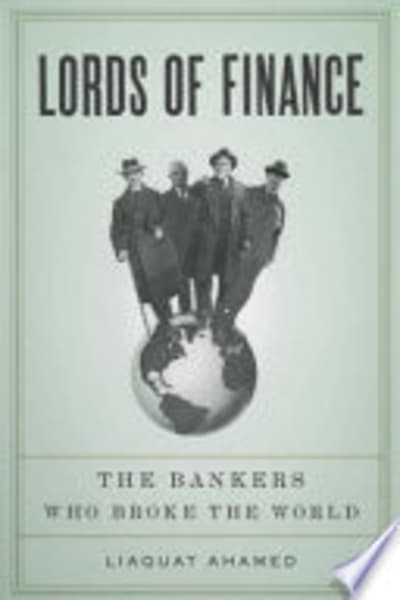
Lords of Finance builds its case around the four central bankers—Montagu Norman, Emile Moreau, Hjalmar Schacht, and Benjamin Strong—using their shared obsession with returning to the gold standard to explain how the late-1920s crash metastasized. Ahamed Ahamed’s central argument is blunt: the Great Depression wasn’t only a weather system of bad luck and policy drift; it was driven, at key moments, by decisions from a small circle of people who believed inflation was the mortal enemy and treated gold as the cure. The book’s structure alternates between biography and systems, so you’re constantly shown how personal temperaments and institutional authority shaped monetary choices—Norman’s nervous tinkering at the Bank of England, Moreau’s suspicion at the Banque de France, Schacht’s mix of swagger and calculation at the Reichsbank, and Strong’s frenetic drive at the Federal Reserve. One concrete example is Ahamed’s attention to the mid-1920s stabilization period: for a while, capital flows and currency calm made it look like the gold standard worked, but the “success” hid fragility that would snap once the system was stressed. Another is how Ahamed frames the gold standard as a straitjacket: when shocks hit, central banks couldn’t flex without threatening the very credibility they were trying to preserve. What disappointed me is that Ahamed’s focus stays tightly inside the four men’s orbit; you get less about ordinary workers, regulators, and industrial realities than you might expect from a history that name-checks World War II as an outcome. If you want a broad social history of 1929–1933, Lords of Finance will feel like it’s narrowing the camera until only the central bankers are in frame.
Key Takeaways from Lords of Finance
-
1
Gold standard as straitjacket: Ahamed shows how fixed rules limited central banks’ ability to respond when stress hit.
-
2
Inflation fear: The four leaders treat price stability as a moral and political priority, shaping policy even under strain.
-
3
Montagu Norman’s temperament: His anxious, manipulative style becomes a policy engine at the Bank of England.
-
4
Benjamin Strong’s leadership: Strong’s Fed ambitions and urgency influence international coordination during the mid-1920s calm.
-
5
Central bankers’ agency: Ahamed argues a handful of decisions can steer global crisis dynamics, not just reflect them.
Who Should Read This
Someone who watches economic headlines and suspects policy choices matter more than vague “market forces” will like how Ahamed assigns responsibility. If you’ve read general Great Depression summaries and felt unsatisfied by the lack of named decision-makers, this will scratch that itch.
Who Shouldn't Read This
If you want a wide-angle social history of the early Depression—jobs, poverty, labor politics—Ahamed keeps pulling the lens back to central banks. If you dislike tightly argued, thesis-driven narratives that can feel like a courtroom brief, you may find the constant causal emphasis exhausting.
Editor's Verdict
The single best thing Lords of Finance does is connect character and institutional power: Ahamed’s treatment of Montagu Norman’s gold-standard obsession shows how psychology can become policy, then policy becomes catastrophe. The real limitation is scope—Ahamed privileges the four bankers’ decisions and leaves broader social, political, and industrial context comparatively thin. This book hits hardest for anyone who’s grown tired of hand-wavy explanations of 1929 and wants a specific, personal chain of cause and effect.
Ready to read Lords of Finance?
Get your copy on Amazon today.
Lords of Finance — Frequently Asked Questions
About Liaquat Ahamed
Liaquat Ahamed is a writer and journalist known for financial history. He has reported on economics and markets and has written extensively about central banking and international finance, which makes him credible for explaining how monetary systems shape global events. His book Lords of Finance examines the creation and early influence of the Federal Reserve. He also wrote The Lords of Finance (1999) and Lords of Finance (also published as a revised edition), and he authored a related work on the international monetary system, The Fate of Liberty (2018).