Lord of the Flies — Book Summary & Review
Last updated:
Lord of the Flies Summary
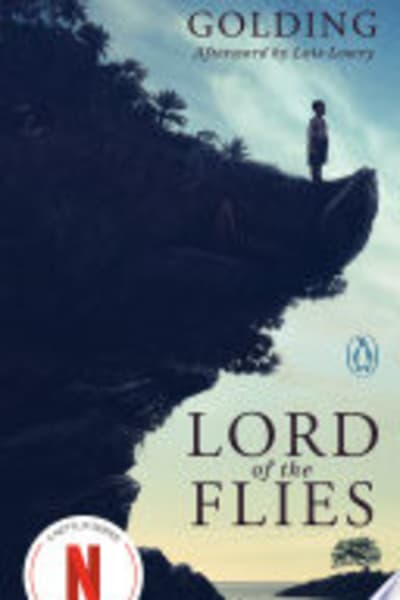
In Lord of the Flies, Golding sets up a “civilizing” framework through Ralph’s signal fire and the boys’ rules—then systematically shows how quickly that framework collapses once fear and status take over. The story is deceptively simple: a plane crash strands a group of British schoolboys on an island, and they try to re-create order with elections, assemblies, and the practical goal of getting rescued. Golding keeps returning to the same pressure points—hunger, boredom, noise, and the seduction of belonging—until the boys’ procedures stop functioning. Ralph’s insistence on the signal fire is the clearest moral and rational anchor, but it also becomes a target for the group’s emotional needs.
A key turning point comes with the emergence of the “beast” rumor and the way it spreads through the social machinery of the tribe. When Jack shifts from hunting to performing authority, Golding shows how quickly “we” becomes a weapon: the rules are replaced by intimidation, and individuality gets treated as disloyalty. The novel’s structure keeps tightening the screws—meetings become rituals, rituals become threats, and the island stops being geography and turns into an engine for escalation. Golding’s writing is blunt about what happens next: when the boys stop believing in rescue as a shared project, violence stops feeling like a betrayal and starts feeling like proof.
By the time the hunt turns into something closer to celebration, Golding has made his argument with maximum clarity: morality can be voted on, but it cannot be sustained on pure procedure once fear hijacks the group. The book doesn’t offer a comforting alternative system, either—there’s no “fix” you can carry back to real life. Honest limitation: it’s likely to frustrate readers who want character growth that feels psychologically realistic over time, because Golding often prioritizes moral patterning and symbolic motion over lingering interiority. If you’re looking for a hopeful, character-driven adventure, Golding’s bleak design will feel like a trap.
Key Takeaways from Lord of the Flies
-
1
Signal-fire governance: Ralph’s system depends on shared attention, and once attention fractures, the “rules” become theater.
-
2
The beast rumor: Golding treats fear as contagious logic—once believed, it reorganizes every decision the boys make.
-
3
Jack’s charisma: authority shifts from fairness to performance, where hunting becomes a stage for dominance.
-
4
Assemblies vs. ritual: meetings fail when they can’t compete with the emotional rewards of group ritual and exclusion.
-
5
Piggy’s vulnerability: Piggy embodies reason under pressure, and Golding shows how easily intellect becomes a scapegoat.
Who Should Read This
Someone who’s ever watched a team, friend group, or online community slip from “principles” into panic and status games will recognize the mechanism instantly. If you’ve felt uneasy about how fast people rationalize cruelty when it’s socially rewarded, Golding’s island will land hard.
Who Shouldn't Read This
If you need a plot that rewards you with catharsis or moral recovery, Golding offers escalation without a satisfying rescue for the reader’s nerves. If you prefer nuanced, lingering psychology over symbolic momentum, the novel’s pattern-driven approach will feel cold and schematic.
Editor's Verdict
The single best thing Golding does is trace how the signal-fire project collapses into tribal violence, using Ralph’s assemblies and the beast rumor as concrete steps in that breakdown. The real limitation is that Golding privileges moral symbolism and structural tightening over psychologically detailed character development, so some readers won’t feel close to the boys as people. This hits hardest for anyone in their late teens or early adulthood who’s just realized how quickly “good intentions” can turn into harmful group momentum when fear and belonging collide.
Ready to read Lord of the Flies?
Get your copy on Amazon today.
Lord of the Flies — Frequently Asked Questions
About William Golding
William Golding (1911–1993) was a British novelist and educator. Born in Cornwall, he studied at Oxford and later taught English and philosophy, giving him firsthand insight into youth behavior and group dynamics. His experience and long career in literature make him credible on themes of social order and moral decision-making. He is best known for Lord of the Flies (1954), and he also wrote The Inheritors (1955) and Pincher Martin (1956).