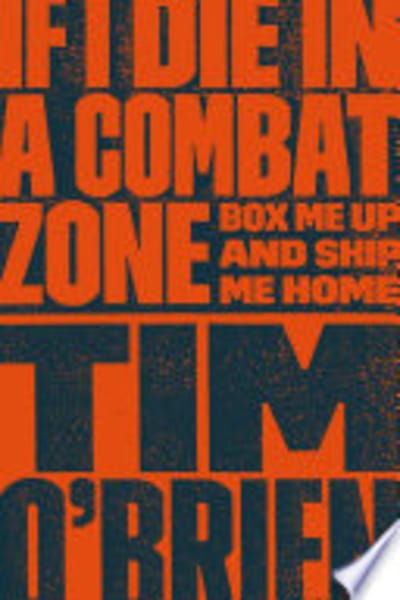
If I Die in a Combat Zone — Book Summary & Review
by Tim O'Brien
Last updated:
If I Die in a Combat Zone Summary
In If I Die in a Combat Zone, Tim O’Brien builds his case around the idea that “true” war writing can be both factual and emotionally accurate, and he keeps testing that promise until it breaks in your hands. The book is arranged as short, sharp pieces that feel like field notes and confessions at once, and O’Brien’s signature move is to treat memory as unreliable—then treat that unreliability as part of the truth. One early organizing device is his repeated insistence that a story can be “true” because it matches what it felt like, even when the details can’t be pinned down. He doesn’t let you hide behind the comfort of clean chronology; instead he returns to the same moral questions from different angles, like a soldier circling a wound to see if it still hurts.
A concrete example that lands hard is the section about how a soldier’s job—carrying out orders, doing the work of killing—gets entangled with the ordinary textures of fear and routine. O’Brien also includes the famous moment of the soldier who survives a situation that should have killed him, and the aftermath becomes the real battlefield: guilt, numbness, and the way language fails to hold what happened. Another recurring example is the way he frames the draft-era American military machine as something bureaucratic and distant, while the foot soldier experiences it as immediate, bodily pressure. O’Brien’s argument is not “war is bad” in the abstract; it’s that war scrambles the relationship between events, memory, and meaning, and the writing has to admit the scramble.
Honest limitation: this isn’t a broad history of Vietnam or a strategy-and-politics account. If you want policy context, unit tactics, or a neat timeline of the conflict, O’Brien will frustrate you, because his focus stays stubbornly personal and literary.
Enjoyed this one? Read these next.
Top picks in Vietnam War, chosen for readers of If I Die in a Combat Zone.
The Armies of the Night
by Norman Mailer
Check price on Amazon
The Sympathizer
by Viet Thanh Nguyen
Check price on Amazon
Fire in the Lake
by Frances FitzGerald
Check price on Amazon
A Bright Shining Lie
by Neil Sheehan
Check price on AmazonKey Takeaways from If I Die in a Combat Zone
-
1
True War Writing: O’Brien argues that emotional accuracy can matter as much as factual accuracy when describing combat.
-
2
Memory as Evidence: He treats recollection as unstable data, using contradictions to show how war distorts perception.
-
3
Order vs. Meaning: The book keeps separating “doing the job” from understanding what the job means morally.
-
4
Survivor Aftermath: He emphasizes what happens after the incident—guilt, numbness, and story-making—over the incident itself.
-
5
The Foot Soldier Lens: O’Brien narrows the world to one body’s experiences, refusing the comfort of grand explanations.
Who Should Read This
If you’re someone who keeps replaying a past event and realizing your memory edits it as it goes, you’ll recognize O’Brien’s logic immediately. If you want Vietnam writing that focuses on how truth works inside a mind under stress, not just what happened on the ground, this fits.
Who Shouldn't Read This
If you need a chronological Vietnam overview with political context and tactical detail, you’ll feel shortchanged by O’Brien’s deliberately literary, fragmentary structure. If you dislike ambiguity—especially moral and factual ambiguity—you may find the book exhausting rather than clarifying.
Editor's Verdict
The single best thing O’Brien does is force you to confront his “true” standard for war stories, especially through the book’s repeated experiments with memory and emotional accuracy. The real limitation is that If I Die in a Combat Zone offers almost no external history or policy context, so it won’t satisfy readers looking for a fuller Vietnam explanation. Anyone who’s spent years consuming war accounts as straightforward information will hit hardest when they realize the stories are also arguments about how truth gets manufactured.
Ready to read If I Die in a Combat Zone?
Get your copy on Amazon today.
If I Die in a Combat Zone — Frequently Asked Questions
About Tim O'Brien
Tim O’Brien (born 1946) is an American writer and Vietnam War veteran. He served in the U.S. Army in Vietnam and later drew on that experience in his fiction and nonfiction about combat and its effects. His firsthand service makes him credible on the realities of war depicted in If I Die in a Combat Zone. Other notable works include the novel Going After Cacciato and the nonfiction collection The Things They Carried.