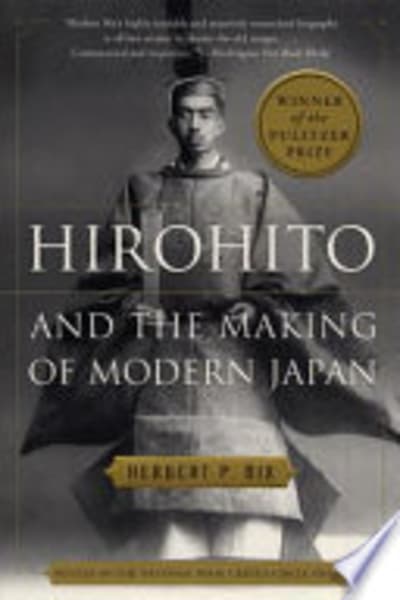
Hirohito and the Making of Modern Japan — Book Summary & Review
Last updated:
Hirohito and the Making of Modern Japan Summary
Bix organizes Hirohito and the Making of Modern Japan around the emperor’s evolving authority—especially the way Hirohito’s access to advisors and “symbol” status translated into real political leverage. Bix doesn’t treat Hirohito as a decorative figurehead; he tracks how Hirohito navigated the ultranationalist climate, cultivated a religious aura of divinity, and repeatedly resisted efforts that would limit his power. The book’s spine is archival: Bix leans on primary documents to reconstruct decision-making from the China crisis through the Asia-Pacific War, then follows the messy aftermath where Hirohito’s image is managed rather than simply “explained.” One of the most concrete sections is Bix’s treatment of the run-up to the Pearl Harbor decision, where he argues that Hirohito’s role was neither symbolic nor marginal. Bix also returns to the Manchuria takeover in 1931 to show how early acquiescence and later insistence helped normalize expansion inside the imperial system.
Where Bix really sharpens the story is after 1945: Hirohito and the Making of Modern Japan shows how surrender-era narratives were reshaped, with MacArthur’s alliance becoming a hinge for postwar legitimacy. Bix’s claim is blunt—Hirohito used the endgame created by Hiroshima, Nagasaki, and the Soviet entrance as an exit from a no-win situation, and then the occupation helped rewrite the emperor’s wartime posture. If you want a single through-line, it’s Bix’s insistence that the mythology around Hirohito’s “reluctance” was constructed, not discovered.
Limitation: this is not a quick, character-driven portrait; it’s a dense political biography that expects patience with Japanese court structures, factional politics, and long stretches of documentary detail. If you’re looking for a breezy explanation of Japan’s war choices, Bix can feel relentlessly procedural.
Key Takeaways from Hirohito and the Making of Modern Japan
-
1
Hirohito’s authority: Bix shows how sacred status became actionable influence inside cabinet and advisory channels during wartime.
-
2
Ultranationalism alignment: Bix traces how Hirohito’s gradual cooperation with extremists helped harden policy, even when he seemed “passive.”
-
3
Cult of emperor worship: Bix treats religious emperor ideology as political infrastructure, not background color for the Showa era.
-
4
China War causes: Bix assigns weight to Hirohito’s decisions in 1937 rather than pinning everything on junior militarists.
-
5
Postwar image management: Bix argues MacArthur’s partnership enabled a legitimacy reset that softened Hirohito’s wartime footprint.
Who Should Read This
Someone who’s been frustrated by simplistic explanations of Japan’s war—like a single villain group controlling everything—should read Bix to see how Hirohito’s decisions mattered. If you’re studying the logic of imperial legitimacy and how leaders survive defeat through narrative control, Bix will give you plenty of ammunition.
Who Shouldn't Read This
If you want a lean, accessible overview with minimal archival scaffolding, you’ll likely resent how procedural and document-heavy Bix can get. If you mainly want moral verdicts or a straightforward antiwar polemic, Bix’s method will feel too focused on mechanisms, timing, and institutional leverage.
Editor's Verdict
The best part of Hirohito and the Making of Modern Japan is Bix’s evidence-driven insistence that Hirohito’s role in the China War and the run-up to 1941 cannot be reduced to figurehead status. The real limitation is that Bix’s documentary density and political-system focus make the book demanding for anyone who wants narrative velocity over archival reconstruction. This will hit hardest for history readers who are mid-research or mid-argument—especially anyone drafting a paper on Showa-era responsibility and needing specifics about who decided what.
Ready to read Hirohito and the Making of Modern Japan?
Get your copy on Amazon today.
Hirohito and the Making of Modern Japan — Frequently Asked Questions
About Herbert P. Bix
Herbert P. Bix (1945–2017) was an American historian and biographer specializing in modern Japan and U.S.–Japan relations. He earned his PhD at Harvard University and conducted extensive archival research in Japan, making him credible on twentieth-century Japanese politics and the imperial system. His best-known work is Hirohito and the Making of Modern Japan (1989). He also wrote Witness to the Holocaust (1983) and published additional scholarship on Japanese history.