Grover Cleveland: A Study in Courage — Book Summary & Review
by Allan Nevins
Last updated:
Grover Cleveland: A Study in Courage Summary
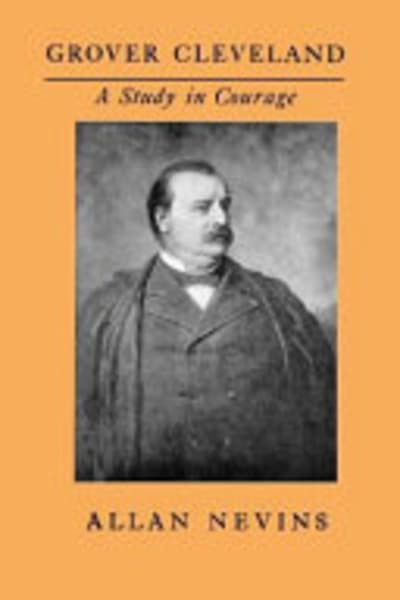
Allan Nevins structures Grover Cleveland: A Study in Courage around a stubbornly specific idea: character under pressure, especially when politics rewards performance more than principle. Nevins keeps returning to Cleveland’s habit of choosing the hard, legal, often unpopular line—then showing how that choice rippled through the Democratic Party, the courts, and the public. One recurring thread is Nevins’s focus on Cleveland’s “courage” as a civic trait, not a personality quirk: the book reads like a long argument that moral steadiness can be a governing strategy. Nevins also repeatedly ties presidential decisions to earlier moments of restraint, so his portrait doesn’t feel like a highlight reel; it feels like a case built from contradictions Cleveland had to live with.
A concrete example is Nevins’s treatment of Cleveland’s approach to federal power and labor conflict, where the book’s emphasis on legal obligation becomes a test of temperament. Nevins contrasts Cleveland’s measured stance with the louder instincts of party leaders, then documents how that mismatch shaped appointments and legislative outcomes. Even when Nevins zooms out to the national crisis—economic strain, party factionalism, and the expanding machinery of modern campaigning—he keeps dragging the narrative back to Cleveland’s decisions in the room, not the slogans outside it.
The limitation is plain: Nevins doesn’t write for readers who want a breezy, year-by-year political recap, and he also doesn’t offer much in the way of modern interpretive frameworks beyond his own “courage” thesis. If you’re looking for a fast, scandal-forward biography, you’ll likely find the pacing heavy and the argument repetitive.
Still, if you want to understand how one president’s restraint could look like weakness to contemporaries—and how Nevins thinks it was actually the point—you’ll probably finish the book feeling that Cleveland’s legacy is less about luck than about nerve.
Key Takeaways from Grover Cleveland: A Study in Courage
-
1
Character under pressure: Nevins treats courage as a repeatable governing behavior, not a heroic moment.
-
2
Legal obligation as temperament: Cleveland’s steadiness shows up through court- and statute-driven choices, not rhetorical flourishes.
-
3
Party factionalism: Nevins explains how Democratic infighting repeatedly punished Cleveland for refusing easy compromises.
-
4
Federal power and labor conflict: the book frames national disputes as stress tests for restraint and rule-following.
-
5
Nevins’s courage thesis: the biography stays loyal to one interpretive lens, shaping which episodes get the most ink.
Who Should Read This
Someone who’s tired of politics biographies that feel like gossip threads and wants a serious argument about decision-making under real constraints will likely enjoy this. If you’re stuck in a workplace where “doing the easy thing” keeps being rewarded, you’ll read Cleveland’s restraint and immediately translate it to your own pressure points.
Who Shouldn't Read This
If you want a quick, skim-friendly political timeline, Nevins’s insistence on building one big “courage” interpretation will feel slow and repetitive. If you’re hunting for modern, revisionist framing or psychological theory, this book offers mostly Nevins’s own lens rather than fresh methods.
Editor's Verdict
The best thing Nevins does is sustain his character-under-pressure argument across multiple presidencies, using Cleveland’s legal-anchored choices as recurring evidence. The real limitation is that the biography’s single interpretive thesis crowds out alternative explanations, so the pacing and emphasis can feel repetitious. This hits hardest for anyone who’s mid-career questioning why principle costs so much when you’re the one expected to absorb the blame.
Ready to read Grover Cleveland: A Study in Courage?
Get your copy on Amazon today.
Grover Cleveland: A Study in Courage — Frequently Asked Questions
About Allan Nevins
Allan Nevins (1890–1971) was an American journalist and historian, educated at Harvard, who became a leading authority on U.S. political history. He covered national politics as a reporter and later taught and wrote extensively on the presidency and political leadership. His credibility on Grover Cleveland comes from his deep research into primary sources and his focus on executive decision-making during the Cleveland era. Other notable works include The Emergence of Lincoln and Hamilton Fish: The Inner History of the Grant Administration.