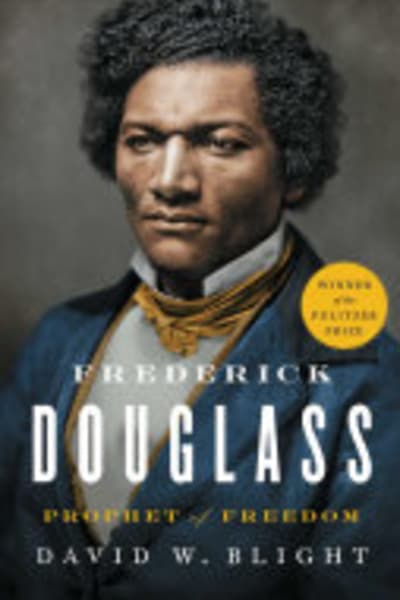
Frederick Douglass: Prophet of Freedom — Book Summary & Review
Last updated:
Frederick Douglass: Prophet of Freedom Summary
In Frederick Douglass: Prophet of Freedom, David W. Blight builds the book around a recurring tension: Douglass as a “prophet” of freedom in public speech and Douglass as a politically complicated family man whose private choices shaped his public stance. Blight’s structure moves chronologically but keeps circling back to how Douglass used literacy, performance, and newspaper work to turn autobiography into abolitionist strategy. One concrete highlight is Blight’s treatment of Douglass’s early mentorship by William Lloyd Garrison, where the biography shows how Douglass borrowed tactics from the abolitionist movement while gradually staking out his own sharper, more organized vision. Another is Blight’s close attention to Douglass’s newspapers after the Civil War—how print culture let Douglass argue with the nation, and also argue with younger Black leaders, without surrendering his commitment to black civil and political rights. Blight also spends real time on the emotional and logistical mess of Douglass’s two marriages and extended family, refusing the common biographical shortcut that turns relationships into mere moral punctuation. The result is a fuller portrait: a man who could be both radical and tactically patient, both combative and disciplined.
The limitation is that Blight’s focus on documentary recovery and political development can feel heavy if you came for a more purely narrative, scene-by-scene escape story; the book is at its best when you’re willing to sit with argument and historical context rather than sprint from shock to shock. Even so, if you want to understand why Douglass’s voice mattered—and why it still irritates and energizes people now—Blight earns his Pulitzer-level attention.
Key Takeaways from Frederick Douglass: Prophet of Freedom
-
1
Prophet of Freedom: Blight frames Douglass’s public speaking as moral forecasting, not mere persuasion, tied to specific abolitionist moments.
-
2
Garrison mentorship: Early influence shows how Douglass learned movement tactics, then retooled them as his own program hardened.
-
3
Newspaper work: Douglass’s postwar journalism becomes a political engine for pushing civil-rights claims with speed and repetition.
-
4
Two marriages: Blight treats Douglass’s family life as historically consequential, shaping how he navigated reputation, duty, and freedom.
-
5
Radical patriotism: The book argues Douglass attacked the nation while insisting on its promises, which explains his evolving political alliances.
Who Should Read This
Someone who keeps running into the question “what is freedom, really?”—and wants an answer grounded in nineteenth-century evidence—will likely connect with Blight’s Douglass. If you’re wrestling with how to talk about race, citizenship, and protest without turning them into slogans, this biography gives you language and precedent.
Who Shouldn't Read This
If you mostly want a fast, cinematic escape-and-triumph narrative with minimal political argument, Blight’s documentary density will frustrate you. If you dislike biographies that linger on family complexity and postwar policy fights, you’ll probably feel like the book keeps interrupting the story you wanted.
Editor's Verdict
The best thing Blight does is tie Douglass’s evolution to the mechanics of communication—especially how the shift from Garrison-era abolition tactics into Douglass’s own newspaper-driven politics changes what “freedom” meant in practice. The real limitation is that the book leans hard on historical reconstruction and political context, so readers seeking nonstop narrative momentum may find themselves trudging. This hits hardest for anyone studying for a U.S. history course or preparing for conversations about civil rights and rhetoric, particularly if you’re tired of surface-level Douglass quotes and want the full machinery behind them.
Ready to read Frederick Douglass: Prophet of Freedom?
Get your copy on Amazon today.
Frederick Douglass: Prophet of Freedom — Frequently Asked Questions
About David W. Blight
David W. Blight is an American historian and professor at Yale University. He specializes in U.S. history, especially the Civil War, emancipation, and the memory of slavery. Blight is credible on Frederick Douglass because he has spent decades researching Douglass, abolitionism, and Reconstruction and has published major scholarship on their historical and cultural legacy. His other notable works include Race and Reunion: The Civil War in American Memory and Passions of the Past: The Trial of American Historical Memory.