Fortunate Son — Book Summary & Review
Last updated:
Fortunate Son Summary
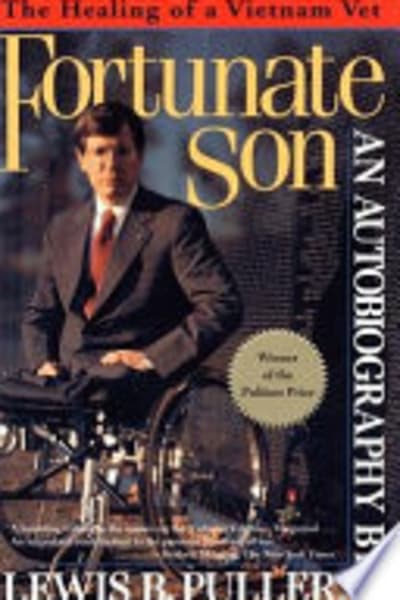
In Fortunate Son, Lewis B. Puller frames his story around a recurring idea he calls “homecoming math”: what you imagine getting back will cost you, versus what it actually takes. The book is built in a memoir-and-reckoning sequence—Vietnam scenes, the brutal pivot to medical survival, and then the slow arithmetic of living after amputation. Puller doesn’t treat his disability as a single turning point; he shows it as a daily system with new failures and small workarounds, from physical tasks to the social math of who stares and who looks away. One concrete anchor is the book’s focus on his attempts to return to the Marine Corps identity he lost, not through speeches but through repeated efforts that keep collapsing under reality. In the middle stretches, Puller also shows how memory behaves when you’re trying to be “normal”—how certain nights and sounds keep reopening the war even when you’ve moved cities. He writes about the long lag between physical recovery and emotional recovery, and he’s blunt about how family and institutions can mean well while still getting it wrong. Puller’s strongest chapters are the ones where he describes the practical friction of being a double amputee and a one-handed man in a country that still designs most life for uninjured bodies. The limitation: this is not a broad history of Vietnam or a policy argument; it’s a personal accounting, so readers seeking tactical military detail or a wider geopolitical thesis will feel the narrow scope and the book’s occasional reliance on emotional explanation rather than external context. Still, Puller’s honesty lands because he keeps returning to the same question—what “fortunate” can possibly mean when your body and your life have both been rearranged—until the answer becomes less rhetorical and more lived.
Key Takeaways from Fortunate Son
-
1
Homecoming math: Puller uses a cost-and-returns framework to measure the gap between imagined welcome and real life after injury.
-
2
Marine identity maintenance: He treats Corps pride as something you practice daily, not something you inherit, and shows it failing under new limits.
-
3
Daily friction model: Puller foregrounds mundane obstacles—access, attention, logistics—arguing that recovery is mostly repetitive problem-solving.
-
4
Memory relapse mechanics: He explains how war memories “reopen” through sensory triggers, even after the body has healed.
-
5
Emotional lag honesty: Puller insists feelings don’t follow the medical timeline, so progress can look like stagnation to outsiders.
Who Should Read This
Someone who is rebuilding life after a medical rupture—injury, chronic illness, or a sudden loss of capability—will recognize Puller’s daily friction and emotional lag. If you’re tired of inspirational survivor talk and want a veteran’s account that treats recovery as messy math, Fortunate Son will fit.
Who Shouldn't Read This
If you want a sweeping Vietnam War history or a strategic analysis of decisions and battles, Puller mostly stays inside one man’s aftermath. If you dislike memoirs that circle the same emotional problems repeatedly, you may find the structure repetitive rather than revelatory.
Editor's Verdict
Fortunate Son’s best move is how Lewis B. Puller insists on the practical timeline—medical survival, then the slower grind of social and emotional recovery—especially in the sections focused on trying to live a Marine identity. The book’s limitation is its narrow scope: it offers personal reckoning rather than a wider Vietnam or institutional critique, so history buffs will feel underfed. This hits hardest for anyone early in a long rehab phase who keeps hearing “you’ll be fine” and needs a voice that admits the gap between survival and living.
Ready to read Fortunate Son?
Get your copy on Amazon today.
Fortunate Son — Frequently Asked Questions
About Lewis B. Puller
Lewis B. Puller Jr. (1923–2020) was an American author and military historian. He was the son of Marine Corps General Lewis B. Puller and served in the U.S. Marine Corps as a combat veteran in World War II and the Korean War. His firsthand experience with Marine operations and his family’s deep involvement in U.S. military history made him credible on the Vietnam-era Marine story. He wrote Fortunate Son and also authored Marines Under Fire.