Eleanor and Franklin — Book Summary & Review
Last updated:
Eleanor and Franklin Summary
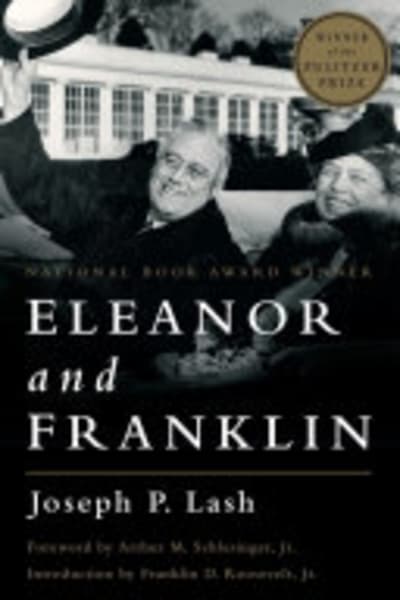
Joseph P. Lash structures Eleanor and Franklin around the Roosevelt marriage as a long negotiation of power, privacy, and self-invention, and he keeps returning to Eleanor’s childhood insecurity as the engine behind her later political toughness. Lash’s account isn’t satisfied with the usual “Eleanor was resilient” shorthand; he traces how she learned to translate private doubt into public competence, then shows how that translation changed once Franklin became the center of national attention. One of the book’s most revealing through-lines is Lash’s attention to Eleanor’s coping tactics—how she built emotional distance, practiced selective disclosure, and used networks to keep moving when her marriage became politically and personally unstable. Lash also makes relationship history do real work: the book treats Franklin’s infidelities and Eleanor’s responses as ongoing events that reshape strategy rather than as a sensational subplot.
A concrete example: in the section dealing with Eleanor’s early years before she fully enters national life, Lash lingers on formative humiliations and the way Eleanor learned to perform “competence” to survive social judgment. Later, when the narrative reaches Eleanor’s role as a politician’s wife, Lash focuses on the friction between being expected to be ornamental and her insistence on being a participant. He frames their partnership as both intimate and adversarial—love mixed with bargaining—so the reader understands why Eleanor’s independence isn’t a mood swing; it’s a method.
The limitation is that Lash stays heavily invested in Eleanor’s inner life as interpreted by the author’s reading of letters and events, so readers hoping for a tight, balanced political analysis of FDR’s policy agenda will feel like the domestic story keeps swallowing the broader history.
Key Takeaways from Eleanor and Franklin
-
1
Eleanor’s Insecurity: Lash treats her childhood self-doubt as a practical tool, later fueling her political discipline and social nerve.
-
2
Coping as Strategy: Eleanor’s coping isn’t passive; Lash shows it as selective disclosure, emotional distance, and network-building under pressure.
-
3
Roosevelt Marriage as Bargain: Lash presents the union as ongoing negotiation, where intimacy and power shift with every new crisis.
-
4
Politician’s Wife Constraint: The book details the social script Eleanor resists—ornament over authority—and how she rewrites the role.
-
5
Letters and Events Interpretation: Lash leans on documentary reading to infer motives, which makes his portrait feel intimate but also subjective.
Who Should Read This
If you’re wrestling with how personal history gets repurposed into public leadership, you’ll recognize Eleanor’s pattern of self-management in your own life. Someone who wants a relationship-centered political biography—especially the strain between marriage and ambition—will likely find Lash’s focus rewarding.
Who Shouldn't Read This
If you’re looking for a policy-first FDR biography, Lash’s emphasis on the marriage and Eleanor’s psychology will frustrate you. If you dislike author-driven interpretation of private motives from correspondence, you may feel the book leans too much on Lash’s inferences.
Editor's Verdict
The single best thing Lash does is connect Eleanor’s childhood insecurity to her later political methods, especially when he shows how coping becomes strategy rather than “strength.” The real limitation is that the book’s domestic focus crowds out sustained analysis of Franklin Roosevelt’s policy work. This hits hardest for anyone who’s spent years trying to separate their personal life from their professional identity and now wonders what that separation really costs.
Ready to read Eleanor and Franklin?
Get your copy on Amazon today.
Eleanor and Franklin — Frequently Asked Questions
About Joseph P. Lash
Joseph P. Lash (1908–2005) was an American journalist and biographer known for extensive research into 20th-century political figures. He worked for major newspapers and wrote on public affairs, giving him primary-source access and reporting experience relevant to Eleanor and Franklin D. Roosevelt. Lash’s credibility comes from his long-term archival work and document-based biographies of the Roosevelts. Other notable works include Eleanor and Franklin (1971) and Roosevelt and Churchill (with a later edition published as Roosevelt and Churchill: The Partnership That Saved the World, 1976).