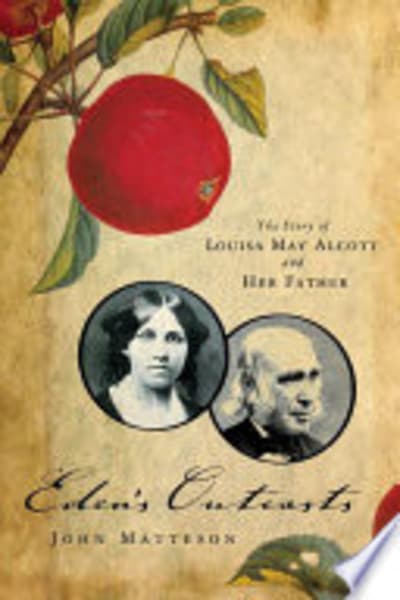
Eden's Outcasts — Book Summary & Review
Last updated:
Eden's Outcasts Summary
In Eden’s Outcasts, John Matteson structures the book around Bronson Alcott’s perfectionism and the specific rupture it causes inside Louisa May Alcott’s daily life—especially the tug-of-war between love, money, and the hunger for her father’s approval. Matteson builds a close reading of the Alcott family that feels less like literary history and more like a household psychology case file: Bronson’s ideals are loud, his presence is volatile, and Louisa learns to translate that pressure into work, wit, and sometimes resentment. One of the most effective through-lines is how Matteson connects Bronson’s public philosophies to private demands; you can see the same “world-improvement” language morph into expectations for Louisa’s moods, choices, and output. Matteson also gives Louisa credit for resisting her father even when she’s emotionally trapped, and he keeps returning to the concrete problem of what Louisa wanted—security and recognition—versus what Bronson could consistently offer.
A standout section is Matteson’s treatment of the Alcott household’s financial instability and the way Louisa’s efforts to earn money collide with Bronson’s belief that moral purpose should outrank practical needs. That’s where Eden’s Outcasts earns its emotional punch: the book shows how a daughter can love a father and still feel managed by him. Still, Matteson never turns this into a neat moral ledger; he’s interested in the messy tradeoffs, not in absolving either Alcott. Limitation: the book focuses heavily on Bronson and Louisa’s relationship and the family’s internal drama, so readers hoping for a broad survey of Louisa May Alcott’s entire career arc or the wider publishing world may feel underfed.
Key Takeaways from Eden's Outcasts
-
1
Bronson’s perfectionism functions like a household rulebook, shaping Louisa’s choices through approval, punishment, and relentless moral demands.
-
2
Louisa’s hunger for money and fame becomes emotional fuel, because financial strain and recognition are treated as tests of worth.
-
3
Fathers and daughters here means a specific power dynamic: Bronson sets ideals, Louisa negotiates them through writing and defiance.
-
4
The Alcott family’s instability isn’t background; Matteson uses it to explain why Louisa’s ambition spikes when security collapses.
-
5
Matteson’s method treats biography as psychology, linking public philosophy to private behavior rather than separating the two.
Who Should Read This
Someone who’s stuck in a recurring family pattern—one parent’s high ideals colliding with your need for stability—will recognize themselves in Louisa’s tightrope. If you’re reading biography to understand why family love can still feel controlling, Matteson’s focus will land hard.
Who Shouldn't Read This
If you want a sweeping, career-spanning account of Louisa May Alcott’s work and legacy, Matteson’s narrow emphasis on Bronson and Louisa may feel claustrophobic. If you dislike emotionally tense family narratives and prefer lighter literary history, this book will likely frustrate you with its persistent friction.
Editor's Verdict
Eden’s Outcasts works best when Matteson ties Bronson’s public perfectionism to the everyday mechanics of Louisa’s home life, especially around the family’s financial strain and approval-seeking. The limitation is structural: the narrative stays centered on the father-daughter relationship, so it under-serves readers looking for a full map of Louisa’s broader career and cultural reach. This book hits hardest for anyone mid-career who’s revisiting old family scripts—right after you’ve realized your “motivation” might be trained, not chosen.
Ready to read Eden's Outcasts?
Get your copy on Amazon today.
Eden's Outcasts — Frequently Asked Questions
About John Matteson
John Matteson is an American author and historian. He writes about the American South and the lives of people pushed to the margins, drawing on documentary research and archival sources. His credibility on this topic comes from his extensive work in historical nonfiction and his focus on primary records. Matteson is the author of Eden’s Outcasts and also wrote Lincoln and the Power of the Press.