Devil in the Grove — Book Summary & Review
by Gilbert King
Last updated:
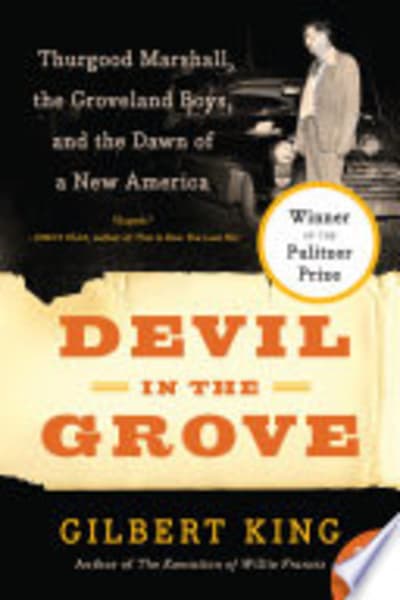
Devil in the Grove Summary
In Devil in the Grove, Gilbert King builds the book around a paper-trail confrontation: he argues that the Groveland Four case was driven by a coordinated local apparatus—sheriff, prosecutors, and terror tactics—long before Thurgood Marshall’s NAACP Legal Defense Fund arrived to contest it. King structures the narrative around the timeline of 1949 to the later court battles, then keeps returning to one chilling mechanism: how “rape” allegations functioned as a racial weapon, especially when Sheriff McCall moved faster than due process. A concrete anchor is King’s use of the FBI’s unredacted Groveland case files alongside NAACP Legal Defense Fund material, which lets him show discrepancies in official accounts and the pressure campaign used to control witnesses and public belief.
One of the book’s most forceful sections is the run-up to the first trial and the ensuing Klan violence—King repeatedly ties the courtroom record to the extra-legal violence outside it. He also tracks how the Klan’s arrival wasn’t a side plot; it was enforcement. When King gets to Marshall’s decision to take the matter, he frames it as strategic risk: the civil-rights movement needed Marshall, yet the Groveland case demanded a national legal spotlight after the murder of an NAACP associate and threats aimed at Marshall himself.
Still, Devil in the Grove is not a tidy, courtroom-only story. If you want a purely legal analysis of doctrine or a focused character study of Marshall’s inner life, King largely refuses that comfort. The book’s obsession is evidence, institutions, and the machinery of racialized prosecution—so it will frustrate readers looking for courtroom technique over social context.
Key Takeaways from Devil in the Grove
-
1
Groveland Four Trial: King reconstructs how one accusation becomes a pipeline from local power to state-sanctioned outcomes.
-
2
FBI unredacted case files: He uses the raw paperwork to expose contradictions that polished summaries conveniently omit.
-
3
NAACP Legal Defense Fund files: King shows how the defense strategy depended on records, not vibes, in a hostile jurisdiction.
-
4
Sheriff McCall’s tempo: The book treats speed and intimidation as deliberate tactics, not mere prosecutorial zeal.
-
5
Klan enforcement in-circuit: King argues the terror campaign functioned as an extension of the legal process.
Who Should Read This
If you’re trying to understand why civil-rights legal wins were so rare in the Jim Crow South, this book will feel uncomfortably specific. Someone who reads about trials and thinks the verdicts must be “about facts” will need King’s evidence-driven dismantling of that assumption.
Who Shouldn't Read This
If you want a breezy narrative with minimal violence and fewer procedural details, the constant linkage of courtroom and terror will wear you down. If your main interest is Thurgood Marshall’s personality or legal doctrine, King’s focus on institutions and records will likely feel lopsided.
Editor's Verdict
Gilbert King’s best move is using the FBI’s unredacted Groveland case files alongside NAACP Legal Defense Fund material to show how official narratives were constructed before trial day. The limitation is that King writes like an investigator—more evidence than emotional catharsis—so readers wanting character-driven momentum may feel stalled. This hits hardest for anyone who’s grown tired of vague talk about “systemic racism” and wants to see the system’s paperwork and intimidation lined up, step by step.
Ready to read Devil in the Grove?
Get your copy on Amazon today.
Devil in the Grove — Frequently Asked Questions
About Gilbert King
Gilbert King is an American journalist and author. He has written extensively about legal history and civil-rights cases, including the prosecution and defense of people accused of crimes during the Jim Crow era. His reporting and research draw on court records, interviews, and archival sources, making him credible on the historical events at the center of Devil in the Grove. Other notable works include The Execution of Willie Francis and Blood and Oil.