Designing Data-Intensive Applications — Book Summary & Review
Last updated:
Designing Data-Intensive Applications Summary
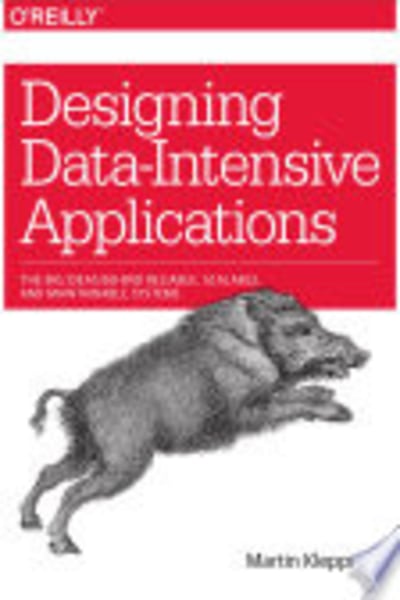
Kleppmann kicks off 'Designing Data-Intensive Applications' with an exploration of the CAP theorem, a cornerstone for understanding distributed systems. The book is meticulously structured, starting with foundational concepts and moving onto real-world applications with chapters like 'Data Models and Query Languages.' Kleppmann doesn't shy away from complex topics like consistency models and the trade-offs between different database architectures. His analysis of real-world systems like Kafka and Cassandra is both detailed and approachable, offering insights into their internal workings and how they solve specific problems. However, the book's in-depth technical nature might overwhelm those who are not already familiar with basic data engineering concepts. If you're looking for a guide that simplifies choosing between NoSQL and SQL databases, or a cookbook for quick solutions, this isn't it. Instead, Kleppmann provides a comprehensive toolkit for understanding the challenges and considerations of building data-intensive systems, making it a valuable resource for engineers looking to deepen their knowledge in this complex field.
Key Takeaways from Designing Data-Intensive Applications
-
1
CAP Theorem: Understand the trade-offs between consistency, availability, and partition tolerance in distributed systems.
-
2
Event Sourcing: Learn how this pattern enables system state reconstruction from event logs, enhancing reliability and auditability.
-
3
Consistency Models: Explore different levels of data consistency, from linearizability to eventual consistency, and their practical implications.
-
4
Batch vs Stream Processing: Distinguish between processing paradigms to choose the optimal approach for your application's data flow needs.
-
5
Data Models: Examine the strengths and weaknesses of various data models, including relational, document, and graph databases.
Who Should Read This
If you're grappling with scaling your application and need to understand the underlying principles of data systems, this book is for you. Someone who is a software engineer or architect looking to deepen their technical understanding will find it invaluable.
Who Shouldn't Read This
If you're hoping for a light read or a quick guide to implementing specific technologies, you'll be disappointed. The book's detailed and technical depth requires a commitment that casual readers or beginners may not be ready for.
Editor's Verdict
Kleppmann excels in demystifying complex systems with practical examples, particularly in the 'Fault Tolerance' chapter. However, the book demands a substantial commitment due to its technical depth and length. Anyone embarking on a major data architecture project will find this book indispensable before diving into design decisions.
Ready to read Designing Data-Intensive Applications?
Get your copy on Amazon today.
Designing Data-Intensive Applications — Frequently Asked Questions
About Martin Kleppmann
Martin Kleppmann is a computer scientist and software engineer known for his expertise in distributed systems and data management. He is the author of "Designing Data-Intensive Applications," a widely acclaimed book on building reliable, scalable data systems. Kleppmann has a background in software engineering, having worked at companies like LinkedIn and Rapportive. He is also a researcher at the University of Cambridge, focusing on distributed systems and collaboration software. His work is highly regarded in the field of data engineering.