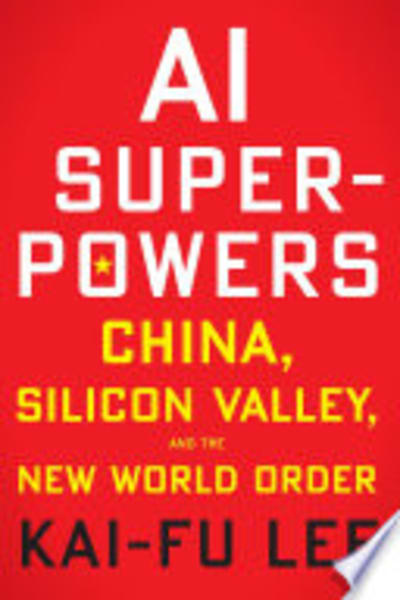
AI Superpowers — Book Summary & Review
by Kai-Fu Lee
Last updated:
AI Superpowers Summary
Kai-Fu Lee lays out his concept of the “Four Waves of AI” to explain how artificial intelligence is rearranging global economies. The book is organized by four stages—Internet AI, Business AI, Perception AI, and Autonomous AI—each tied to a specific shift in technology and its consequences for society and the economy. Lee’s central claim is that China has rapidly narrowed the gap with the U.S. in AI capability, pointing to China’s billion-dollar investment push and its massive data reservoirs. He also emphasizes social fallout, especially job displacement, and warns that neither country is prepared for what comes next. In the chapter “The End of Work As We Know It,” he spells out grim possibilities for employment, arguing that white-collar work may be just as exposed as blue-collar labor. Still, Lee’s attention stays locked on China and the U.S., largely ignoring how other countries could respond or shape the AI race, a limitation that will likely irritate readers who want a genuinely global perspective.
Key Takeaways from AI Superpowers
-
1
The Four Waves of AI: Lee categorizes AI development into four stages affecting all sectors of the economy.
-
2
Data Advantage: China’s vast population provides significant data, giving it a competitive edge in AI development.
-
3
Copycat to Innovator: China has transitioned from imitation to innovation, especially in mobile-based AI applications.
-
4
Job Displacement Forecast: Lee predicts AI will disrupt both white-collar and blue-collar jobs, requiring new economic policies.
-
5
Silicon Valley vs. Zhongguancun: A comparison of innovation hubs, highlighting cultural and operational differences.
Who Should Read This
If you're navigating career choices in tech or policy-making, this book offers crucial insights into future job landscapes. Someone who feels overwhelmed by the rapid pace of AI developments will find clarity in Lee's structured analysis.
Who Shouldn't Read This
If you're looking for a comprehensive global view of AI, this book's focus on China and the U.S. will disappoint. Those expecting deep technical discussions will find the content too general and high-level.
Editor's Verdict
Lee excels in presenting a clear framework with his 'Four Waves of AI', making complex topics accessible. However, the book's narrow focus on China and the U.S. limits its global applicability. Ideal for tech enthusiasts or policymakers who are grappling with the implications of AI on future job markets.
Ready to read AI Superpowers?
Get your copy on Amazon today.
AI Superpowers — Frequently Asked Questions
About Kai-Fu Lee
Kai-Fu Lee is a prominent AI expert and venture capitalist, known for his influential book "AI Superpowers." He holds a Ph.D. in computer science from Carnegie Mellon University and has held executive roles at Apple, Microsoft, and Google, where he led Google China. Lee is the CEO of Sinovation Ventures, investing in technology startups. His credibility stems from decades of experience in AI development and leadership. Other notable works include "AI 2041" and "Making a World of Difference."