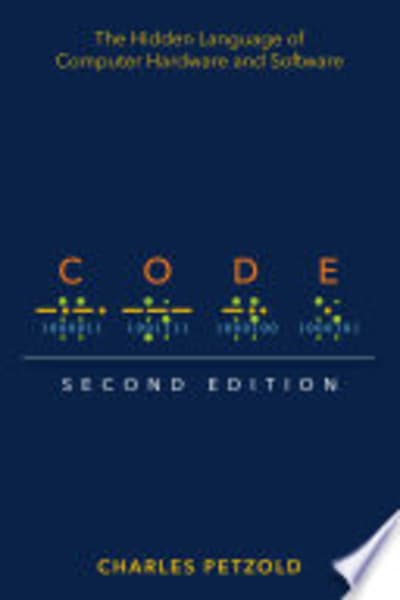
Code — Book Summary & Review
Last updated:
Code Summary
Petzold opens with the idea of a flashlight to introduce the binary system, offering a practical entry point into how computing actually works. The book’s structure tracks the evolution of communication and technology, leaning on concrete examples such as Morse code and Braille to strip away the intimidation around the digital world. A standout chapter, “Braille and Binary Codes,” explains how these systems underpin machine languages. Petzold keeps returning to everyday analogies, which makes the technical material feel less like a lecture and more like a clear argument. Still, the emphasis on history is heavy, so readers hoping for modern programming techniques or real-world applications may feel shortchanged.
Key Takeaways from Code
-
1
Flashlight Binary: Demonstrates binary's simplicity by using a flashlight's on/off states to explain binary coding.
-
2
Morse Code Insights: Illustrates early digital communication, showing its influence on machine language development.
-
3
Braille as a Language Model: Uses Braille to parallel how computers process binary data and interpret information.
-
4
Seesaw Logic Gates: Explains logic gates through seesaw analogies, making it easier to grasp complex digital circuits.
-
5
The British Invasion: Connects historical events to the rapid technological advances in communication and computing.
Who Should Read This
Someone who finds themselves mystified by how computers work but enjoys historical context and tangible metaphors. If you're curious about the evolution of technology and its foundational principles, this book is for you.
Who Shouldn't Read This
If you're looking for a guide to modern programming languages or current software development practices, this book will disappoint. It doesn't cover contemporary coding skills or specific programming frameworks.
Editor's Verdict
The book excels in making complex ideas accessible, particularly through the 'Seesaw Logic Gates' concept. However, it lacks practical applications for readers seeking modern programming skills. Anyone intrigued by the historical roots of technology's evolution will find this book particularly engaging and enlightening.
Ready to read Code?
Get your copy on Amazon today.
Code — Frequently Asked Questions
About Charles Petzold
Charles Petzold is a renowned computer programmer and author, best known for his influential book "Code: The Hidden Language of Computer Hardware and Software," which demystifies the inner workings of computers. With a degree in Mathematics from Stevens Institute of Technology, Petzold has authored numerous technical books, making him a credible authority in computer programming. His notable works include "Programming Windows," a definitive guide on Windows programming, and "The Annotated Turing," which explores Alan Turing's groundbreaking paper on computability.