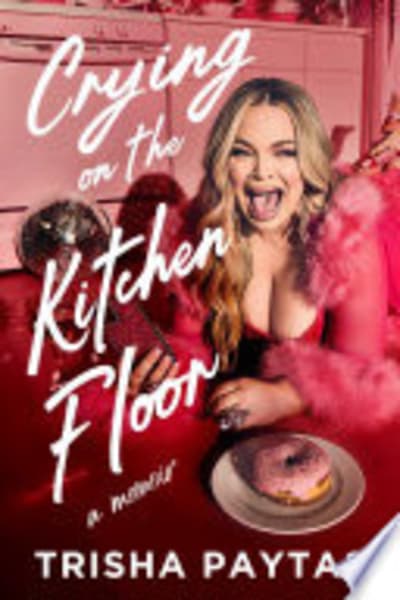
Crying on the Kitchen Floor — Book Summary & Review
Last updated:
Crying on the Kitchen Floor Summary
Crying on the Kitchen Floor is built around Trisha Paytas’s two-part “set the record straight” structure: first, the messy origin story of her fame hunger, and second, the aftermath—what she says she learned after the internet chewed her up. Paytas keeps returning to a single claim: her public reinventions weren’t random, they were a survival strategy, and she used attention as a substitute for safety. One of the most concrete through-lines shows up in her chapter on the “serial killer” fear she lived with while still chasing hookups, clout, and validation; she doesn’t frame it as spooky lore—she frames it as how paranoia rewires your decision-making. Another recurring example is her account of abusive dynamics tied to former child-star relationships, where Paytas argues that “industry proximity” can look like opportunity while quietly turning into control. The memoir’s emotional engine is how she connects mental health to the mechanics of content: spirals, apologies, cancellations, and the way each cycle taught her to perform stability instead of practicing it. Paytas also name-checks the era of infinite reality TV cameos as a kind of treadmill—she says it kept her visible, but visibility kept her numb.
Here’s the limitation: this book is less interested in offering a clean, step-by-step recovery plan than in documenting the chaos, so readers who want a tidy arc or actionable therapy takeaways may feel frustrated by the repetition of the same themes across decades. If you’re okay with that—if you want the record, not a roadmap—Paytas gives you plenty to chew on, including her own admission that she chased the feeling of being chosen even when she didn’t know what she was worth.
Enjoyed this one? Read these next.
Top picks in Non-Fiction, chosen for readers of Crying on the Kitchen Floor.

Sapiens
by Yuval Noah Harari
Check price on Amazon
Educated
by Tara Westover
Check price on Amazon
Becoming
by Michelle Obama
Check price on Amazon
The Wright Brothers
by David McCullough
Check price on AmazonKey Takeaways from Crying on the Kitchen Floor
-
1
Paytas’s “set the record straight” structure frames fame as cause, not coincidence, then forces her to account for the wreckage afterward.
-
2
Paytas’s mental-health-to-content link explains how spirals become posting schedules, and how apologies can function like addiction management.
-
3
Reality TV cameo cycles operate like a treadmill: constant visibility, shrinking privacy, and a numbness she admits she mistook for progress.
-
4
The “serial killer” fear episode shows paranoia as decision fuel, shaping who she trusts and how quickly she rationalizes danger.
-
5
Abusive relationships tied to former child stars illustrate control disguised as access, with Paytas naming the patterns she missed at the time.
Who Should Read This
Someone who grew up online and keeps replaying old drama—wondering how it felt so urgent while it was happening—should read Crying on the Kitchen Floor. If you’re wrestling with why attention ever seemed like safety, Paytas’s account will hit hard because she treats fame like a coping mechanism, not a personality.
Who Shouldn't Read This
Someone who wants a structured recovery program, with clear exercises and a neat timeline, will likely hate how Paytas prioritizes narrative mess over practical steps. If you’re easily turned off by a memoir that repeatedly returns to the same emotional cycles—spirals, cancellations, reinvention—you’ll probably feel trapped in the loop.
Editor's Verdict
The single best thing Crying on the Kitchen Floor does is connect Paytas’s mental-health cycles to the actual content mechanics of her career, especially in her “serial killer” fear and abuse-adjacent sections. The real limitation is that Paytas doesn’t translate her experience into a usable framework for readers; you leave with story, not a method. Anyone who’s just burned out on influencer redemption arcs will feel this hardest when Paytas refuses to pretend the past was simple and keeps showing how reinvention can be self-sabotage.
Ready to read Crying on the Kitchen Floor?
Get your copy on Amazon today.
Crying on the Kitchen Floor — Frequently Asked Questions
About Trisha Paytas
Trisha Paytas is an American author and media personality. She rose to prominence through online videos and podcasting, building a large audience and sharing personal experiences publicly. Her credibility for Crying on the Kitchen Floor comes from her direct, first-person writing style about mental health, relationships, and personal growth, drawing on her long-running public discussions of these topics. Other notable works include her memoirs and related nonfiction writing, such as The Book of Trisha.