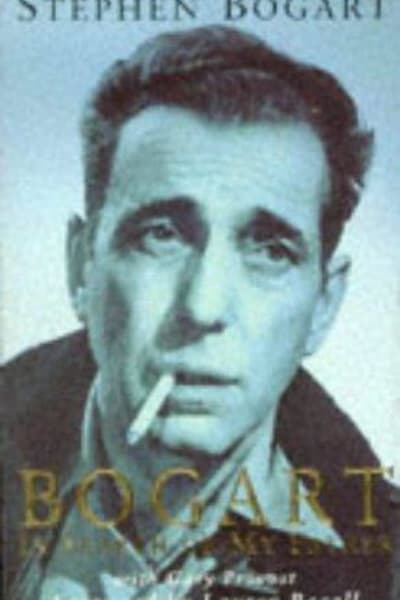
Bogart — Book Summary & Review
Last updated:
Bogart Summary
In Bogart, Stephen Bogart frames the book around a simple emotional thesis: the “giant shadow” of Humphrey Bogart’s screen persona became Stephen’s private burden after his father died of lung cancer in 1957. The biography is built in a back-and-forth rhythm—public legend, then the quieter man behind it—so Stephen Bogart can test how much of the myth he inherited and how much he had to earn. Early on, he leans on access to friends and colleagues of Humphrey Bogart, and the payoff is in the texture of specific anecdotes: Frank Sinatra’s presence in the orbit of Humphrey’s world, Katharine Hepburn’s sharp intelligence, “Swifty” Lazar’s influence, and John Huston’s professional friction. One of the book’s most effective choices is how often Stephen Bogart uses relationships as evidence; he doesn’t treat character as a mystery to solve, but as a pattern that shows up in what people remember and what they refuse to forget. The narrative also benefits from the author’s position as son—especially when he admits what he didn’t understand until later, and how Lauren Bacall’s encouragement shaped Stephen Bogart’s willingness to look at the softer edges of Humphrey Bogart’s toughness. The limitation is that the book can feel less like a full, chronological “life story” and more like a curated set of revealing episodes, meaning readers wanting exhaustive film-by-film analysis or a strict timeline of career decisions may feel shortchanged.
Key Takeaways from Bogart
-
1
Humphrey Bogart’s “giant shadow” is Stephen Bogart’s organizing metaphor for how fame can distort a family life.
-
2
Extraordinary access functions like a credibility engine, letting Stephen Bogart build portraits from conversations with insiders.
-
3
Lauren Bacall’s encouragement shows up as narrative permission, pushing Stephen Bogart toward candor instead of reverence.
-
4
Relationship-as-evidence means people’s memories (Sinatra, Hepburn, Huston) are treated as character data, not gossip.
-
5
Persona-versus-private man is the book’s main tension, and Stephen Bogart keeps returning to why the myth stuck.
Who Should Read This
Someone who grew up with a famous parent and still feels tugged between the public story and the private one will recognize Stephen Bogart’s emotional problem immediately. If you’re in a phase of your life where you’re trying to separate admiration from unresolved grief, Bogart will feel personal without becoming self-pitying.
Who Shouldn't Read This
If you want a strict, comprehensive biography with heavy film-by-film interpretation and career chronology, Stephen Bogart’s episode-driven structure will frustrate you. If you prefer celebrity books that focus mostly on craft—directing, writing, performance technique—this one spends more time on relationships and interior burden than on how the movies are made.
Editor's Verdict
The best thing Bogart does is turn Stephen Bogart’s “giant shadow” thesis into usable biography, especially when he contrasts tough-screen behavior with the vulnerabilities people around Humphrey Bogart describe. The real limitation is scope: it’s curated and intimate rather than exhaustive, so readers expecting a full timeline and deep film analysis may feel underfed. This will hit hardest for anyone in the grieving-after-the-fact stage—after you’ve already heard the legend, and you’re finally ready to ask what it cost the people closest to it.
Ready to read Bogart?
Get your copy on Amazon today.
Bogart — Frequently Asked Questions
About Stephen Humphrey Bogart
Stephen Humphrey Bogart is an American author and the son of actor Humphrey Bogart and actress Lauren Bacall. He is credible on his topic because he has direct family access to his parents’ lives and materials and has spent years researching and writing about their careers. He wrote Bogart (1997), a biography of Humphrey Bogart. He also authored Humphrey Bogart: The Early Years (2000).