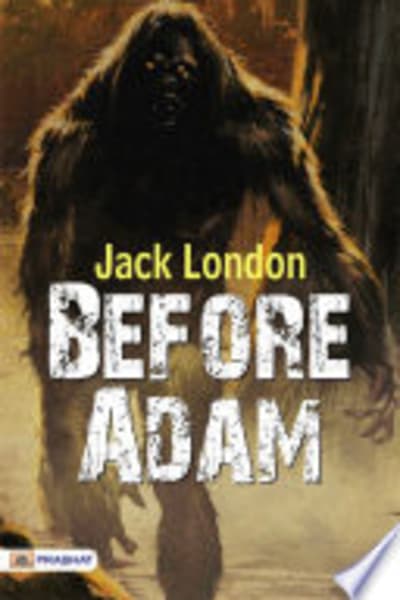
Before Adam — Book Summary & Review
by Jack London
Last updated:
Public domain via Project Gutenberg — free and legal.
Before Adam Summary
In Before Adam, Jack London hinges the plot on a modern man’s visions syncing with the consciousness of “Big-Tooth,” an ancestor living in Pleistocene Africa, and the whole story is built to make that mental link feel disturbingly plausible. The narrator starts in contemporary America, where the dreams aren’t poetic—they’re invasive, physical, and increasingly panicked. Then London pulls the rug back by letting Big-Tooth’s world bleed into the present, so the reader is forced to experience evolution not as a lecture but as a lived, animal-minded survival logic. One of the book’s most concrete set pieces is the sustained contrast between protohuman group behavior and the brutal presence of other predators and threats; London keeps returning to what matters when your senses are your only technology. The “mind for early humans” angle is doing heavy lifting here: London leans hard on animal cognition, using Big-Tooth’s perceptions (and the young man’s forced imitation of them) to argue that thought begins as pattern recognition, not abstract reasoning. London is also careful about scale—he doesn’t casually say “thousands of years” and move on; he makes the time-gap feel like a psychological distance you can trip over. If you want a specific structural note, the book’s dream-to-ancestral layering functions like its own chapter system, with each new vision tightening the link until the modern setting feels like a thin costume over something older.
Now the limitation: the story is short, and London doesn’t fully develop everything it promises. You get a lot of mood, speculation, and evolutionary imagining, but not a thorough, step-by-step explanation of how the mechanism of the visions works or a fully fleshed-out cast. If you’re the kind of reader who wants contemporary science citations or a clean, rational ending, London’s method will frustrate you. Still, for readers who like speculative fiction that treats evolution as a psychological pressure rather than a diagram, Before Adam delivers a bleak, memorable experience—more unsettling than comforting.
Key Takeaways from Before Adam
-
1
Big-Tooth consciousness: London uses an ancestor’s perspective to make evolution feel like lived survival, not distant theory.
-
2
Dream-vision layering: The modern narrator’s terror escalates as each vision rewires his perceptions into Big-Tooth’s world.
-
3
Animal-minded cognition: London argues early thought is pattern-based, built from sensory urgency rather than abstract reasoning.
-
4
Pleistocene Africa stakes: The story anchors evolution in constant predation and intergroup conflict, forcing choices under pressure.
-
5
Survival logic vs modern logic: The book spotlights how “civilized” reasoning collapses when the senses take over.
Who Should Read This
Someone who reads evolution fiction but keeps wishing it felt visceral, not academic, should try Before Adam. If you’re currently stuck in a nonfiction rut and crave a short, disturbing speculative premise that centers fear and survival perception, London will likely land for you.
Who Shouldn't Read This
If you need clear scientific grounding or a transparent explanation for the vision mechanism, you’ll feel cheated by how London stays speculative. If you prefer character-driven realism with fully developed supporting roles, Before Adam’s compressed scope will leave you wanting more than it supplies.
Editor's Verdict
The single best thing Jack London does is make the Big-Tooth link function as an engine for sensory logic, turning evolutionary “mindsets” into something you experience through terror and imitation. The real limitation is that the book offers mood and imaginative projection more than it offers explanation or payoff depth, especially around how the modern visions actually operate. This hits hardest for readers who are tired of tidy explanations and want evolution presented as an emotional, bodily pressure—right after you’ve finished a dense science book and need a jolt of fiction instead.
Ready to read Before Adam?
Get your copy on Amazon today.
Before Adam — Frequently Asked Questions
About Jack London
Jack London (1876–1916) was an American writer and journalist known for adventure and social realism. He grew up in poverty in San Francisco, worked many jobs, and traveled widely, including extensive time in the American West and Alaska, gathering firsthand observations of harsh environments. This background makes him credible when writing about survival and human behavior in extreme conditions. Other notable works include The Call of the Wild and White Fang.