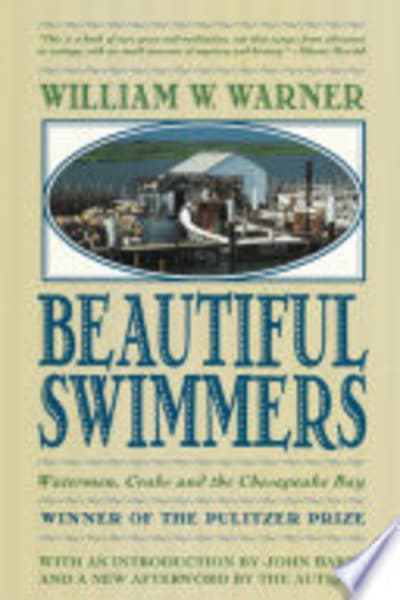
Beautiful Swimmers — Book Summary & Review
Last updated:
Beautiful Swimmers Summary
Beautiful Swimmers is built around Warner’s insistence that the Chesapeake Bay’s seafood boom and collapse can be read through a watershed lens, not a single species story. Early on, Warner lays out how “meat per acre” and the bay’s productivity shaped settlement, work, and trade, then he keeps zooming out until you’re staring at fisheries management as a human history of incentives. One of the book’s most useful sections is the discussion of blue crab harvest cycles—how gear, seasons, and demand interact—so the reader learns to see “crab abundance” as something engineered and regulated, not a natural constant. Warner also threads families and businesses through the science and the economics, giving you specific textures: who owned the boats, how local labor changed, and what pollution did to the system when the rules were weak or unenforced. The strongest payoff is when Warner connects overharvest and water quality decline to broader patterns seen across fisheries worldwide; he’s not writing a parlor anecdote, he’s arguing that repeated mistakes look similar wherever people treat common resources as free. Still, Beautiful Swimmers has limits: it’s written in a 1970s nonfiction voice that can feel brisk and sometimes dated in its science framing, and it won’t satisfy readers seeking recent data, modern stock assessments, or a clear “what to do next” policy blueprint. If you grew up on the Eastern Shore, Warner’s focus on local ways of speaking, working, and eating will land like recognition; if you didn’t, you’ll feel the place come alive through work, food, and the bay’s changing rules. By the end, Warner’s thesis is hard to shrug off: when greed and weak oversight steer the boat, the ecosystem pays first, and the people follow.
Key Takeaways from Beautiful Swimmers
-
1
Watershed lens: Warner treats the bay as a connected system where land use, runoff, and harvest pressure all feed the same outcome.
-
2
Blue crab cycles: He explains abundance through timing, gear, and demand, showing why “natural” population swings often reflect human choices.
-
3
Common-resource incentives: Warner frames fisheries as economic behavior under weak regulation, so collapse becomes predictable rather than mysterious.
-
4
Family-and-business continuity: He uses local operators and households to show how policy failures persist through generations of practice.
-
5
Pollution feedback: Warner links water quality decline to productivity loss, making ecosystem health a direct variable in livelihoods.
Who Should Read This
If you’re trying to write a school report or personal essay about why fisheries collapse—especially in Chesapeake communities—this will give you named examples and a clear causal framework. Someone who grew up near the Eastern Shore and feels like the “old stories” were really about work, ecology, and risk will appreciate how Warner turns memory into explanation.
Who Shouldn't Read This
If you want the newest science, citations, and modern stock-assessment thinking, Warner’s 1976 framing will feel incomplete and sometimes old-fashioned. If you’re allergic to regional specificity and want a purely technical ecology text, the family-and-place emphasis will frustrate you.
Editor's Verdict
The single best thing Beautiful Swimmers does is connect blue crab harvest patterns to a broader watershed argument, so the bay’s decline reads as a system with causes, not vibes. The real limitation is that Warner stops short of modern data and policy prescriptions, so readers looking for 21st-century answers will feel stranded. This hits hardest for anyone who’s mid-career realizing their job or community depends on resources they never learned to manage—before the damage becomes personal, and irreversible.
Ready to read Beautiful Swimmers?
Get your copy on Amazon today.
Beautiful Swimmers — Frequently Asked Questions
About William W. Warner
William W. Warner is an American marine biologist and author known for writing about marine life. He has spent decades studying and documenting aquatic ecosystems, including the behavior and biology of marine animals, which makes him credible to write about “Beautiful Swimmers.” His expertise is grounded in scientific research and field observation rather than general popular science. Other notable works include Beautiful Swimmers and The Natural History of Seals.