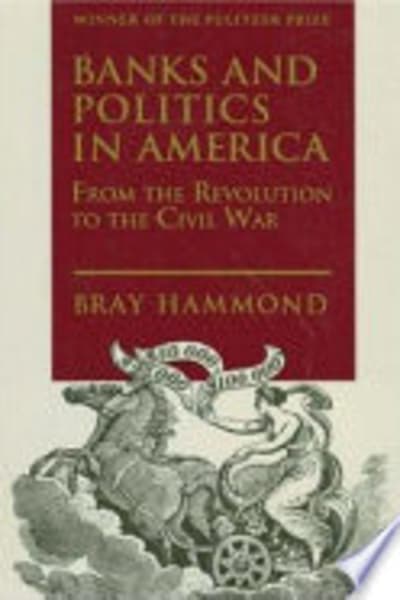
Banks and Politics in America — Book Summary & Review
by Bray Hammond
Last updated:
Banks and Politics in America Summary
Banks and Politics in America opens with Hammond’s big organizing idea: banking institutions and political coalitions grow together, shaping what the U.S. becomes. Hammond, drawing on his Federal Reserve experience, doesn’t treat banks as scenery behind elections; he treats them as active political machinery—capital, credit, and risk all feeding back into legislation and public power. One of the book’s most distinctive moves is the way Hammond tracks shifts in American finance alongside changes in political incentives, then argues that periods of entrepreneurial expansion often reward instability. A concrete example is his attention to early American banking’s growth-and-failure cycle, where political pressure for credit and growth can undercut the discipline institutions need to survive. Hammond also insists that central banking is not a luxury but a stabilizer: in his view, the U.S. needs a system that can dampen booms, manage crises, and prevent local interests from turning national finance into a patchwork of favors.
If you’re expecting a tidy narrative, Hammond’s structure can feel more like an argument built from many episodes than a straight chronological march. He piles evidence and frameworks until the reader feels the logic of his claim: politicians influence banks, but banks also influence politics by creating constituencies around money and access. That’s why Hammond’s analysis lands harder than a standard banking history—it’s pitched at the mechanics of power. Limitation: the book is dense, old-school in style, and it doesn’t offer a modern policy toolkit or a chapter-by-chapter “what to do next” guide for today’s debates. If you want quick, contemporary relevance, Hammond will frustrate you.
Key Takeaways from Banks and Politics in America
-
1
Political coalitions: Hammond shows how credit access and banking interests form durable alliances with officeholders and parties.
-
2
Central banking even keel: He argues a central bank stabilizes shocks by coordinating liquidity and constraining local, interest-driven finance.
-
3
Entrepreneurial risk spirit: Hammond treats expansionist attitudes as both fuel for growth and a recurring threat to institutional soundness.
-
4
Federal Reserve experience lens: Hammond’s insider perspective shapes his emphasis on governance, crisis management, and policy leverage.
-
5
Banking as political machinery: Hammond frames banks as builders of influence—through capital flows, not just through laws and speeches.
Who Should Read This
Someone who’s frustrated by “banking history” that only lists institutions and dates will want Hammond to connect finance to elections, laws, and power. If you’re working through questions about why policy keeps favoring certain financial players, Hammond gives you a historical mechanism to explain it.
Who Shouldn't Read This
If you need a modern, jargon-light explanation of today’s banking rules and regulation, you’ll find Hammond’s mid-century scope and tone dated. If you want a smooth, chronological story with minimal argument density, Hammond’s exhaustive approach will feel heavy and relentless.
Editor's Verdict
The single best thing Banks and Politics in America does is fuse political incentives with banking outcomes, especially in Hammond’s insistence that banking drives political coalition-building, not merely follows it. The real limitation is that the book is written as an academic, evidence-heavy argument, so it offers little in the way of a practical modern policy guide. This hits hardest for anyone mid-career questioning why financial interests keep reappearing in policy fights and needing a mechanism, not slogans.
Ready to read Banks and Politics in America?
Get your copy on Amazon today.
Banks and Politics in America — Frequently Asked Questions
About Bray Hammond
Bray Hammond is an author and researcher focused on the intersection of banking and U.S. politics. Their credibility comes from studying how financial institutions, regulatory policy, and political decision-making shape American banking outcomes. Hammond is the author of Banks and Politics in America. They have also written other works examining financial regulation and political economy in the United States.