Anti-Intellectualism in American Life — Book Summary & Review
Last updated:
Anti-Intellectualism in American Life Summary
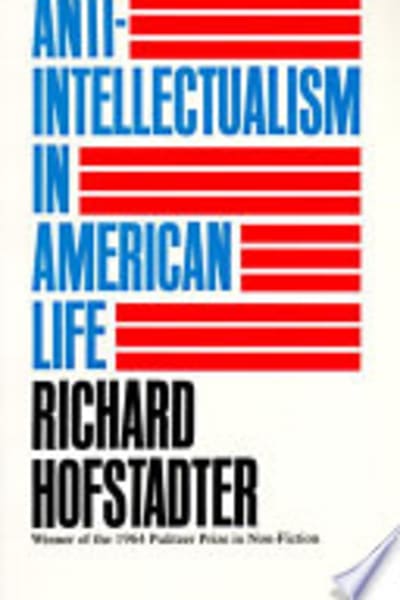
Hofstadter’s book is organized around a repeating diagnosis: American public life keeps finding ways to treat “intellect” as suspect, and the McCarthy-era climate is where his story sharpens into a pattern. He doesn’t simply blame bad actors; he tracks how anti-intellectualism becomes a cultural reflex—an insistence that expertise, scholarship, and “book learning” are either elitist or morally dangerous. In early chapters, Hofstadter lays out the social psychology behind the posture: the suspicion of intellectuals as detached from ordinary people, plus the fear that ideas can destabilize faith in common sense. His term “status anxiety” (and the broader logic around it) helps explain why cultural authority feels threatening to those who think education is a ladder that can be kicked out from under them. When Hofstadter reaches the McCarthy era, the argument tightens: the rhetoric of loyalty tests and the attack on “un-American” thinking turns intellectual life into a target, and the target is not only individuals but the legitimacy of critical inquiry itself. One concrete example he leans on is the way public debate reframes scholarship as a kind of betrayal—questioning institutions becomes “plotting,” and nuance becomes evidence. Hofstadter also connects earlier American strands—Puritan suspicion of worldly learning and populist resentment toward elites—to show the anti-intellectual mood didn’t begin in the 1950s; the period simply provided a loud stage. Still, Hofstadter’s focus is narrower than readers hoping for a full map of every political institution involved. He spends more time tracing attitudes and rhetoric than offering a step-by-step guide to how to reverse the culture, and anyone wanting practical prescriptions for civic education may feel frustrated by the emphasis on diagnosis rather than cure.
Key Takeaways from Anti-Intellectualism in American Life
-
1
Anti-intellectualism as a cultural reflex: Hofstadter frames it as a recurring habit of treating intellectual authority as illegitimate.
-
2
Status anxiety: he links resentment toward educated elites to fear about social standing and who gets to speak for “real people.”
-
3
McCarthy-era loyalty rhetoric: Hofstadter shows how “un-American” accusations convert disagreement into moral suspicion.
-
4
Populist resentment toward elites: he traces how populist suspicion of “bookish” people becomes politically useful during crises.
-
5
Puritan suspicion of worldly learning: Hofstadter connects older religious attitudes to later patterns of distrust in scholarship.
Who Should Read This
If you’re watching your workplace or community treat expertise as arrogance—especially when stakes rise—you’ll recognize Hofstadter’s pattern immediately. Someone who’s tired of arguing with people who think nuance equals betrayal will want Hofstadter’s vocabulary for what’s going on.
Who Shouldn't Read This
If you want a modern, data-heavy study with actionable reforms, Hofstadter will feel like he’s diagnosing symptoms without building a program. If you dislike dated prose and mid-century cultural theory, the book’s pacing and argumentative style will likely wear you down.
Editor's Verdict
Hofstadter’s best move is showing how the McCarthy-era attack on “un-American” thinking works as a cultural mechanism, not an isolated political episode—his linkage of loyalty rhetoric to deeper suspicion of intellect is the core payoff. The limitation is that he stays mostly at the level of attitudes and discourse, offering too little concrete guidance for how to change the culture. This lands hardest for mid-career professionals who’ve started to feel their credentials punished in public debates, especially when they’re trying to defend expertise without sounding arrogant.
Ready to read Anti-Intellectualism in American Life?
Get your copy on Amazon today.
Anti-Intellectualism in American Life — Frequently Asked Questions
About Richard Hofstadter
Richard Hofstadter (1915–1970) was an American historian and public intellectual. He earned his PhD at Columbia University and taught at Columbia, where he became known for analyzing American political culture and intellectual life. He is credible on anti-intellectualism because his scholarship traced how public debates, populism, and political movements treated expertise and “learned” authority. His notable works include The Age of Reform (1955) and The American Political Tradition (1948).