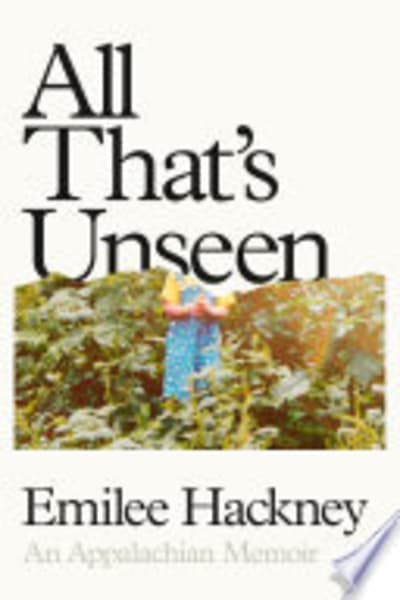
All That's Unseen — Book Summary & Review
Last updated:
All That's Unseen Summary
All That’s Unseen is built around Emilee Hackney’s pivot from Deliverance Christian Church doctrine to a Harvard re-entry, and the memoir’s engine is the slow, humiliating math of how belief can turn into social control. Hackney doesn’t write in abstractions; she anchors the story in concrete rituals and relationship dynamics—especially the way Pentecostal “repentance” language gets used to manage her body, her friendships, and her judgment. A key sequence in the book centers on her marriage plans with Sam, and Hackney keeps returning to the same sickening pattern: she treats obedience as proof of love, while the people around her treat her compliance as proof of usefulness. When isolation tightens, her inner life starts sounding like a courtroom transcript—she argues with herself in the same tone the church trained her to use. Years later, the Harvard application becomes more than plot; it’s the moment Hackney realizes she can choose a future that isn’t pre-approved. The 2016 election backdrop isn’t decorative either; it heightens the memoir’s tension between public identity and private fear, because Hackney is learning how to exist without performing certainty for others. One honest limitation: the book is less interested in explaining Appalachian economic history in depth than in showing how faith and family systems shape one person’s choices, so readers looking for a broad social analysis of southwest Virginia may feel the focus is too personal and too narrow. Still, Hackney’s reckoning lands hardest in the aftermath—when she has to rebuild trust with her own memories, and when her old vocabulary for sin no longer fits the new life she’s trying to build.
Key Takeaways from All That's Unseen
-
1
Deliverance Christian Church: Hackney shows how a local doctrine can govern daily decisions, from dating timelines to what counts as “truth.”
-
2
Pentecostal “repentance” talk: The memoir treats repentance as a control mechanism, especially when it’s used to shame, not heal.
-
3
Sam’s deception: The book frames betrayal as a system, where secrecy survives because the community rewards silence and obedience.
-
4
Harvard application pivot: Hackney uses the acceptance process to illustrate reinvention as a practical, stressful act—not a symbolic one.
-
5
2016 election pressure: Public politics becomes a stress test for private identity, forcing Hackney to decide what she believes without permission.
Who Should Read This
Someone who grew up in a faith community where “submission” is treated like love will recognize the emotional logic Hackney describes. If you’re rebuilding your life after years of self-censorship, Hackney’s Harvard pivot and isolation aftermath will feel uncomfortably accurate.
Who Shouldn't Read This
If you want a sweeping Appalachian history or a sociological breakdown of poverty and labor, this memoir keeps its lens trained on faith, relationships, and internal fallout. If you dislike first-person writing that revisits shame in detail, Hackney’s courtroom-like self-interrogation will likely wear you down.
Editor's Verdict
All That’s Unseen works best when Hackney dramatizes how doctrine mutates into relationship control, especially through her Deliverance Christian Church arc and the Sam deception timeline. The real limitation is that it prioritizes a single person’s spiritual and relational unraveling over broader Appalachian social analysis, so it won’t satisfy readers seeking macro context. This will hit hardest for anyone who left a restrictive community and is still translating old religious language into new personal boundaries.
Ready to read All That's Unseen?
Get your copy on Amazon today.
All That's Unseen — Frequently Asked Questions
About Emilee Hackney
Emilee Hackney is an author and researcher who writes about the history and cultural context of photography and visual media. They are credible on this topic through their work examining archival materials and the ways unseen or overlooked images shape public understanding. Hackney is the author of All That’s Unseen. Their other notable work includes The Camera and the Archive, which further explores how photographic records are preserved, interpreted, and used.