A Universe from Nothing — Book Summary & Review
Last updated:
A Universe from Nothing Summary
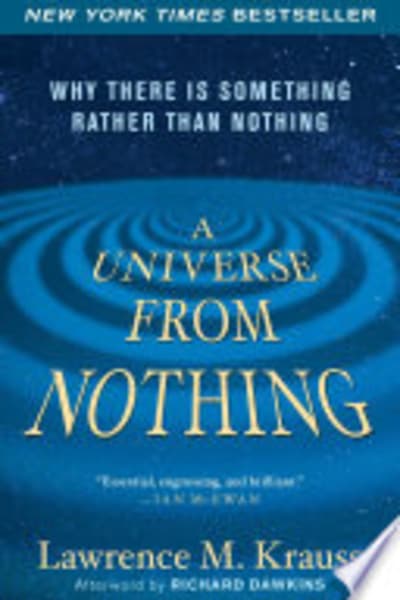
Krauss introduces the framework of 'quantum fluctuations' as a core concept in 'A Universe from Nothing,' arguing that the universe could indeed originate from nothing without any divine intervention. The book is structured in a way that takes the reader from the fundamentals of quantum mechanics to the philosophical implications of a universe born from nothingness. In the chapter 'The Runaway Universe,' Krauss elaborates on how recent astronomical observations support his claims. While his explanations are often engaging and full of wit, the book may frustrate readers looking for a thorough philosophical discussion, as Krauss tends to focus more on scientific evidence. Additionally, his brash dismissal of religious perspectives might alienate those looking for a more balanced discourse.
Key Takeaways from A Universe from Nothing
-
1
Quantum Fluctuations: Krauss explains how random energy events in a vacuum could lead to the creation of a universe.
-
2
The Runaway Universe: This chapter details how expanding universe theories lend credence to a universe from nothing.
-
3
Dark Energy: Krauss discusses its role as a dominant force accelerating the universe's expansion.
-
4
Cosmic Microwave Background: He uses this evidence to illustrate remnants from the early universe supporting his theory.
-
5
Anthropic Principle: Krauss challenges this idea, suggesting that multiple universes could explain our universe's life-supporting conditions.
Who Should Read This
Someone who is curious about the latest scientific arguments against the necessity of a divine creator. If you love exploring the intersection between cutting-edge physics and cosmology, this book will pique your interest.
Who Shouldn't Read This
If you're looking for a balanced discussion that includes religious or philosophical considerations, this book may disappoint you. Krauss's focus on scientific explanations might not satisfy those seeking a broader cultural or philosophical context.
Editor's Verdict
Krauss excels in making complex scientific ideas accessible, especially in chapters like 'The Runaway Universe.' However, the book's lack of engagement with philosophical or religious perspectives limits its appeal. If you find yourself wondering about the universe's origins and lean towards scientific explanations, this book is a fascinating read.
Ready to read A Universe from Nothing?
Get your copy on Amazon today.
A Universe from Nothing — Frequently Asked Questions
About Lawrence Krauss
Lawrence Krauss is a theoretical physicist and cosmologist, known for his work in the field of cosmology and science communication. He earned his Ph.D. in Physics from the Massachusetts Institute of Technology. Krauss is credible on the topic of the universe's origins due to his extensive research and academic contributions. In addition to "A Universe from Nothing," he authored "The Physics of Star Trek" and "The Greatest Story Ever Told—So Far," further establishing his role in making complex scientific ideas accessible to the public.