A Thousand Splendid Suns — Book Summary & Review
Last updated:
A Thousand Splendid Suns Summary
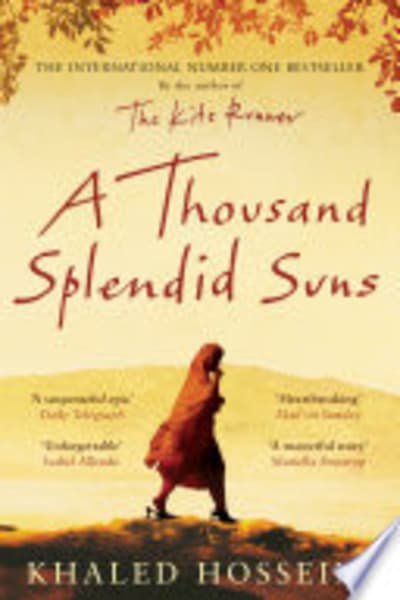
A Thousand Splendid Suns splits its emotional force between two Afghan women’s lives—Mariam’s grinding years and Laila’s later survival—so Khaled Hosseini can track how war rearranges a household long before it rearranges the map. The book’s structure is almost architectural: Hosseini builds Mariam’s world through humiliations that feel domestic rather than political, then he widens the lens as Kabul tightens and the Taliban era starts to harden daily life. One concrete example that stayed with me is the recurring pattern of “small” choices inside the home—what gets said, what gets hidden, what gets endured—until those choices suddenly collide with public violence. Another is how Hosseini uses relationships as a kind of moral weather: Mariam and Laila’s bond forms slowly enough to feel earned, then accelerates into something that reads like family by necessity, not sentiment. Hosseini also keeps returning to faith and rumor as competing forms of truth; Sufism and folk belief aren’t decorative, they’re tools people use to survive grief and explain cruelty. If you want a named anchor, the novel’s long stretch after Laila’s arrival into Mariam’s life turns the “home” into a front line, and the later escalation around Kabul’s dangers makes the earlier domestic scenes look like rehearsals. Still, Hosseini doesn’t pretend this is gentle literature: the abuse is explicit, the stakes are relentless, and the suffering can feel repetitive in its emotional mechanics even when the historical pressure changes. A Thousand Splendid Suns also doesn’t offer a tidy political explanation of Afghanistan’s factions; it’s focused on one family’s experience, so readers looking for clear historical argumentation will feel shortchanged.
Key Takeaways from A Thousand Splendid Suns
-
1
Mariam’s illegitimacy functions as a social sentence, showing how law-by-custom can be more violent than formal punishment.
-
2
Laila’s education and choices contrast with Mariam’s endurance, making “agency” a moving target under occupation.
-
3
Kabul’s Taliban-era rules operate like atmosphere, tightening daily routines until they control speech, movement, and safety.
-
4
Sufism and folk belief act as survival language, not theology lessons, shaping how characters interpret loss and hope.
-
5
The Mariam–Laila bond becomes practical family, where loyalty is tested through concrete harm, not speeches.
Who Should Read This
Someone who has been avoiding heavier historical fiction because it feels too bleak, but still wants a human-centered story that keeps moving. If you’ve recently lost patience with books that treat trauma as background and you want the consequences lived in full sentences.
Who Shouldn't Read This
If you can’t handle prolonged domestic abuse scenes and the emotional whiplash of watching loved ones get cornered, this will frustrate you. If you’re buying a novel expecting a clear, explanatory history of Afghan politics, Hosseini’s focus on one household will feel narrow and incomplete.
Editor's Verdict
The single best thing A Thousand Splendid Suns does is braid Mariam and Laila into a believable family-relationship under Taliban pressure, especially in the long middle where home becomes the arena and faith becomes a coping system. The real limitation is that Hosseini leans hard on repeated cycles of suffering and consequence, so readers who want variety in tone may feel the grind. This hits hardest for anyone who grew up believing love is mostly private—then needs to see, in painful detail, how love can be the only remaining structure when society collapses.
Ready to read A Thousand Splendid Suns?
Get your copy on Amazon today.
A Thousand Splendid Suns — Frequently Asked Questions
About Khaled Hosseini
Khaled Hosseini is an Afghan-American writer born in Kabul in 1965 and raised in Afghanistan and later the United States. He trained as a doctor before turning to fiction. His credibility on Afghan life comes from his personal experience living through Afghanistan’s decades of conflict and his extensive research and interviews for his novels. He is best known for A Thousand Splendid Suns and The Kite Runner, and he also wrote And the Mountains Echoed.