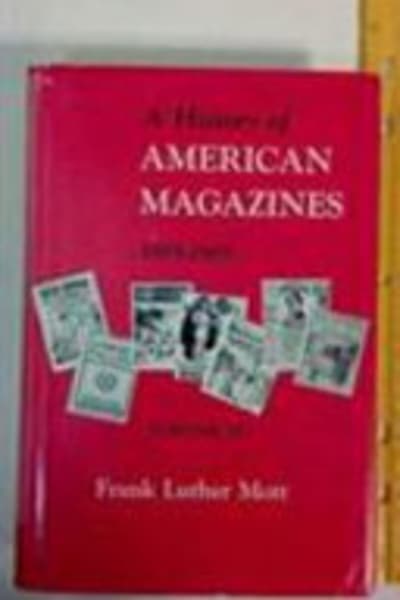
A History of American Magazines — Book Summary & Review
Last updated:
A History of American Magazines Summary
Frank Luther Mott’s A History of American Magazines is organized across five volumes, and the core framework is that magazines are a cultural record you can read through their mastheads, artwork, editorial habits, and business models—so Mott treats periodicals as evidence, not decoration. Early on, he anchors the story in the first monthly magazines of the 1740s, then tracks how American publishing ecosystems shaped what people wanted to see in print. What I kept appreciating is how Mott refuses to separate “content” from “industry”: the rise of illustrated humor, the shifting appeal of women’s pages, and the changing economics of circulation all get tied back to magazine design and editorial strategy.
One concrete example of his method is the way he handles the “golden age of magazines” in the twentieth century—he doesn’t just list famous titles, he explains why certain formats, advertising relationships, and audience segments lined up at that moment. He also leans on the idea of periodical “types,” showing how repeating features and visual styles create recognizable brands long before we’d call them brands. If you’re the kind of reader who likes footnotes and bibliographic scaffolding, Mott’s approach will feel like a map with receipts: he constantly points back to specific publications and their trajectories.
The limitation is also blunt: this is not a narrative you’ll read for character-driven suspense, and Mott does not modernize the material with today’s media theory or quick takeaways. If you want a compact, single-volume overview of American media history, you may feel like you’re wading through reference density rather than sprinting through story. Still, if you enjoy tracing how print culture actually functioned, Mott’s careful, cumulative argument is worth the time.
(Word count: 308)
Key Takeaways from A History of American Magazines
-
1
Periodical “types”: Mott categorizes magazines by recurring formats and editorial patterns, showing how identity forms through repeatable choices.
-
2
Magazines as cultural evidence: he treats artwork, layout, and ads as historical documents, not background noise behind “real” events.
-
3
Circulation economics: Mott connects editorial decisions to distribution realities, arguing that market structure shapes what gets published.
-
4
Women’s pages as audience strategy: he reads sections aimed at women as targeted programming with specific visual and editorial conventions.
-
5
Golden age alignment: Mott explains the twentieth-century surge by matching format, advertising, and readership demand rather than naming winners.
Who Should Read This
If you’re knee-deep in research—writing a paper, building a family archive, or auditing sources for a project—Someone who needs magazine history with bibliographic seriousness will get real traction here. If you’ve been burned by “media history” books that skim content while ignoring business and design, this is the corrective you’ll appreciate.
Who Shouldn't Read This
If you want a smooth, one-sitting narrative with modern media theory and punchy takeaways, Mott’s reference-heavy, multi-volume approach will frustrate you. If you only care about a handful of famous magazines and want depth without the surrounding ecosystem, you’ll likely feel the sprawl.
Editor's Verdict
The single best thing Mott does is use magazines as cultural evidence—linking editorial habits, visuals, and circulation economics to explain why the golden age happened, rather than merely celebrating it. The real limitation is that the book’s scope and density assume patience for bibliography and periodical taxonomy, not fast comprehension. This will hit hardest for anyone doing academic groundwork mid-project, especially if you’ve already collected primary magazine issues and need the industry context to interpret them.
Ready to read A History of American Magazines?
Get your copy on Amazon today.
A History of American Magazines — Frequently Asked Questions
About Frank Luther Mott
Frank Luther Mott (1879–1963) was an American historian and scholar known for research on U.S. journalism and the history of publishing. He earned his education in the United States and taught and wrote on media history. Mott is credible on American magazine history because he conducted extensive archival research and produced comprehensive, source-based studies of periodicals. His notable works include American Journalism (3 volumes) and A History of American Newspapers.