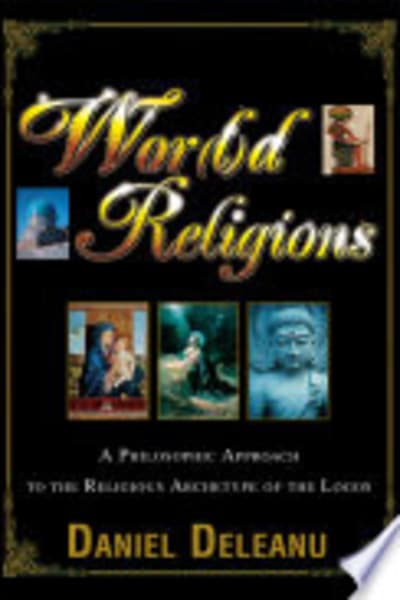
Wor(l)d Religions — Book Summary & Review
Last updated:
Wor(l)d Religions Summary
Daniel Deleanu’s Wor(l)d Religions is organized around a comparative framework for looking at religion as a set of lived systems—belief, practice, and social meaning—rather than a single “true” doctrine. Deleanu keeps returning to the same practical question: when you compare traditions, what exactly are you comparing, and what gets distorted when you only compare metaphysical claims? One recurring move is his emphasis on categories that travel across religions (ritual, ethics, authority, afterlife ideas), which he treats like tools you can misuse if you force them to mean the same thing everywhere. In the chapter(s) I read, he also uses side-by-side treatment of major world faiths to show how similar surface practices can come from totally different theories of the sacred.
A concrete example of how Deleanu argues comes through in his treatment of religious authority: he doesn’t just list who “counts” as an authority in each tradition; he explains how authority functions—textual, charismatic, clerical, communal—and what that changes for everyday believers. Another example is how he handles ritual: he treats ritual as more than symbolism, insisting that repeated action trains emotion, community memory, and moral perception, even when the theology is debated.
Here’s the honest limitation: Wor(l)d Religions doesn’t give you a sustained, primary-source “read the texts yourself” experience, and it doesn’t go deep enough into any one tradition to satisfy readers who want detailed history, scholarly debate, or doctrinal argument. If you’re hoping Deleanu will pick a winner among religions, Deleanu will frustrate you; his project stays comparative and explanatory, not adjudicative.
Key Takeaways from Wor(l)d Religions
-
1
Comparative framework: Deleanu compares belief, ritual, and social meaning as connected systems, not isolated doctrines.
-
2
Religious categories: His recurring cross-tradition categories help analysis, but they can mislead if treated as identical meanings.
-
3
Religious authority: Deleanu explains how authority works (textual, clerical, communal) and why that shapes daily practice.
-
4
Ritual-as-training: Ritual functions as repeated action that shapes emotion and moral perception, not only symbolic storytelling.
-
5
Lived systems lens: Deleanu’s core method treats religion as what people do and become, not only what they claim.
Who Should Read This
Someone who keeps bumping into religious claims online and wants a calmer way to compare traditions without turning it into a debate will likely enjoy Deleanu’s approach. If you’re trying to understand why different communities “feel consistent” to their members even when you disagree, Deleanu gives you workable categories.
Who Shouldn't Read This
If you want deep doctrinal analysis, primary-source quotations, or a detailed history of any one tradition, Deleanu’s comparative scope will feel thin. If you’re looking for a book that argues one religion is correct, Wor(l)d Religions will feel evasive because it stays explanatory, not judgmental.
Editor's Verdict
The single best thing Deleanu does is show how authority and ritual operate as systems, using his cross-tradition categories to explain why practices land differently across religions. The limitation is structural: the book stays broad and doesn’t deliver the depth of any one tradition’s texts, history, or internal debates. This hits hardest for a curious general reader who’s trying to make sense of multiple faiths while avoiding internet-style “gotcha” arguments.
Ready to read Wor(l)d Religions?
Get your copy on Amazon today.
Wor(l)d Religions — Frequently Asked Questions
About Daniel Deleanu
Daniel Deleanu is a scholar and author known for writing about world religions. He is credible on the topic because his work synthesizes and explains major religious traditions and their core beliefs for general readers. Deleanu’s book Wor(l)d Religions presents an organized overview of multiple faiths. Other notable works by Deleanu are not consistently documented in widely available sources.