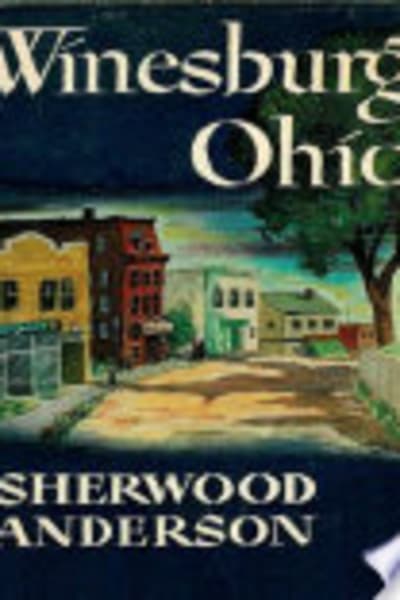
Winesburg, Ohio: A Group of Tales of Ohio Small Town Life — Book Summary & Review
Last updated:
Public domain via Project Gutenberg — free and legal.
Winesburg, Ohio: A Group of Tales of Ohio Small Town Life Summary
In Winesburg, Ohio, Sherwood Anderson builds a “book of the grotesque” frame that treats ordinary townspeople as emotional case files, and George Willard’s schooling in watching becomes the spine tying twenty-two stories together. The cycle opens by naming the town’s defining posture: people distort themselves—through longing, shame, appetite, performance—until the distortion feels like their truest face. George starts as a boy who learns to look, then keeps looking as he grows into adulthood, and Anderson uses that habit to show how selfhood gets manufactured in public. You can feel Anderson’s method in the way each vignette pauses on a single figure’s private weather: a teacher whose talk turns into confession, a man whose work masks panic, a woman whose need for recognition curdles into a kind of performance.
“The Book of the Grotesque” isn’t a theme statement so much as a permission slip. Anderson keeps returning to the idea that the “grotesque” is not monsters but misalignments—between what someone says and what they mean, between their story and their body. George’s arc tracks that lesson: he comes to Winesburg as a student of faces and leaves as someone who can’t bear the town’s emotional gravity. That ending isn’t a neat moral; it’s an escape hatch.
Where Anderson really wins is the texture of voice—plain sentences that still land like revelations, especially when George Willard narrates his own dawning disgust and longing. Still, this book has a limitation: it doesn’t offer a steady plot or a consistent cast you can follow like a conventional novel, and some readers will find the repetitions of yearning and loneliness wearing. If you want storyline momentum, Anderson will frustrate you; if you want interior pressure, Sherwood Anderson delivers it over and over.
Key Takeaways from Winesburg, Ohio: A Group of Tales of Ohio Small Town Life
-
1
The Book of the Grotesque means character is shaped by distortion—small gaps between speech and feeling become the real plot.
-
2
George Willard’s lookout is the organizing lens, turning town life into a study of how people narrate themselves to survive.
-
3
Winesburg, Ohio works as a short-story cycle, so meaning arrives through echoes rather than one continuous storyline.
-
4
Anderson’s self-revelation style treats ordinary jobs as emotional masks, with desire and shame leaking through daily talk.
-
5
George’s abandonment of Winesburg functions as a verdict: the town teaches you to see, then punishes you for staying.
Who Should Read This
If you’re stuck in a loop of watching other people perform competence while you quietly question what’s real, this book will match that tension. Someone who likes character studies where the “plot” is emotional misalignment—rather than events—will likely feel at home here.
Who Shouldn't Read This
If you need a clear, escalating narrative with payoff scenes, Winesburg, Ohio’s story-cycle structure will feel like drift. If you’re easily tired by repeated loneliness and yearning across many townspeople, Anderson’s method may wear you down fast.
Editor's Verdict
The single best thing Anderson does is use “The Book of the Grotesque” to justify why each person reads like a psychological portrait, not a plot device. The real limitation is that the book offers no conventional momentum, so readers wanting a novel’s continuity may feel stalled. This hits hardest for anyone at the awkward life stage when you’re realizing your hometown stories are traps and you’re deciding whether to leave.
Ready to read Winesburg, Ohio: A Group of Tales of Ohio Small Town Life?
Get your copy on Amazon today.
Winesburg, Ohio: A Group of Tales of Ohio Small Town Life — Frequently Asked Questions
About Sherwood Anderson
Sherwood Anderson (1876–1941) was an American writer and editor from the Midwest. He worked in newspapers and advertising and later became a novelist and short-story writer, drawing on his experiences in Ohio and other industrial towns. His first major success came with Winesburg, Ohio (1919), a collection of stories about small-town life. He is credible on this subject because his writing is rooted in firsthand observation of Midwestern communities. Other notable works include Dark Laughter (1925) and The Triumph of the Egg (1921).