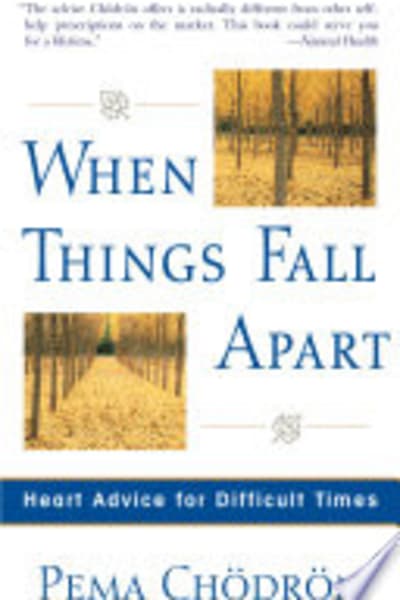
When Things Fall Apart — Book Summary & Review
by Pema Chödrön
Last updated:
When Things Fall Apart Summary
Chödrön introduces the idea of “positive groundlessness” in the opening chapters, urging readers to accept uncertainty instead of scrambling to escape it. One of the strongest sections, “When Things Fall Apart,” argues that life’s inevitable setbacks can turn into growth moments if you meet them with openness and honesty. She leans hard on meditation and mindfulness as practical tools for dealing with hardship, backing up the advice with stories from her life as a Buddhist nun. She also examines “shenpa,” the Tibetan term for the reflex to avoid discomfort, and explains how spotting it early can keep emotional spirals from gaining momentum. Still, the book’s Buddhist-centric framing may frustrate readers who want a more secular or varied toolkit, since it draws primarily from Buddhist philosophy and rarely widens the lens to broader spiritual or psychological theories.
Key Takeaways from When Things Fall Apart
-
1
Positive Groundlessness: Embrace uncertainty and discomfort rather than seeking constant security and control in life.
-
2
The Practice of Maitri: Cultivate unconditional friendliness towards oneself, fostering self-compassion and acceptance in difficult times.
-
3
Shenpa Awareness: Recognize the urge to escape discomfort, allowing for a pause that prevents habitual reactions and emotional spirals.
-
4
The Importance of Meditation: Utilize meditation as a tool to develop mindfulness and presence amidst life's inevitable chaos.
-
5
Tonglen Meditation: A breathing practice to transform pain into compassion by visualizing taking in suffering and sending out relief.
Who Should Read This
If you feel overwhelmed by life's uncertainties and are searching for a way to find peace within chaos, this book is for you. Someone who is open to exploring Buddhist practices and philosophies will gain the most from Chödrön's guidance.
Who Shouldn't Read This
Someone looking for a secular approach to handling life's challenges might find this book too deeply rooted in Buddhist ideology. It doesn't offer a wide range of perspectives outside of Buddhist teachings, which could frustrate those seeking a more universal spiritual discussion.
Editor's Verdict
Chödrön's exploration of 'shenpa' is particularly enlightening, offering a practical way to interrupt harmful patterns. However, the book's heavy reliance on Buddhist concepts might not satisfy those looking for a broader spiritual toolkit. If you're at a crossroads, questioning your ability to cope with life's unpredictabilities, this book will resonate deeply.
Ready to read When Things Fall Apart?
Get your copy on Amazon today.
When Things Fall Apart — Frequently Asked Questions
About Pema Chödrön
Pema Chödrön, born Deirdre Blomfield-Brown in 1936 in New York City, is an American Tibetan Buddhist nun and a leading figure in Western Buddhism. Ordained in 1981, she studied under Chögyam Trungpa Rinpoche. Her credibility on dealing with life’s challenges stems from her extensive experience and teachings in Buddhist philosophy. Besides "When Things Fall Apart," she authored "The Places That Scare You" and "Living Beautifully," offering practical guidance on mindfulness and compassion.